
Reading time: 4 minutes
Achieving net zero in construction by 2050 will not be sufficient. To limit global warming to 1.5°C, humanity can emit no more than 250 billion tonnes of CO₂. At the current rate, this remaining carbon budget could be depleted within a few years—potentially before the end of this decade.1 Without a decisive shift, global temperatures are projected to rise by 3°C. In Switzerland, considered a climate change hotspot, average temperatures have already increased by 2.9°C, according to ETH Zurich climate scientist Reto Knutti.2 The Swiss initiative Countdown 2030 is therefore calling for climate-neutral construction by 2030.
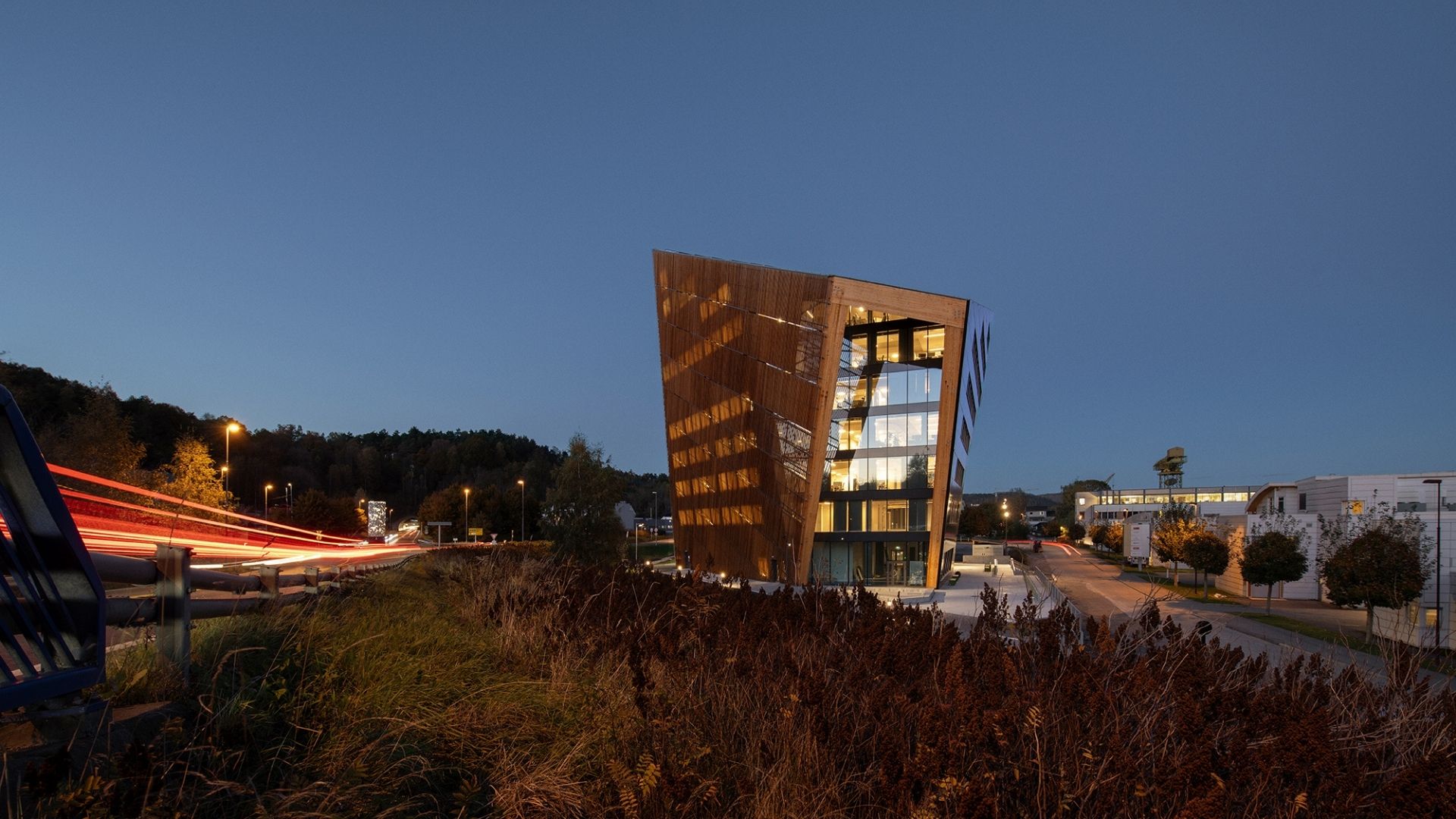
Snøhetta’s Powerhouses illustrate how this ambition can be translated into practice. In Porsgrunn (2020), Trondheim (2019), and Sandvika near Oslo (2014), the firm has realized office buildings that produce more renewable energy over their entire life cycle than they require. The life-cycle assessment includes energy used for raw material extraction, component manufacturing and installation, transport, and eventual dismantling. The Montessori school in Drøbak (2018) and the ongoing expansion of the Moholt student housing complex in Trondheim (since 2022) also meet climate-positive criteria.
Harnessing Solar Potential
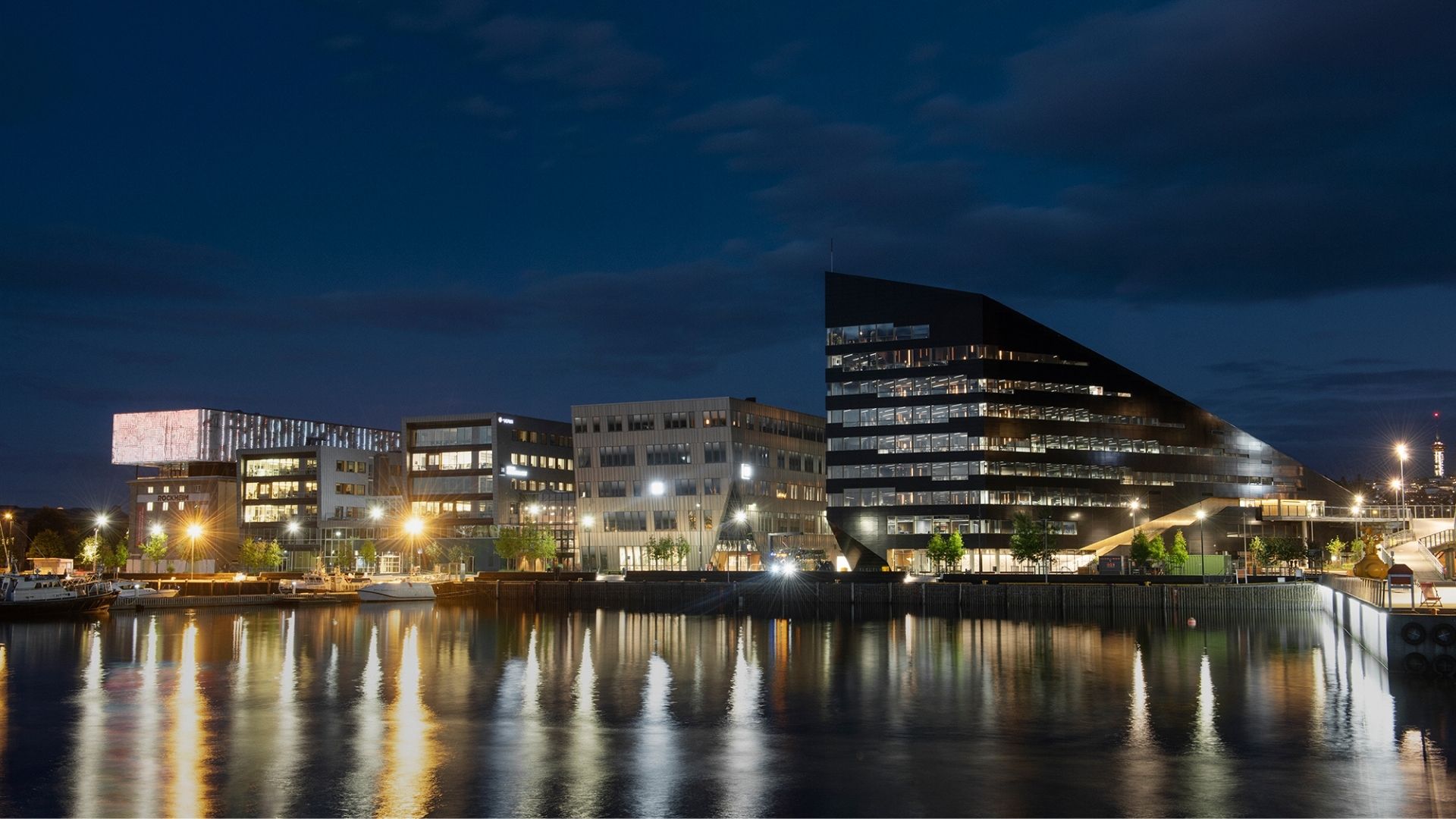
Powerhouse Telemark in Porsgrunn, developed by R8 Property, and Powerhouse Brattørkaia in Trondheim, owned by Entra ASA, rely on extensive photovoltaic installations. The Trondheim project presented a particular challenge: it is the northernmost energy-positive building in the world. Located at the 63rd parallel, the city experiences extreme seasonal fluctuations in daylight—continuous brightness during peak summer and only 4.5 hours of daylight at the winter solstice.
To maximize solar yield, Snøhetta inclined the approximately 3,000-square-metre roof toward the south and designed it as a pentagonal surface optimized for solar exposure. The PV system generates around 500,000 kilowatt-hours annually—more than double the energy demand of the 18,000-square-metre office building and sufficient to supply neighboring buildings and Trondheim’s electric buses. It even surpasses the more southerly Powerhouse in Porsgrunn, whose 24-degree pitched roof and south-facing façade generate up to 256,000 kilowatt-hours per year—equivalent to the annual consumption of 20 average Norwegian households.
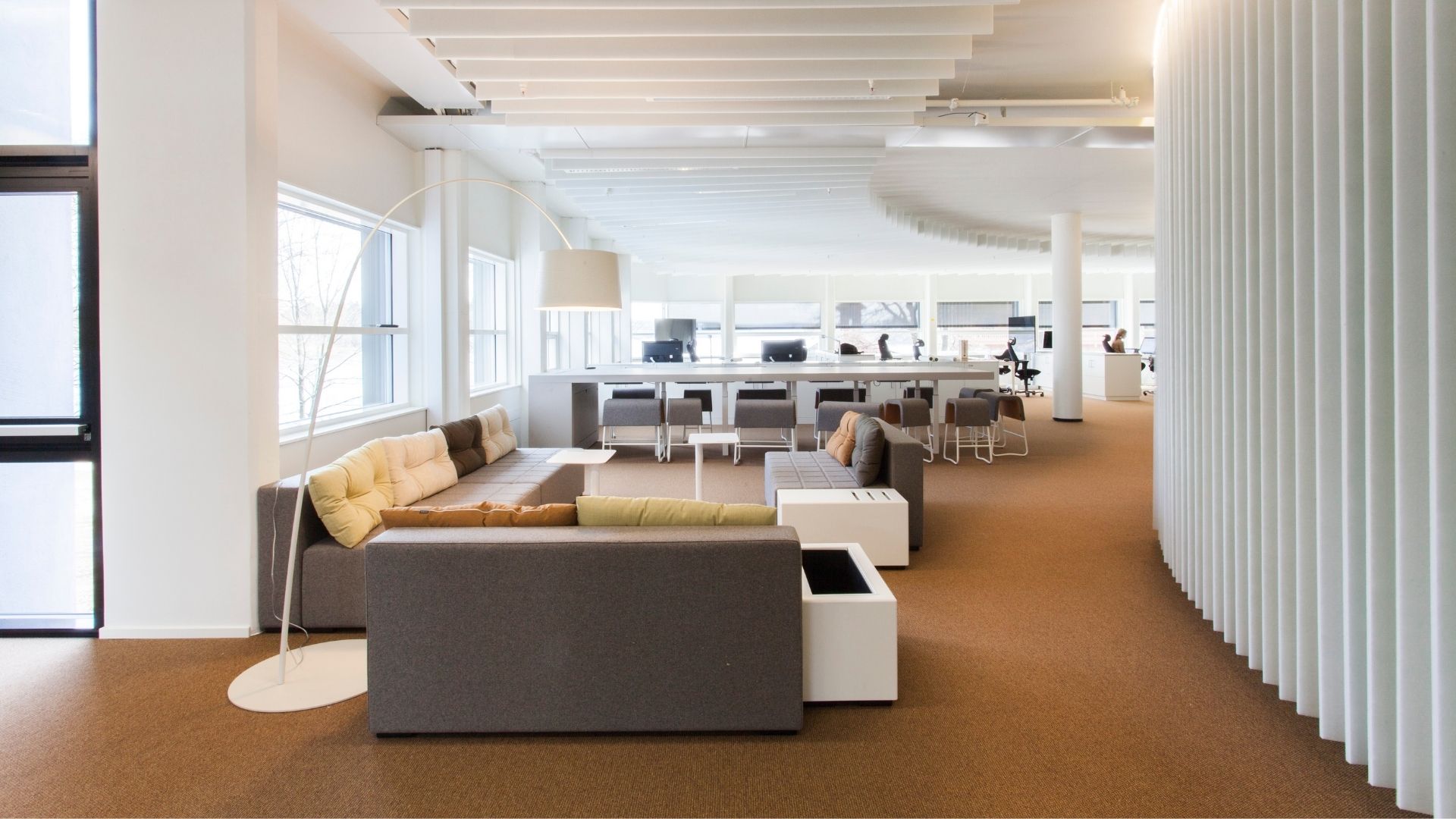
Yet operating effectively as solar power plants alone would not meet Snøhetta’s ambitious targets. At Powerhouse Telemark, overall energy demand was reduced by 70 percent compared to a conventional office building. The project integrates 350-metre-deep geothermal wells for heating and cooling. Glazed roof openings channel daylight into the upper floors, reducing reliance on artificial lighting. Light-colored interior finishes enhance reflectance and daylight distribution. External timber louvers provide solar shading in summer while allowing low winter sun to penetrate and contribute passive heat gains.
In Trondheim, additional heat recovery from the ventilation system improves efficiency. Greywater and seawater are utilized for heating and cooling. Both buildings employ structural components made from specially developed low-carbon concrete, which serves as thermal mass—absorbing heat slowly and releasing it gradually.
Designing Out Waste
A positive life-cycle energy balance also depends on minimizing material waste and extending product lifespans. For Powerhouse Telemark, Snøhetta standardized partitions, flooring systems, kitchenettes, and sanitary units. Surfaces were specified for durability and longevity. The objective was to ensure that tenant turnover would require minimal alterations, thereby significantly reducing waste compared to conventional office fit-outs. Even the wayfinding system was custom-designed.
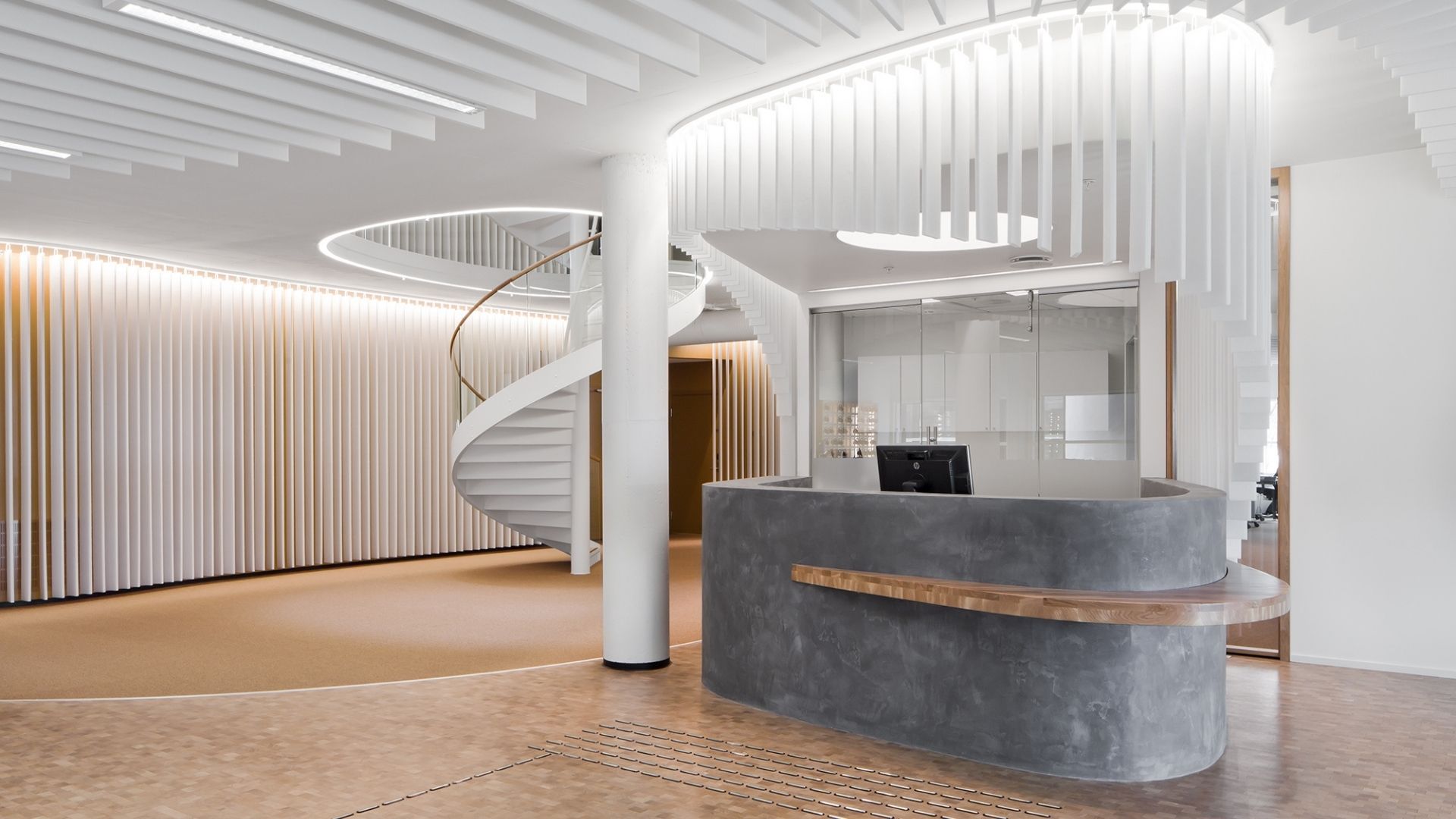
In the staff restaurant and conference areas, Scandinavian design classics were refurbished rather than replaced. The local craft association Grenland husflidslag reupholstered Corona chairs by Danish manufacturer Erik Jørgensen using surplus yarn from Gudbrandsdalens Uldvarefabrikk. Restored City chairs by Norwegian industrial designer Øivind Iversen complement the interior. The reception desk features recycled tiles from the local porcelain manufacturer Porsgrunds Porselænsfabrik.
Climate-Positive Retrofit
Powerhouse Kjørbo demonstrates that energy-positive performance is not limited to new construction. Snøhetta transformed two interconnected 1980s office blocks in Sandvika into plus-energy buildings. Additional insulation and high-performance windows reduce thermal losses, while sensor-based controls manage lighting, ventilation, heating, and cooling. New external blinds prevent summer overheating without compromising passive solar gains in winter. Collectively, these measures reduced energy demand by 90 percent. Minimal heating is required; a limited number of radiators in the building core suffice even during cold winter periods.
A newly installed photovoltaic array produces up to 200,000 kilowatt-hours annually, complemented by a heat pump and geothermal energy system. Over a projected 60-year life cycle, the building generates more energy than is required for construction, refurbishment, operation, and eventual deconstruction.
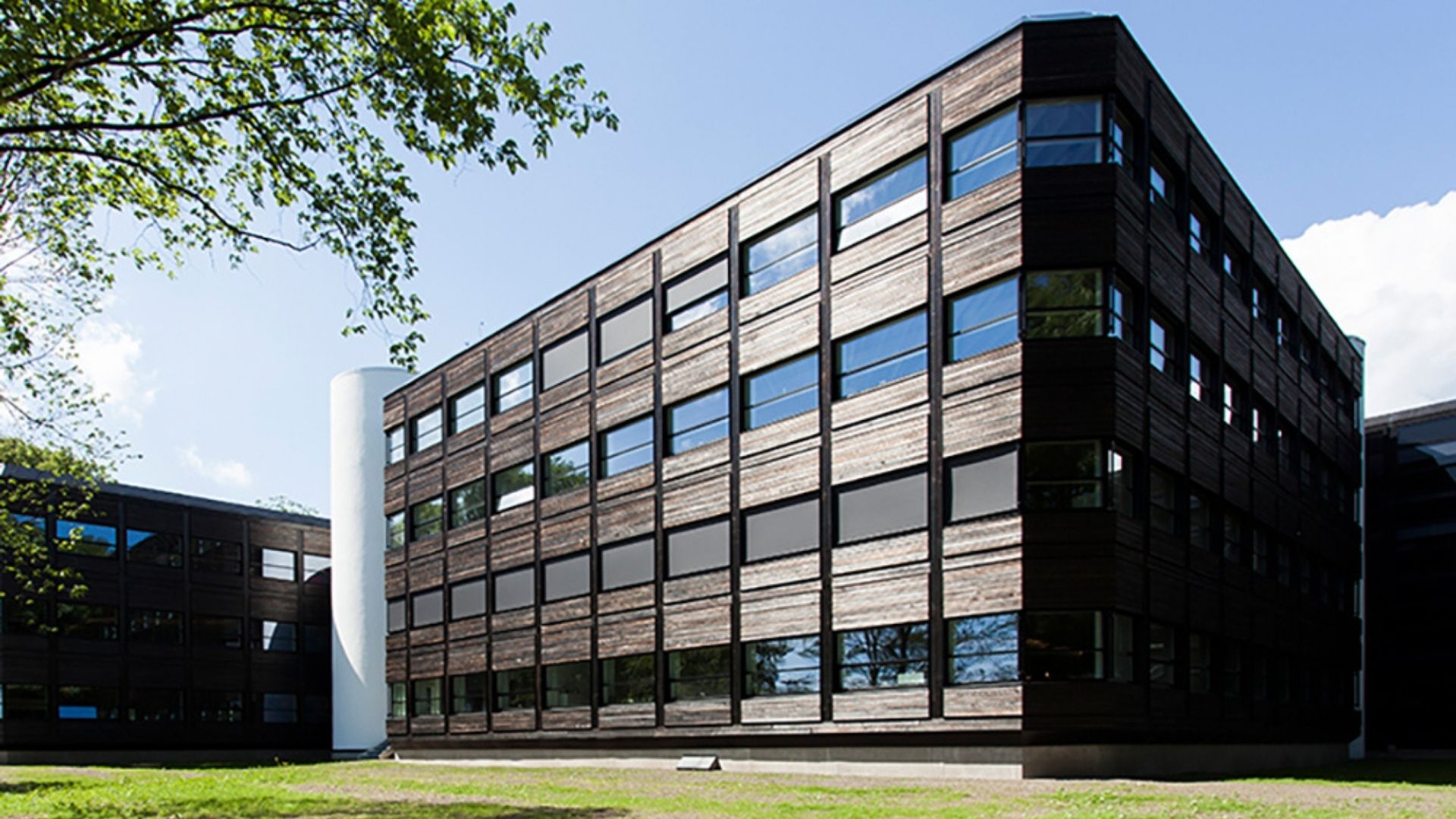
Material reuse was also central to the retrofit strategy. Glass façade panels removed during renovation were repurposed within the building. The new façade is clad in charred timber—a traditional technique that reduces processing energy while preserving the buildings’ distinctive dark appearance. The treatment also enhances resistance to decay and pests.
Snøhetta’s Powerhouses feed surplus energy into the public grid. Looking ahead, the firm advocates for improved technical solutions that enable on-site storage of larger energy volumes. This is increasingly relevant, as power grids in many countries—including Germany and Switzerland—are not designed to accommodate high levels of decentralized solar input without substantial expansion of distribution infrastructure.