Reading time: 8 minutes
Shenzhen has grown at breathtaking speed in recent decades, now reaching nearly 20 million residents and anchoring China’s third-largest economic region. Because such rapid expansion was unforeseen, infrastructure has had to adapt continuously. How significant are the challenges this creates?
Speed defines urban development in China. Planning appears driven almost exclusively by five-year plans, with little long-term thinking in day-to-day local government operations. Rather than anticipating infrastructure needs five or ten years ahead, authorities often react only once capacity limits are reached. Decisions are frequently made at the last minute, leaving no time for meaningful community consultation.
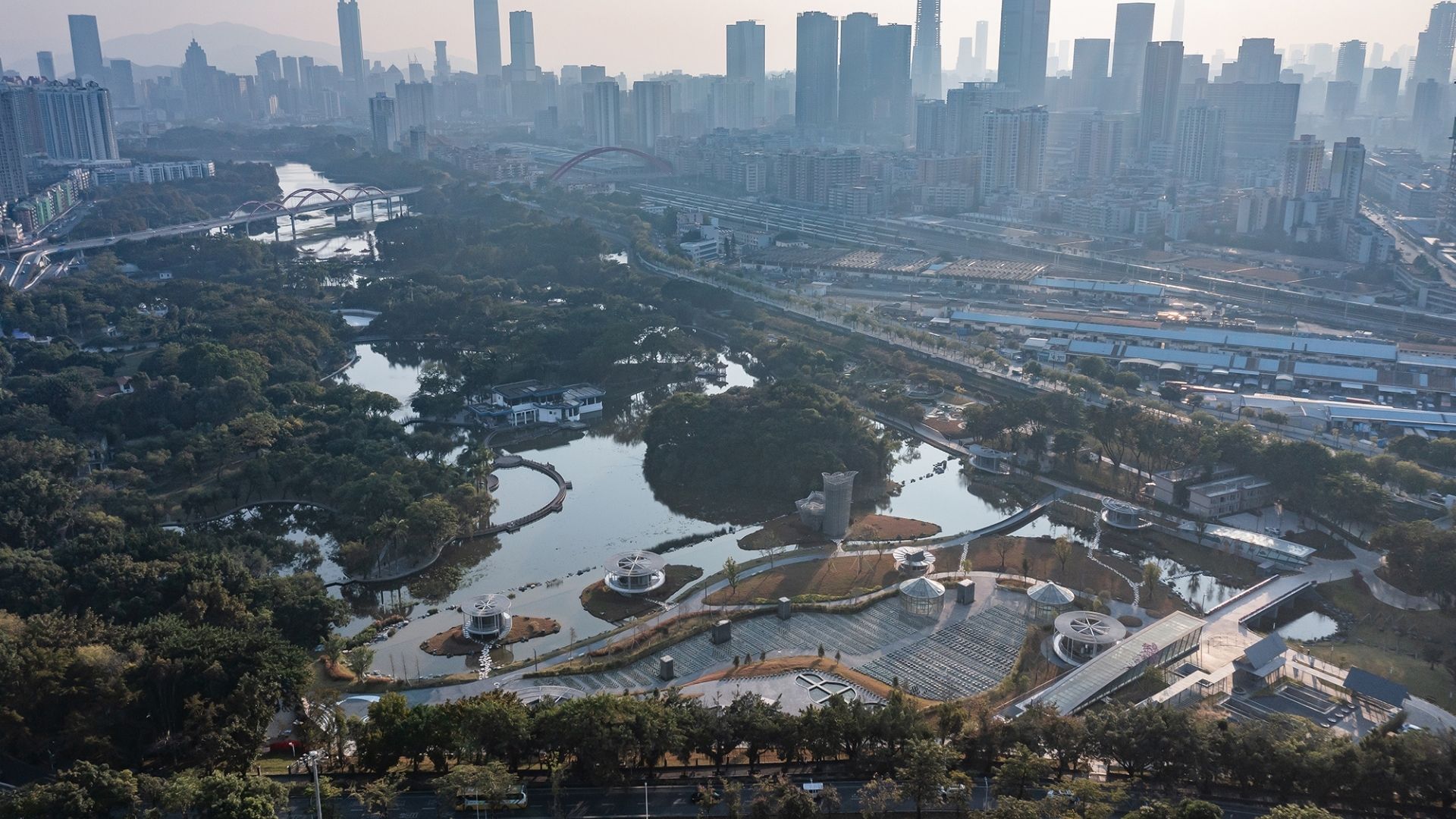
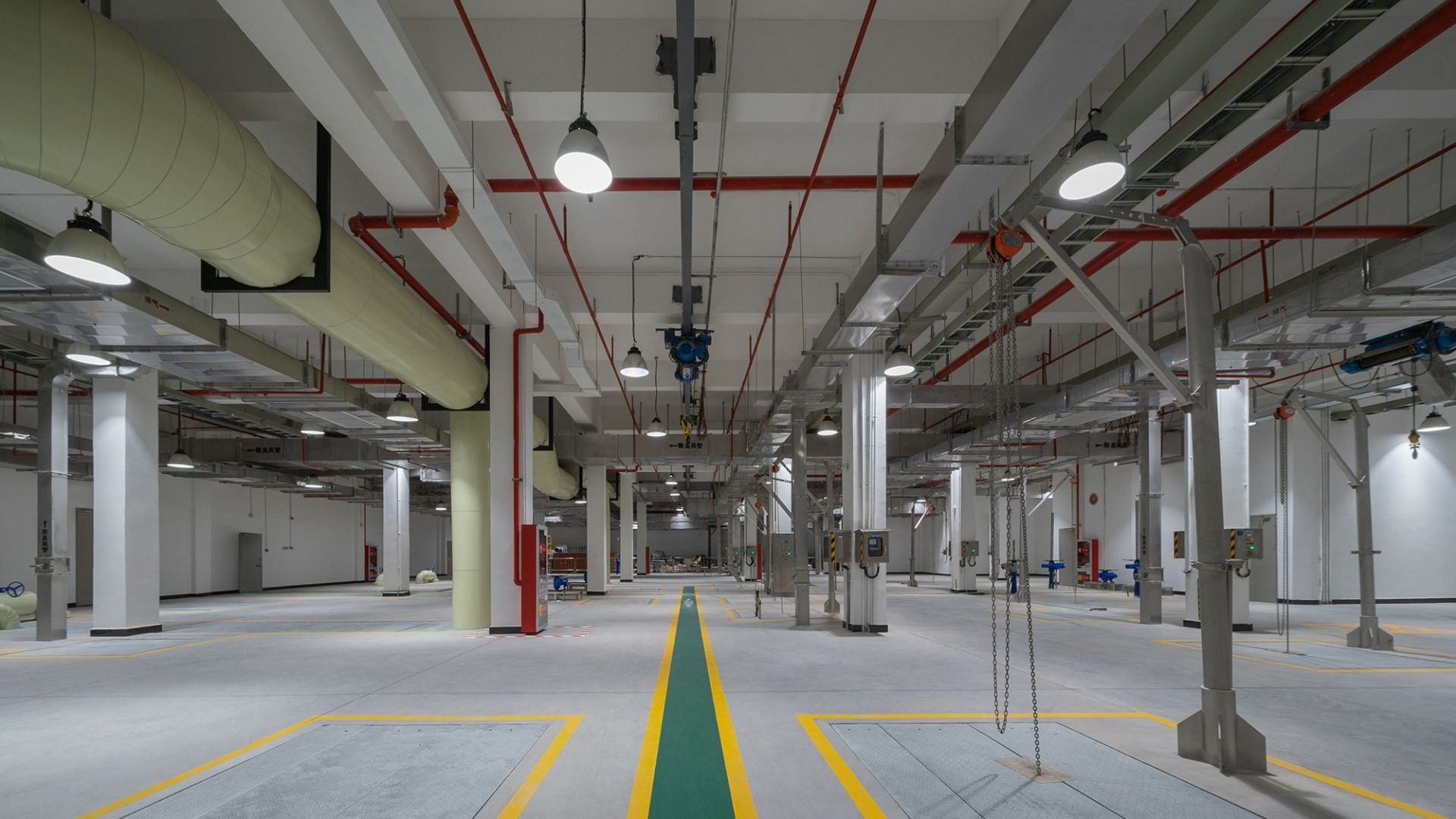
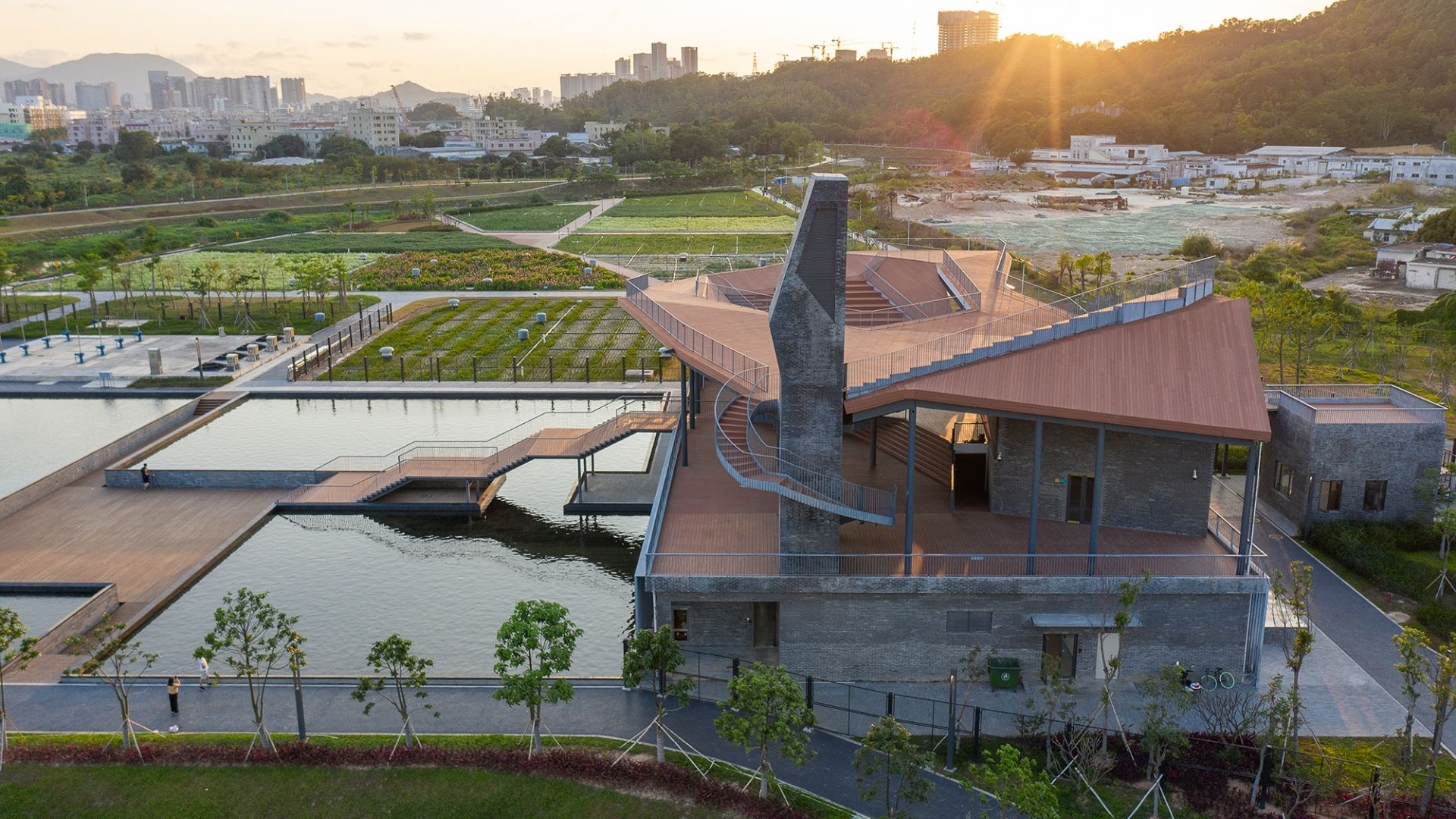
The wastewater plant at Honghu Park is a typical case. It became necessary due to surrounding high-density neighborhoods, but the need was recognized only once the situation became urgent. The government decided first, then launched a technical competition for engineering firms. What followed was labeled a “community approval process,” but in reality it involved no genuine public consent. Because the site lies at the heart of an old neighborhood, residents reacted strongly. Wastewater plants are widely perceived as unpleasant and disruptive, and people expected improvements to their living environment—not industrial infrastructure. Protests forced the planning process to pause. Eventually, the authorities moved the facility underground so it would no longer be visible. This trial-and-error approach is very typical in China: projects proceed until resistance becomes too strong.
Climate change fundamentally reshapes how cities must approach growth and infrastructure. What does this mean for planning and design in Shenzhen?
In practice, the system remains almost entirely top-down, with each bureau—the construction, planning, and land bureaus—operating vertically and with little cross-department coordination. Climate adaptation is largely reactive.
A clear example is Luohu District along the Shenzhen River. In September 2023, a severe storm flooded large parts of the old neighborhood. Authorities recognized the need to upgrade infrastructure only after the disaster. Often, solving one problem creates another one elsewhere. Climate change and disaster risk are addressed passively—and, frankly, inadequately.
Water infrastructure is particularly sensitive. Wastewater treatment plants are often unpopular. How are residents involved, and how can public support be achieved?
Infrastructure planning occurs at the state level and typically does not involve community consultation. In principle, an environmental impact assessment (EIA) and public disclosure are required before project approval. In practice, communities are rarely informed, and for urgent projects, construction may begin before the EIA is completed. Legally, community hearings are required only if mandated by a higher-level government, and state authorities are not obligated to obtain public approval.
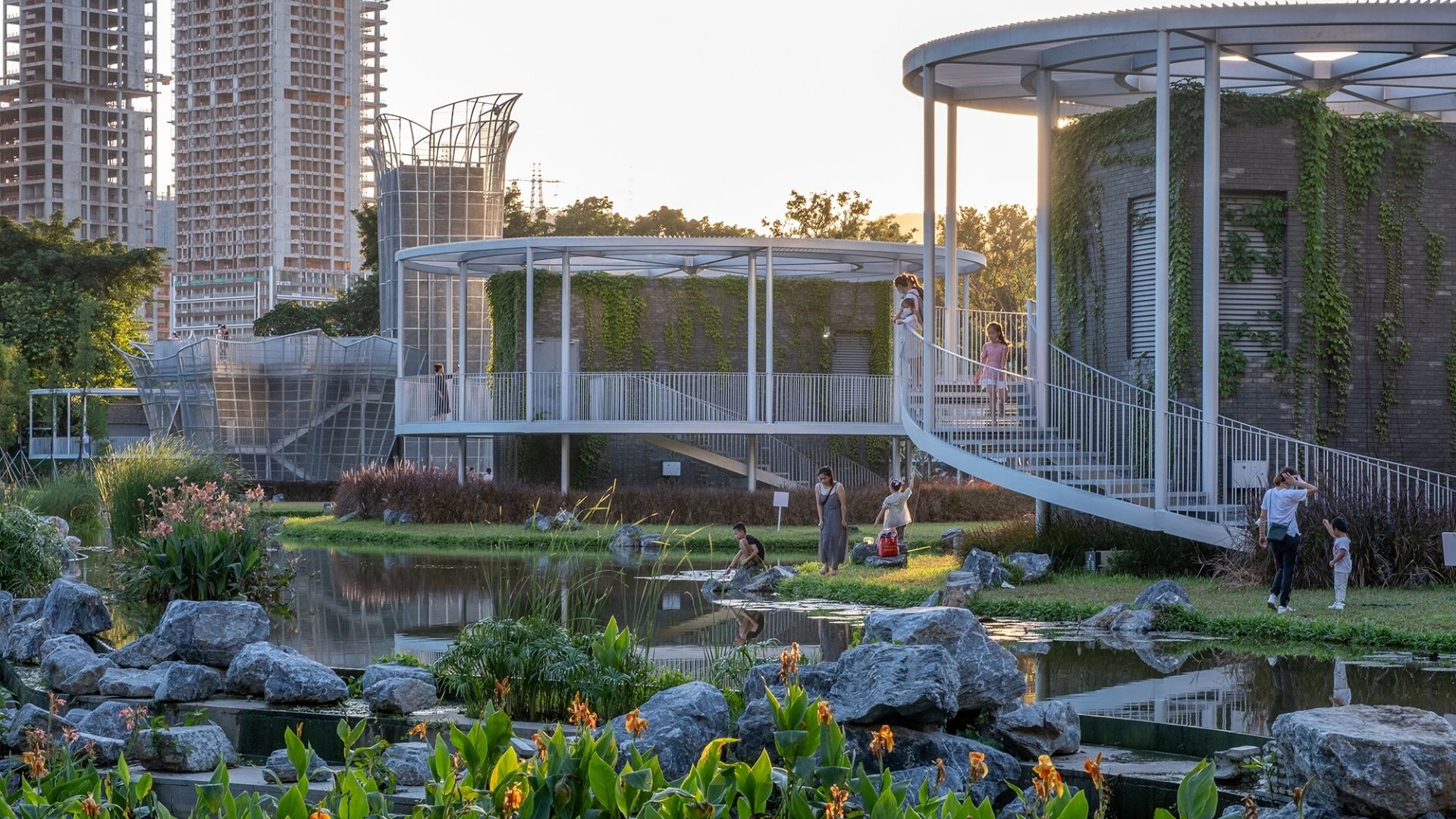
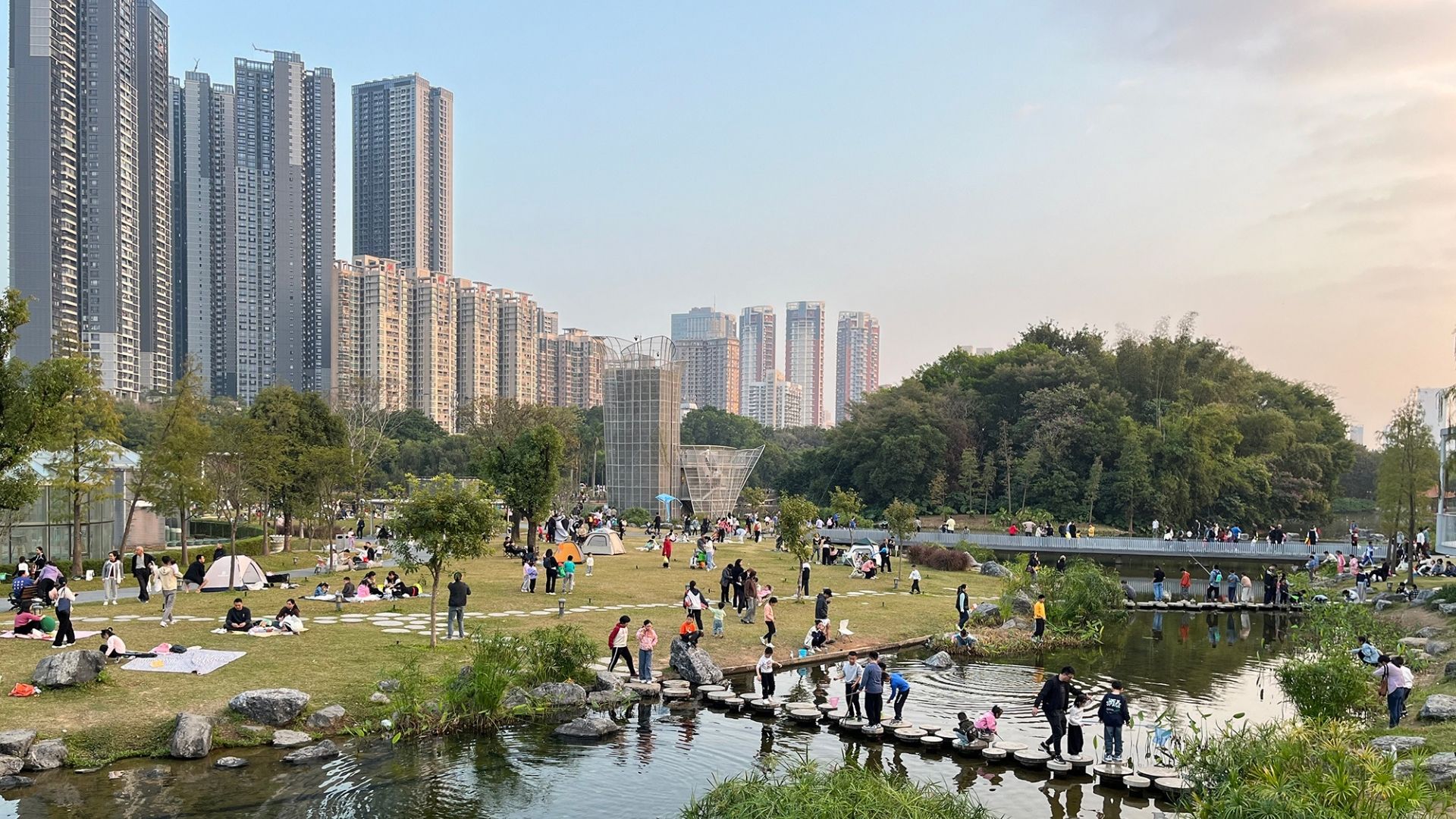
Misconceptions about wastewater facilities persist, so community concerns are understandable. Only when opposition becomes significant—as in Honghu Park—do negotiations begin, and even then usually at a late stage. In that case, relocating the plant underground—an “out of sight, out of mind” strategy—made the infrastructure largely invisible in daily life, providing the basis for our design intervention.
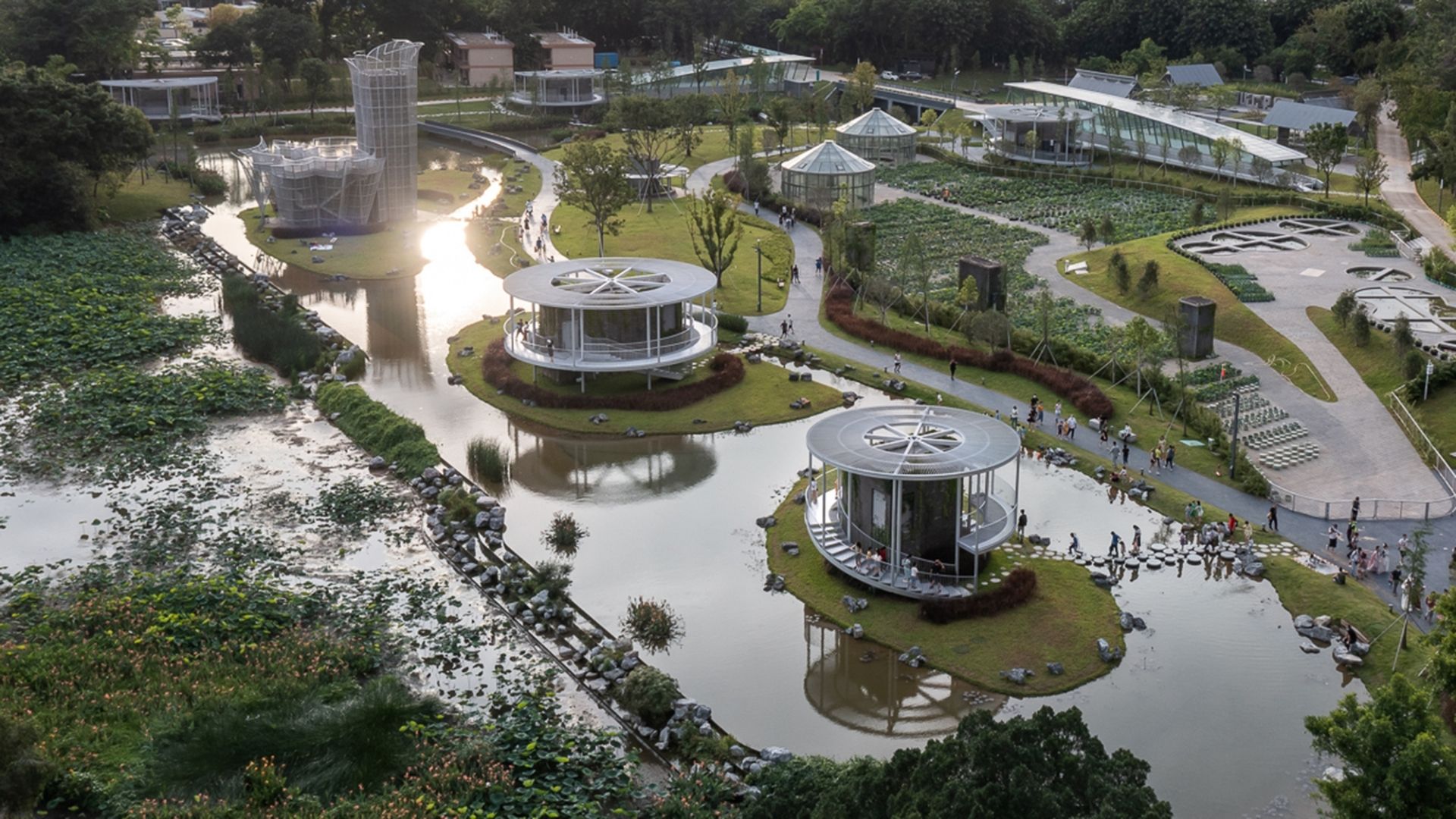
Your office works on engineering projects like these. How did you become involved, and what does your approach look like?
China’s hydraulic institutes operate within a strictly vertical system. They develop a plan, submit it to the planning bureau for approval, and then seek a construction permit from the construction bureau. The system fails to recognize that infrastructure projects carry different implications depending on location: a water purification plant in a dense urban neighborhood affects residents far more directly than one in a rural area. Hydraulic institutes tend to treat all sites the same, focusing narrowly on technical performance, while planning bureaus consider urban impact. In several cases—including Honghu Park—we were brought in only after projects faced public resistance and approvals were halted, highlighting the need for architects to address neighborhood and city-wide interests.
A comparable situation arose along the 3.5-kilometer Pingshan Riverfront Redevelopment. The task involved upgrading the river, designing the surrounding landscape, and integrating a water purification plant and its supporting facilities. This required a coordinated spatial, environmental, and urban design strategy. The engineering institute that won the competition recognized its own limits and invited us to join, understanding that architects and landscape designers were essential to the project’s success. This is often how we become involved in large-scale infrastructure projects—when technical systems intersect with urban life and require a broader, integrated design approach.
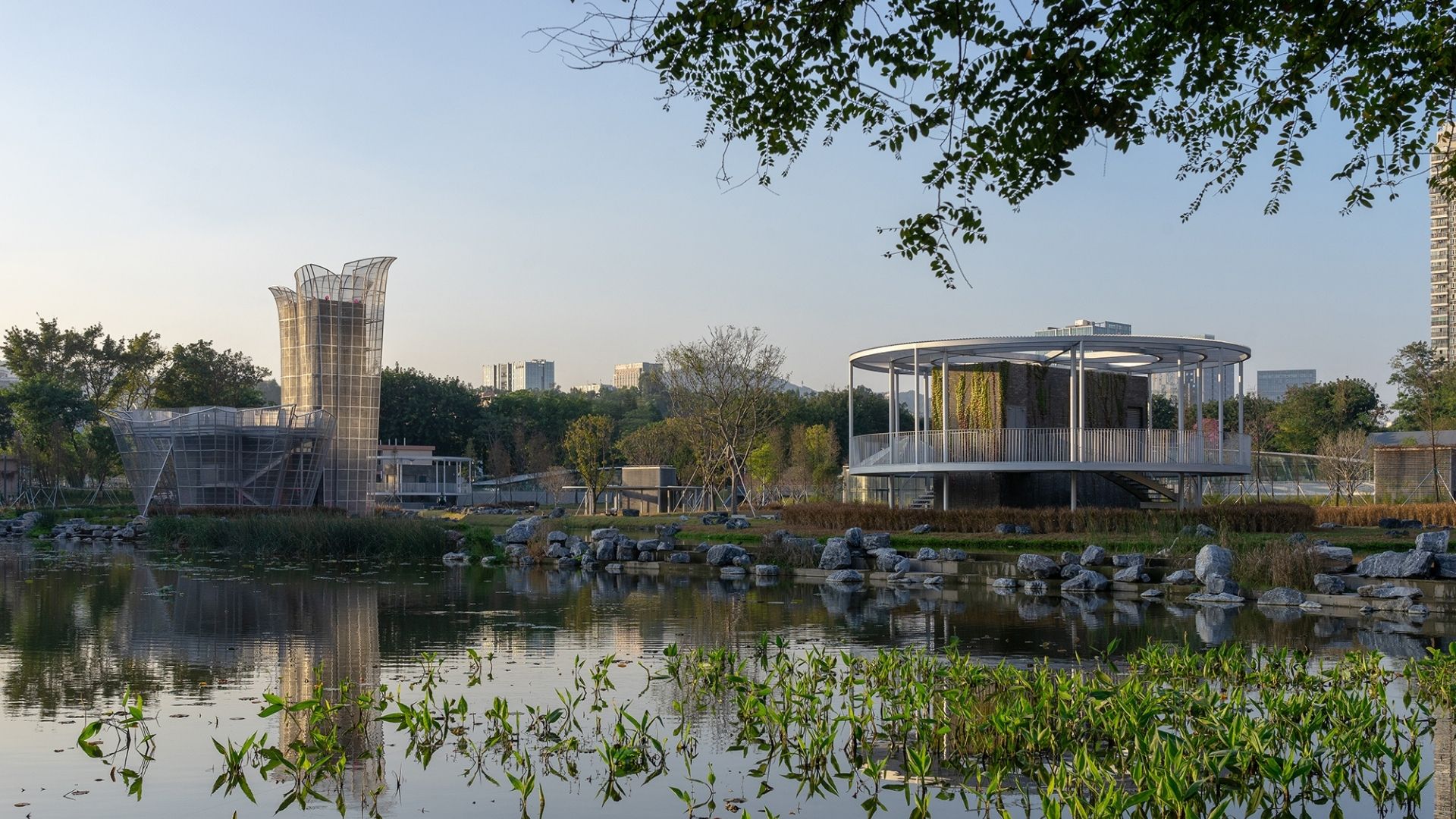
A comparable situation arose along the 3.5-kilometer Pingshan Riverfront Redevelopment. The task involved upgrading the river, designing the surrounding landscape, and integrating a water purification plant and its supporting facilities. This required a coordinated spatial, environmental, and urban design strategy. The engineering institute that won the competition recognized its own limits and invited us to join, understanding that architects and landscape designers were essential to the project’s success. This is often how we become involved in large-scale infrastructure projects—when technical systems intersect with urban life and require a broader, integrated design approach.
How is resident participation structured in Shenzhen, and what formal processes exist to resolve contested projects?
Different projects involve varying degrees of participation, and there is no explicit legal requirement for community involvement. Residents are not formally invited to take part in planning and often learn about nearby purification plants only when construction is imminent. In some cases, residents have written directly to the mayor requesting relocation.
From the government’s perspective, these projects improve public infrastructure and environmental performance, so opposition is often unanticipated. Architects and landscape designers are rarely involved in early planning. Only when resistance becomes strong does the process come to a halt—sometimes for several years, as in Honghu Park. When architects are eventually brought in, our primary contribution tends to focus on aesthetic quality, the so-called “face value.”
Your office worked on the Lotus Water Culture Base in Honghu Park and the Pingshan Terrace projects. Who commissioned your office?
The two projects involved different commissioning structures. Pingshan Terrace was a direct commission from the municipal design institute following a competitive tender. Shared values regarding the public and social value of infrastructure allowed the design and construction process to proceed smoothly.
For Honghu Park, the planning bureau initiated our involvement, but our contract was signed with the hydraulic engineering institute, which had already won the competition. The water utility group had not fully recognized the park’s significance within Luohu’s historic urban core. The planning bureau recommended our participation because they trusted our approach to public perception and community concerns.
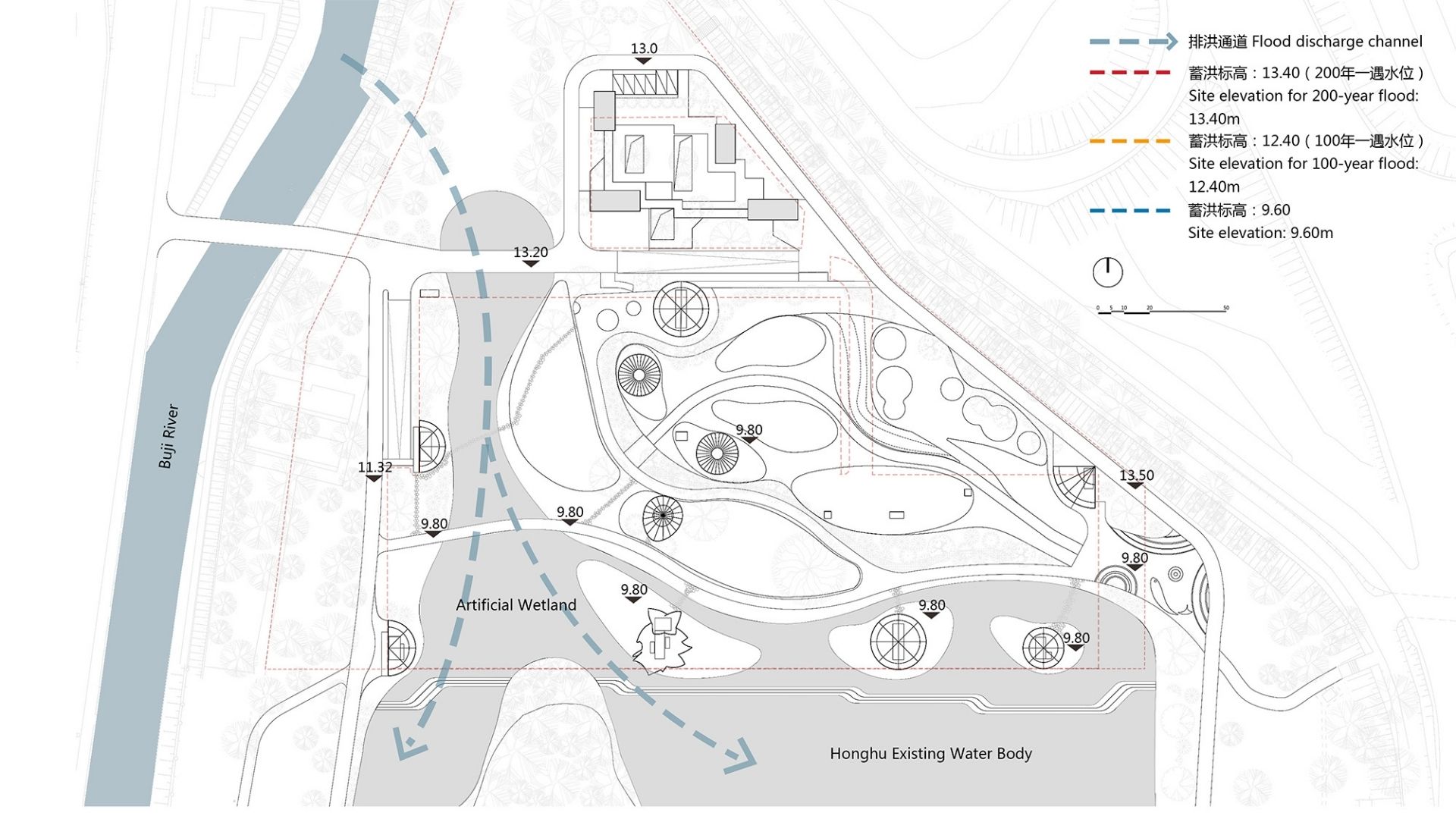
You joined these projects at a relatively late stage. How did collaboration with the engineering institute work?
Collaboration was challenging. Many hydraulic authorities believe engineering solutions alone are sufficient, often seeing architecture and landscape design as surface decoration. Our approach is first to understand the engineering logic, technical constraints, and priorities. Only then can design meaningfully integrate with—and improve—engineering systems rather than simply masking them.
Did you deal directly with residents and their concerns?
It depends on the project type. In urban village renewal, we visited communities with the subdistrict office and village management, gathering perspectives that informed design adjustments. Infrastructure projects, by contrast, typically involve no community dialogue; negotiations are limited to landowners and legal rights holders. In Honghu Park, engagement was largely confined to the government department, the investor, and engineering leads. Once we joined as a later-stage design team, we communicated with operators and end users to refine park-use areas. This should not be seen as a replicable model; processes vary case by case.
What lessons did you take away from this process?
Architects and landscape designers should be involved from the very beginning, working alongside engineers on complex projects. Early communication with all stakeholders is essential, putting projects on the right track and preventing costly back-and-forth later. Clear communication is critical for both efficiency and success.
One might expect architects to play a guiding role, yet the opposite seems to be the case. Would you suggest improvements?
Yes—but it is discouraging. Architectural education in China remains weak in integrating different forms of knowledge. Architects are often criticized for not understanding structural or hydraulic systems, limiting their influence on aesthetics. Engineering has historically dominated construction in China, and this hierarchy is deeply ingrained.
Why are you dealing with these topics, and how did you learn about improved solutions?
During my involvement in the Audi Urban Future Award in 2010–11, I was struck that a German company like Audi had architects leading infrastructure projects such as transportation. In China, architecture and transportation were separate disciplines. The project showed me that infrastructure solutions must serve communities and function as public space. From concept to built form, many disciplines are involved, but ultimately architecture—and spatial design—must address the problem directly. This is the fundamental objective of architecture.
Cover image: Zhangchao