Reading time: 10 minutes
Buildings exposed to extreme conditions reveal a fundamental distinction often overlooked in conventional design discourse. Structural survival does not ensure operational continuity. In seismic regions, buildings may remain intact yet fail to function when surrounding systems collapse. This reflects a broader shift in resilience thinking, from isolated building performance toward system-level continuity.
Resilience, in this context, is not defined by strength alone but by the ability to absorb and adapt to dynamic forces. Structural systems designed for controlled movement, rather than rigid resistance, demonstrate how flexibility can reduce failure risk under extreme stress. This approach aligns with established principles in resilience engineering, where adaptability becomes a core performance criterion.
However, structural performance alone does not guarantee functionality. Large-scale disruptions show that buildings depend on external infrastructure. Power loss, transport interruption, and system-wide instability test not only whether buildings stand, but also whether they operate. Resilience becomes a matter of interdependence.
This reframes buildings as nodes within interconnected systems. Failures in energy, mobility, or data networks can limit operation even when structures remain intact. In parallel, post-event recovery is often slowed by reliance on manual inspection instead of real-time monitoring.
As a result, resilience extends beyond structural integrity. It depends on system interaction, response speed, and the ability to maintain or restore operation under unstable conditions.
Resilience Insight: Sendai Mediatheque, Japan
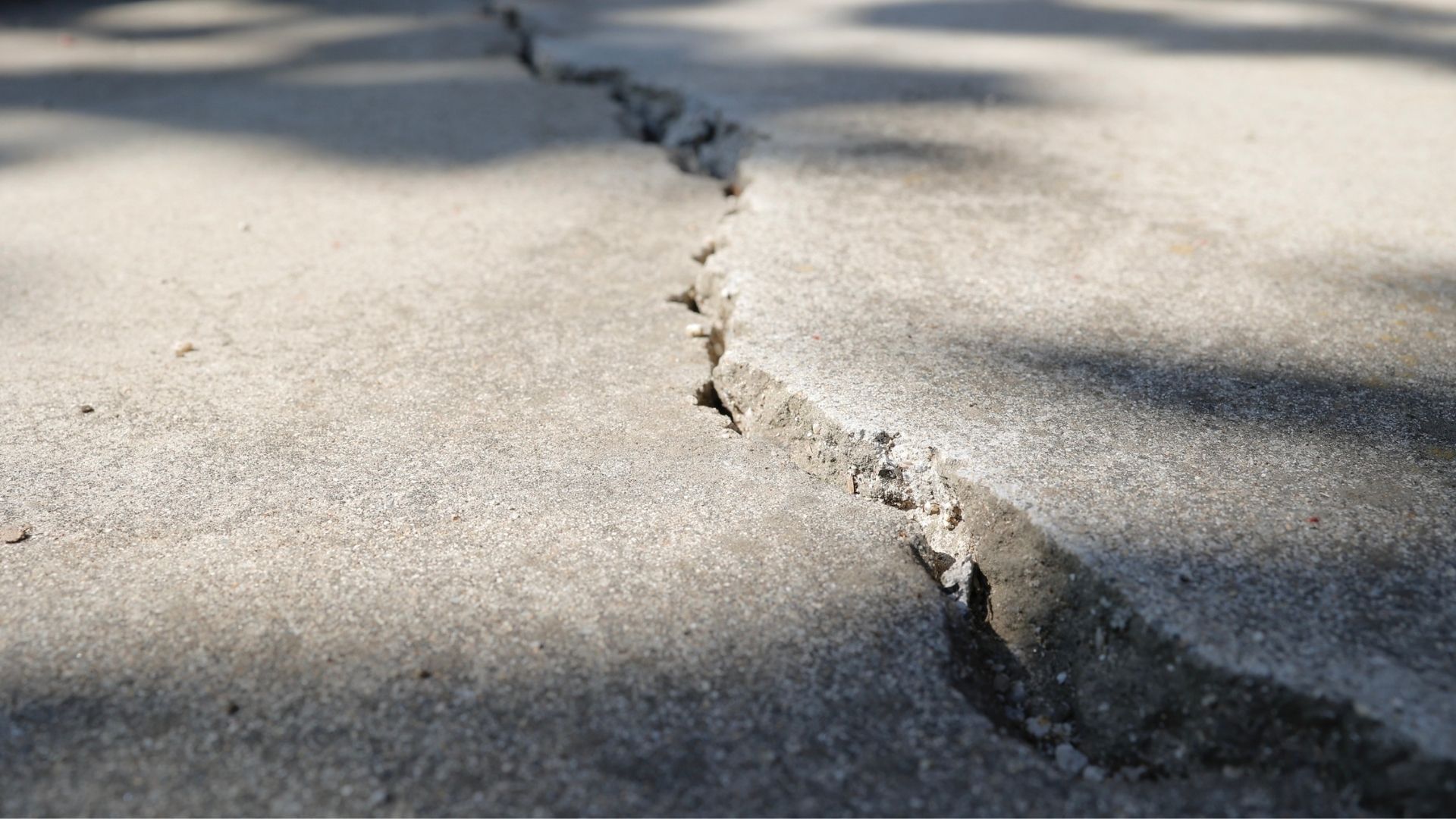
Buildings designed for extreme conditions reveal the difference between structural survival and operational continuity. In seismic regions, resilience depends not only on strength but on the ability of buildings to absorb movement and maintain stability during earthquakes. The Sendai Mediatheque in Japan is often discussed in architectural literature for its flexible tubular structural system, which was designed to allow controlled deformation, which is often interpreted as contributing to its seismic performance and helped the building remain standing during the 2011 Tōhoku earthquake.
Typology
Public cultural building with large open floor plates, irregular geometry, and high visitor occupancy. Designed by Toyo Ito, the Sendai Mediatheque uses a tubular structural system in which vertical circulation, structural support, and lateral stability are integrated within a series of steel tube columns. The design was developed to provide spatial flexibility while allowing the structure to respond to seismic forces through controlled movement rather than rigid resistance.
Risk Context
Sendai is located in one of the most seismically active regions in the world. The 2011 Tōhoku earthquake, with a magnitude close to 9.0, caused strong ground motion, widespread power outages, and large-scale infrastructure disruption across northeastern Japan. In highly seismic environments, building design must account for dynamic loads and structural deformation in order to maintain life safety and allow repair after major events.
Operational Trigger
The earthquake subjected the building to strong horizontal and vertical movement while the surrounding urban systems experienced widespread failure, including electricity loss and transport interruption. The event tested whether the building could maintain structural integrity even when external infrastructure was disrupted.
System Response
The tubular structural system allowed the building to sway during the earthquake helping to reduce structural stress and avoid collapse. Post-event observations reported accounts indicate that the building remained structurally stable, despite some non-structural elements being affected. This behaviour is frequently discussed in architectural discourse as an example of how flexible structural design can improve seismic resilience.
Facility Management Decision
After the earthquake, the building was closed temporarily for inspection and repair. Because the main structural system remained intact, recovery focused on safety verification and restoration rather than reconstruction, and the building was repaired and returned to use.
Human Override Point
Documentation of the post-earthquake response indicates that damage assessment relied on inspection and repair procedures rather than automated monitoring systems. More broadly, many buildings constructed before the widespread use of digital structural monitoring depend on manual evaluation after disasters. Current resilience frameworks note that connected monitoring systems can improve decision speed after extreme events, but such technologies were not common when the building was designed.
User Impact
The building avoided collapse despite severe shaking, which reduced the scale of damage and allowed eventual reopening. However, regional infrastructure failures, including power outages, limited immediate operational continuity, showing that building performance during disasters depends both on structural behaviour and on the stability of external systems.
What Failed
The case shows the limits of structural resilience alone. Although the building survived, the wider disaster affected energy supply and urban infrastructure, demonstrating that maintaining operation requires more than structural strength. Contemporary resilience strategies increasingly combine structural flexibility with backup systems, monitoring technologies, and infrastructure coordination.
Connectivity Layer
Structure ↔ Infrastructure
Sendai Mediatheque shows strong structural resilience but limited independence from external infrastructure. Modern resilience approaches increasingly aim to connect structural safety with energy redundancy, monitoring systems, and coordinated emergency response in order to maintain both safety and continuity during complex events.
Energy Resilience Insight: Brooklyn Microgrid, New York
Energy supply disruptions have become one of the most critical risks for building operations in an age of overlapping crises. Extreme weather events and grid failures can interrupt electricity across entire districts, affecting safety, communication, and building performance. The Brooklyn Microgrid project is best understood as a neighborhood-scale microgrid and local energy trading pilot that explores how distributed generation and digital coordination can strengthen local energy resilience.
Typology
Urban mixed-use neighborhood with residential and small commercial participants linked through a local energy network. The project has been described as combining a physical microgrid with a virtual trading layer, allowing participating prosumers and consumers to exchange locally generated electricity within a defined area rather than depending only on centralized supply.
Risk Context

Dense urban areas depend heavily on continuous electricity supply for heating, cooling, lighting, communication, and safety systems. Extreme weather events such as hurricanes have shown that centralized grids can fail across large regions, leaving buildings without power for extended periods. Resilience requires the ability to operate independently when the main infrastructure is unavailable.
Operational Trigger
Hurricane Sandy caused a massive blackout in the northeastern United States, leaving millions without power and exposing the vulnerability of centralized electricity infrastructure. The event increased interest in local resilience solutions, including community microgrids in New York.
System Response
Brooklyn Microgrid has been analysed as a case study in distributed energy and local energy markets, combining rooftop solar generation, digital metering, and neighborhood-level coordination to designed to enable local energy exchange between participants. Academic work has also discussed it as a case of decentralized microgrid energy markets, while international policy literature places such peer-to-peer models within broader efforts to improve renewable integration and local flexibility.
Facility Management Decision
At the building level, local generation and coordinated control allow energy use to be prioritised when supply is constrained. This supports the possibility of maintaining essential functions while reducing non critical loads, although the level of control depends on the actual configuration of the microgrid and its operating mode.
Human Override Point
The project should not be described as fully autonomous. Operation depends on system operators, market rules, and grid connection decisions, meaning that digital coordination supports but does not replace human control.
User Impact
For users, the main benefit lies in improved local flexibility and the possibility of maintaining electricity supply within the participating network during wider grid disturbances. However, resilience remains partial because participation is limited to connected users, and pilot-scale projects do not automatically extend protection to the whole surrounding neighborhood.
What Failed
The Brooklyn Microgrid also shows the limits of local resilience. Community microgrids require regulatory approval, technical coordination, and digital infrastructure, and studies note that such projects often function as experimental or pilot systems rather than complete replacements for centralized networks.
Connectivity Layer
Building ↔ Grid ↔ District
The defining connectivity layer links individual buildings, local generation, and the wider power grid. Microgrids represent a shift from one-way dependence toward more distributed and locally coordinated energy systems, which is increasingly discussed as part of resilience strategies for complex urban infrastructure.
Failure Insight: Texas Power Grid Crisis, United States

Energy resilience in buildings depends not only on building design, but on the stability of the infrastructure systems they rely on. During the February 2021 winter storm in Texas, extreme cold temperatures caused widespread disruption across the state’s power system, leaving millions of customers without electricity and affecting heating, water supply, and communication services. Investigations reported that the crisis resulted from a combination of equipment failure, fuel supply disruption, and limited preparation for severe winter conditions, showing how interconnected infrastructure systems can fail simultaneously under extreme stress.
Typology
Large-scale regional energy infrastructure supplying electricity to residential, commercial, and critical facilities across the state of Texas. Most buildings were connected to a centralized grid with limited on-site generation or backup capacity. Heating, water supply, communication, and building safety systems depended on continuous electrical power.
Risk Context
Texas's energy infrastructure is less prepared for prolonged extreme cold. During the February 2021 storm, low temperatures affected natural gas production, power generation equipment, and transmission systems at the same time. Because many buildings relied entirely on grid electricity, power loss quickly affected indoor safety conditions as well as access to heating and water.
Operational Trigger
The winter storm brought unusually low temperatures across Texas, increasing electricity demand while simultaneously reducing supply. Power plants shut down due to freezing equipment, the natural gas supply was interrupted, and the grid operator ordered controlled outages to prevent a complete system collapse. As a result, large parts of the state experienced simultaneous loss of power.
System Response
Reports found that the power system was not fully prepared for extreme winter conditions. Lack of weatherization, fuel supply disruptions, and limited operational flexibility reduced the ability of the grid to respond to sudden changes in demand and generation. Because buildings depended on the same infrastructure, failure at the grid level quickly became a building-level emergency.
Facility Management Decision
Once electricity was lost, building operators had limited ability to maintain normal operation. Without power, heating systems, pumps, elevators, and communication equipment stopped functioning. Some facilities used backup generators or emergency procedures, but these measures were often insufficient during prolonged outages affecting large regions at the same time.
Human Override Point
Manual intervention was possible only in limited situations because most building systems require electricity to operate. Emergency shelters, portable generators, and temporary response measures were used in some cases, but the scale of the infrastructure failure reduced the effectiveness of local actions. The event highlighted the importance of preparing for scenarios in which external energy supply may be unavailable for extended periods.
User Impact
Residents experienced very low indoor temperatures, interruptions in water supply, and loss of communication services. Hospitals, care facilities, and public buildings faced significant safety risks when heating and power systems failed. The event showed that building safety is strongly linked to the resilience of the infrastructure networks on which buildings depend.
What Failed
Investigations concluded that insufficient weather protection, dependence on centralized infrastructure, and limited system flexibility contributed to the scale of the crisis. Failures in electricity generation, fuel supply, and other infrastructure systems occurred at the same time, creating cascading impacts across the built environment. The event demonstrated that buildings designed to operate efficiently under normal conditions may not remain functional during extreme and compound risks.
Connectivity Layer
Building ↔ Grid ↔ Regional Infrastructure
The defining connectivity layer was the dependence of buildings on a centralized energy network. When the grid failed, many buildings had no alternative source of power. Resilience studies increasingly emphasize the need for more flexible connections, including local generation, storage, and the ability to operate independently when large-scale infrastructure becomes unstable.