Reading time: 16 minutes
Key Learnings
- The hotel guest experience is not created by individual systems, but by their coordination: bathroom installation, water, indoor climate, heat, ventilation, and operations must work together.
- Premier Inn Hotel in Dubai shows how prefabricated bathroom pods can improve quality, repeatability, and maintainability in large hotel projects.
- Hotel Jakarta Amsterdam demonstrates how water, plants, daylight, indoor climate, and energy systems can form an experiential indoor ecosystem.
- Hotel Meliá Castilla in Madrid shows how heat recovery connects cooling demand and domestic hot water production, making energy use more efficient.
- Hotel Marcel in New Haven highlights that all-electric hotel operation depends on integrated planning across envelope, heat pumps, ventilation, hot water, and controls.
A hotel room appears simple. The temperature is right, the water is hot, the air is fresh, the shower works, and the room is quiet. This appearance of simplicity is not accidental. It is the result of several building systems working together in a way that remains invisible to the guest precisely because it is working well.
The four cases collected here approach hospitality construction from four different technical angles: installation quality in repeated bathrooms, indoor climate and water management in a subtropical atrium hotel, heat recovery between cooling and domestic hot water, and all-electric comfort in an adaptive reuse project. Each case is specific to its building, its climate and its programme. Together, they share a common argument: that the guest experience of a hotel is never produced by a single system, but by the coordination of many.
Building technology in hospitality is often discussed in terms of efficiency, certification or sustainability targets. These cases suggest a different framing. Each one shows that technical decisions made during design and construction continue to shape what a guest feels, hears, smells and trusts long after the project is complete. For the guest, this can translate into a bathroom that drains quietly, an atrium that feels alive, domestic hot water that recovers waste heat, or a room that cools without fossil fuel- none of these are additions to hospitality. They are the technical ground on which hospitality stands.
Bathroom Installation Insight: Premier Inn Hotel, Dubai
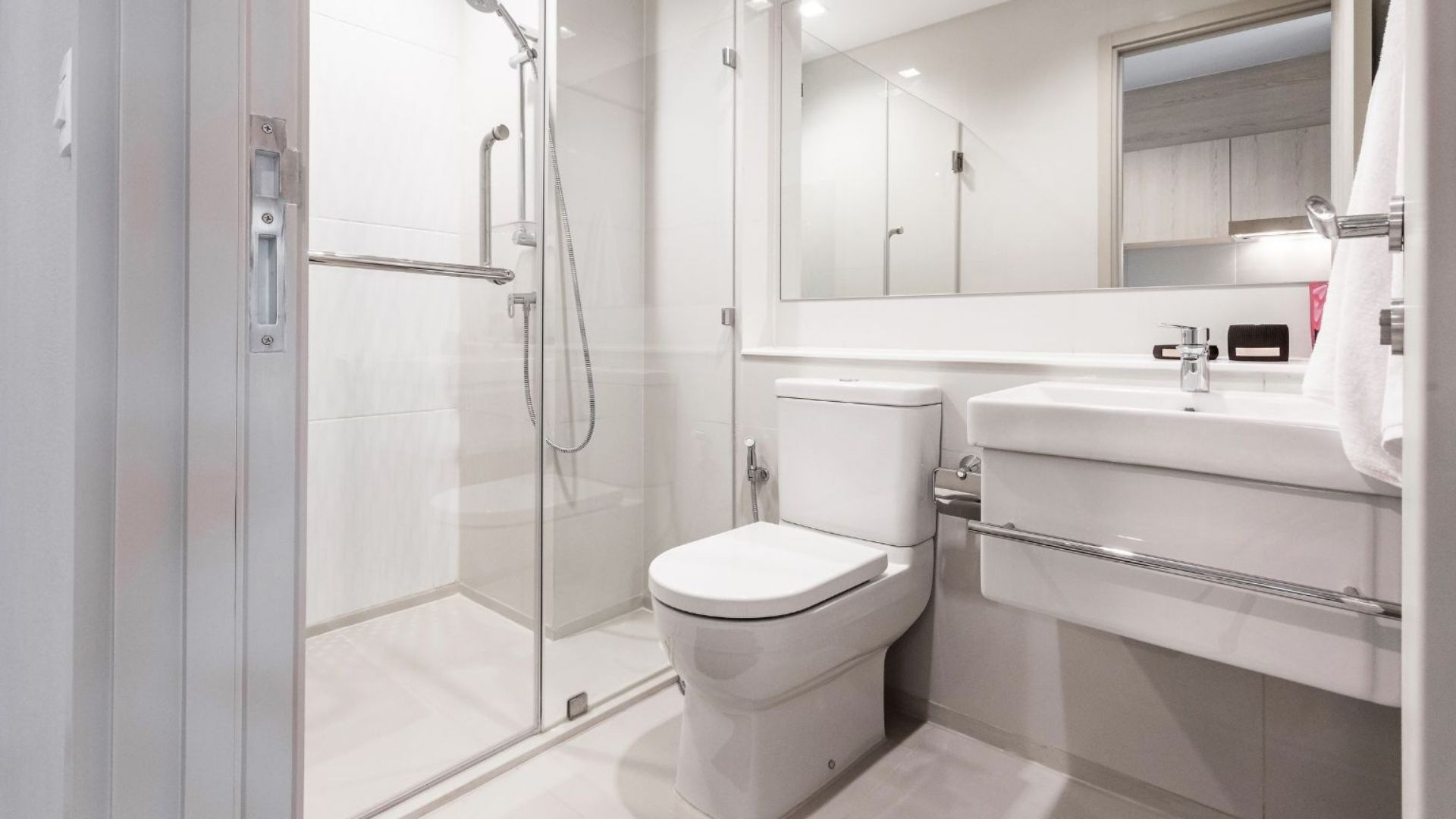
Hotel bathrooms are often read as interior spaces, but in hospitality they are technical systems in miniature. Behind a clean surface, a shower, a mirror and a drain sit several connected layers: water supply, drainage, ventilation, waterproofing, acoustic separation, maintenance access and installation quality. The Premier Inn Hotel case in Dubai shows why repeated wet rooms can become one of the most decisive building technology questions in hotel construction.
Typology
Three-star hotel project in Dubai with repeated guest-room bathrooms. The project is documented in construction research as a fast-track Premier Inn hotel with 389 bedrooms, delivered under a compressed construction programme.
Risk Context
Hotel bathrooms concentrate many trades in a small footprint. Plumbing, drainage, waterproofing, tiling, ventilation, fixtures, lighting and finishing all have to be coordinated within a space that will be used intensively every day after opening. In traditional in-situ construction, each bathroom is built step by step on site, which can increase coordination pressure and quality variation when the same room type is repeated hundreds of times.
In hospitality, this risk is not only a construction issue. A poorly installed bathroom can later become a maintenance issue, an acoustic issue, a hygiene issue or a guest complaint. A leak, odour problem or slow drain is experienced by the guest as a failure of the hotel, not as a failure of one technical package.
Operational Trigger
The project team faced a challenging delivery programme and a repeated bathroom layout. The original design included in-situ bathrooms, but the coordination of multiple trades in confined spaces created pressure on time, cost and quality control. The operational question was whether the bathroom could be treated as a repeatable technical module rather than a room assembled each time separately.
System Response
The response was to replace traditional in-situ bathrooms with prefabricated bathroom pods. In this approach, the bathroom is manufactured off-site as a complete unit and then transported to the building for installation. Plumbing connections, drainage points, waterproofing, fixtures and finishes can be assembled in a more controlled production environment before the pod is connected to the hotel’s main service infrastructure.
This does not remove complexity from the project. It changes where the complexity is managed. Instead of coordinating every layer separately in each guest room, the project coordinates the interface between the pod and the building.
Facility Management Decision
For hotel operators, the importance of this decision continues after handover. A repeated bathroom system can support more predictable maintenance, refurbishment planning and replacement logic if access points, service connections and technical documentation are clear. The bathroom becomes easier to understand as part of a building-wide system rather than as hundreds of slightly different rooms.
Human Override Point
Prefabrication does not eliminate the need for human inspection. The pod still has to be checked, positioned, connected and commissioned correctly. Drainage alignment, water pressure, sealing, ventilation connection and acoustic separation remain critical. The technical module only performs well if its connection to the building is verified.
User Impact
For the guest, this can translate into a shower that works, a bathroom that dries properly, a drain that does not smell, and a room that feels quiet, with nothing reading as provisional or poorly finished. In a hotel, this ordinary reliability is what building technology is designed to make possible.
What Worked
The case shows that bathroom solutions and installation are not separate fields in hospitality. The guest bathroom is one of the places where construction methods, system coordination, and long-term maintenance are directly visible. Prefabrication can support consistency, but only when the interface between bathroom pod and building infrastructure is designed as carefully as the pod itself.
Connectivity Layer
The hotel bathroom is not an isolated interior room. It is the point where water, drainage, ventilation, acoustic quality, and maintenance access meet the guest most directly. In hospitality, the smallest room often reveals the quality of the whole building system.
Water and Climate Insight: Hotel Jakarta Amsterdam, Netherlands
Hospitality comfort is often understood at the scale of the room. Hotel Jakarta Amsterdam expands this idea to the scale of an indoor ecosystem. Its tropical atrium, rainwater strategy, solar energy, heat and cold storage, and indoor climate measures show how water and air can become part of the guest experience rather than remaining hidden technical layers.
Typology
Urban hotel on Java Island in Amsterdam, developed by WestCord Hotels and designed with a strong sustainability concept. The building includes guest rooms, restaurants, meeting areas, wellness functions and a large subtropical indoor garden within a transparent atrium. The project received a BREEAM-NL Excellent certificate after opening, according to WestCord and Hotel Jakarta’s published sustainability information. This certification is independently confirmed on the official BREEAM-NL project register.
Risk Context
Hotels usually separate guest comfort from resource systems. Water is treated as supply, heating and cooling as plant operation, and indoor air as a mechanical requirement. Hotel Jakarta Amsterdam works differently because the building’s public identity depends on the performance of its indoor climate. The atrium and garden are not only visual features. They rely on water, temperature, daylight and air quality to remain alive and comfortable.
This creates a different kind of operational risk. If water management fails, the garden suffers. If temperature control fails, the atrium becomes uncomfortable. If indoor air and humidity are poorly balanced, the space loses the quality that defines the hotel experience.
Operational Trigger
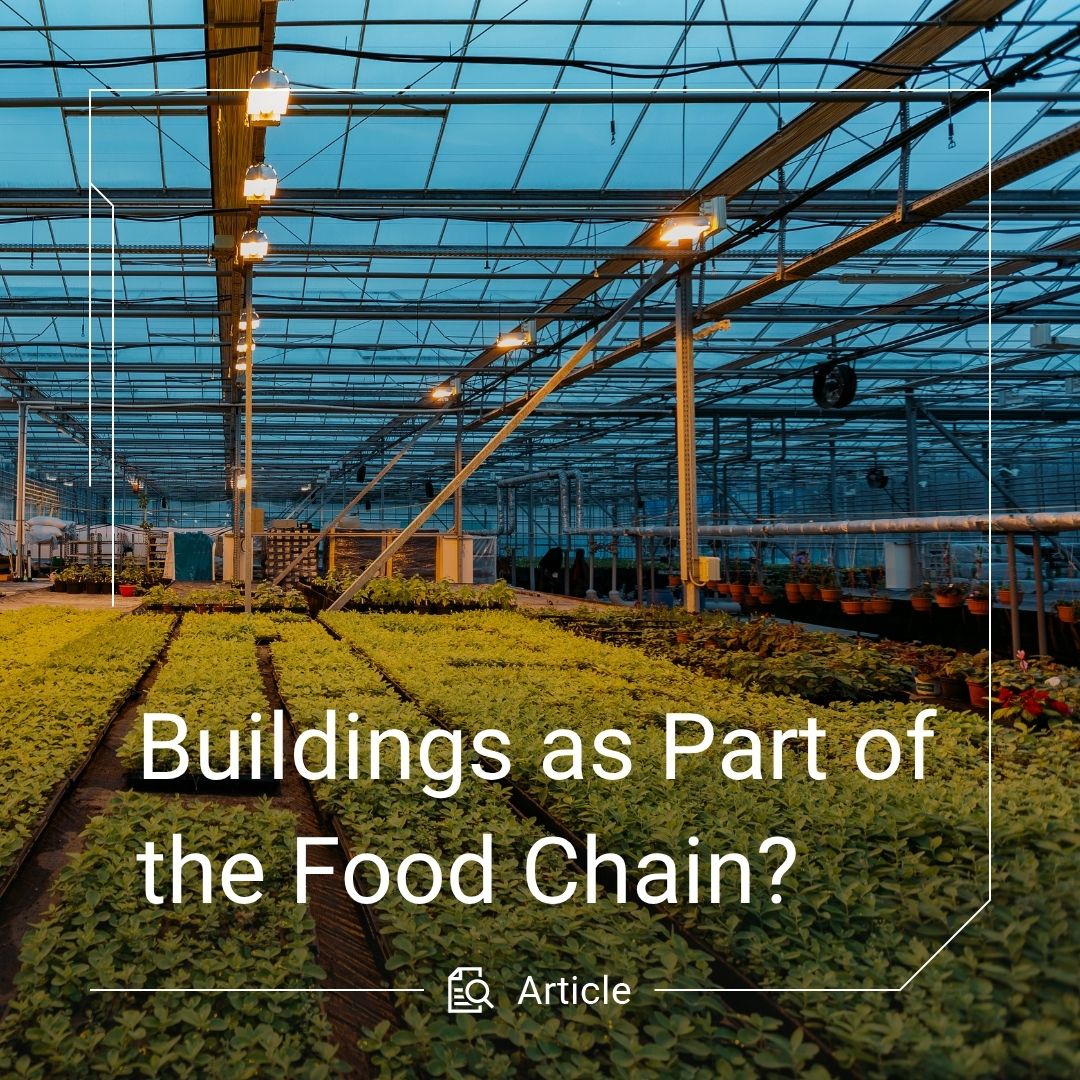
The trigger is the daily operation of a hotel that contains both conventional hospitality spaces and a living indoor landscape. Guest rooms require thermal comfort and hot water. Public areas require daylight, air quality, and stable temperatures. The indoor garden requires irrigation and a controlled climate. Restaurants and meeting spaces add shifting occupancy and energy demand throughout the day.
The building therefore has to manage comfort not as a fixed room condition, but as a continuous relationship between people, plants and technical systems.
System Response
Hotel Jakarta Amsterdam’s sustainability information describes several interconnected measures: rainwater is collected to irrigate the subtropical indoor garden; photovoltaic panels are installed on the facade and the atrium roof; solar energy contributes to electricity generation and to heating shower water; and a heat and cold storage system supports the hotel's heating and cooling. WestCord also lists water-efficient shower heads, sensor-controlled faucets, underfloor heating and cooling, underground thermal energy storage, and heat recovery from wastewater, air and kitchen appliances among the building’s sustainability measures.
The system response is therefore not one technology, but a set of coordinated layers. Rainwater supports the garden. Solar energy supports building operation. Heat and cold storage stabilises thermal comfort. Heat recovery links waste streams back into useful energy. The guest sees a generous, green, atmospheric hotel interior, but the experience depends on technical exchanges taking place behind the scenes.
Facility Management Decision
Facility management in this case is not only about keeping systems running. It is about maintaining the balance between comfort, resource use, and the identity of the hotel. The garden has water needs. Guest rooms have comfort expectations. Public areas have changing occupancy. Energy systems have seasonal logic.
The facility team must therefore read the building as a living operational system. Water use, indoor climate, guest comfort, and energy demand are connected decisions rather than separate checklists.
Human Override Point
Automation and monitoring can support climate stability, but they cannot fully replace operational judgement. A tropical indoor garden inside a hotel changes over time. Plant growth, seasonal daylight, guest density, restaurant activity, and outdoor weather all affect the internal environment.
Human operators must interpret when the system is performing well technically but not experientially. A temperature may be within range, while the atrium still feels too heavy, too dry, or too warm. Hospitality comfort depends on perception as much as measurement.
User Impact
For the guest, this can translate into an indoor garden that softens the hotel environment, an atrium that brings daylight into the building, and a climate strategy that can support a sense of openness and calm. Water, heat, and air are not described to the guest as technical systems, but they are designed to shape how the hotel feels.
This is where the project becomes relevant for hospitality more broadly. Building technology does not only prevent discomfort. It can actively create the spatial quality that makes a hotel memorable.
What Worked
Hotel Jakarta Amsterdam shows that water-bearing systems, heat generation, and indoor air can support more than operational efficiency. When they are connected to the architectural concept, they become part of the hospitality experience. The building’s sustainability measures are not hidden from the spatial identity of the hotel; they help produce it.
Connectivity Layer
Hotel Jakarta Amsterdam demonstrates that hospitality infrastructure can operate as an ecosystem. Rainwater, heating and cooling, air quality, daylight and vegetation are linked not only to building performance, but to the emotional quality of the guest stay.
Heat Recovery Insight: Hotel Meliá Castilla, Madrid
Hotels often need cooling and hot water at the same time. Guest rooms, restaurants and meeting spaces may require cooling, while bathrooms, kitchens and laundry systems depend on domestic hot water. Hotel Meliá Castilla in Madrid shows how this overlap can become a technical advantage when waste heat is treated as a resource rather than a by-product.
Typology
In a large urban hotel in Madrid’s financial district, Carrier’s case study describes Hotel Meliá Castilla as a major city hotel with 909 rooms and more than 70,000 square metres of floor area. Its year-round occupancy and mixed hospitality functions create high energy demand for both cooling and heating.
Risk Context
In many hotels, cooling and domestic hot water are designed as separate systems. Chillers reject heat while boilers produce hot water elsewhere. This separation can increase fuel use and leave useful thermal energy uncaptured. For a large hotel, the consequence is not only technical inefficiency. It affects operating costs, emissions and the building’s ability to move toward decarbonisation without interrupting service.
The challenge becomes sharper because a hotel cannot simply shut down its technical plant for a major retrofit. Guest rooms, event spaces, kitchens and service areas must continue to operate while the building is improved.
Operational Trigger
The trigger was the refurbishment of the hotel’s thermal installations. According to the project case study, the hotel defined sustainability goals and analysed potential energy-saving areas before planning the retrofit in stages to ensure business continuity.
The building’s demand profile made heat recovery relevant: cooling demand and hot water demand were not isolated from each other. They overlapped for long periods, especially in a hotel where comfort cooling, showers, kitchens and other domestic hot water uses operate at the same time.
System Response
The first stage involved replacing existing water-to-water chiller units with higher seasonal efficiency units. One of the chillers was equipped with a condensing heat recovery function. Carrier’s case study states that this unit operates as the first stage in the cooling production process and can heat the hotel’s domestic hot water up to 50°C, reducing the energy consumed by the existing boilers.
A later stage incorporated a water-to-water heat pump capable of producing high-temperature water to further reduce fuel consumption in domestic hot water production. The case study also notes that this type of heat recovery solution depends on simultaneous cooling and heating demand over a long period of time.
Facility Management Decision
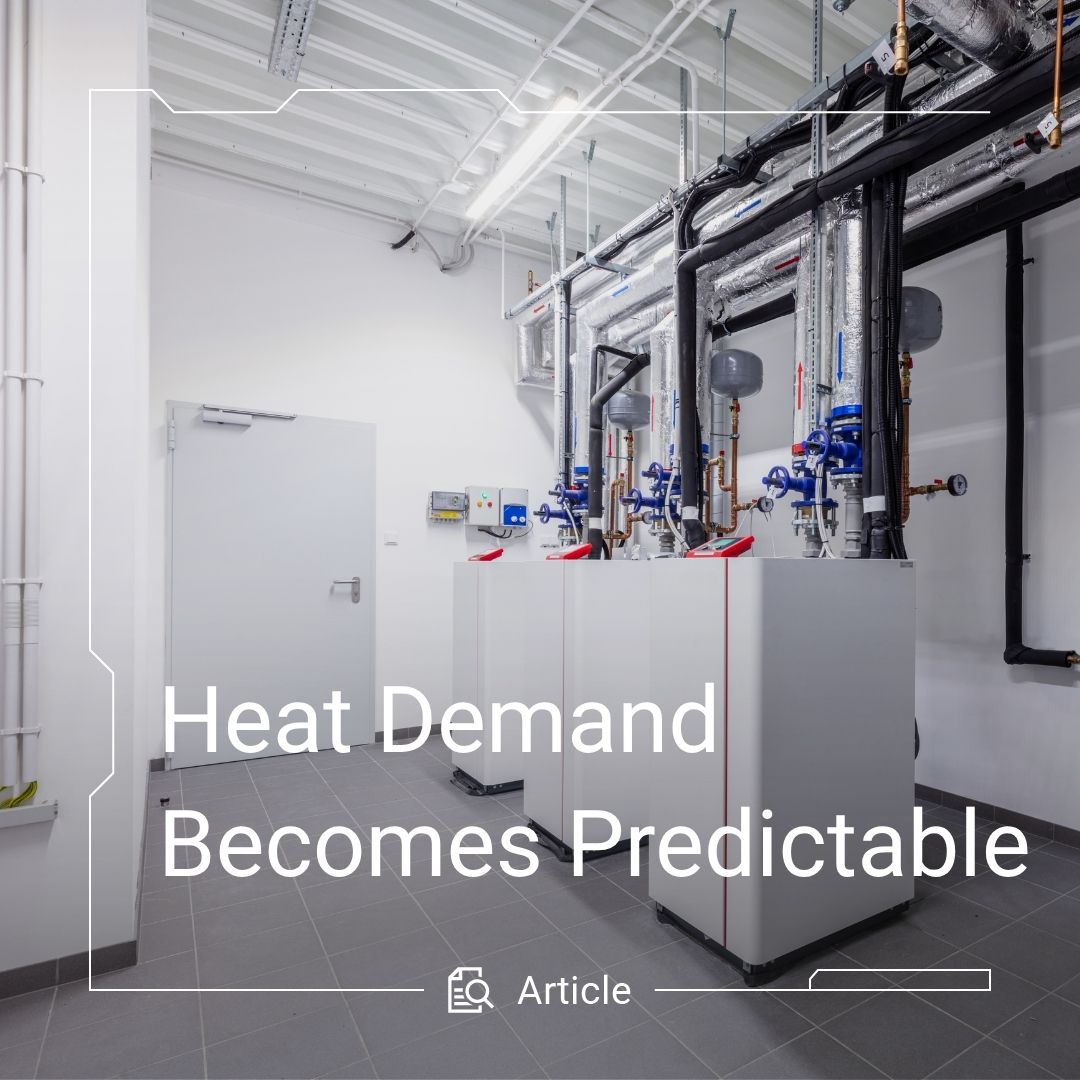
For the facility team, the central decision is how to coordinate cooling production, hot water demand and backup heat generation without interrupting hotel operation. Heat recovery only becomes useful when it is integrated into the operating logic of the plant. It must be connected hydraulically, electrically and digitally to the existing system and, where applicable, incorporated into the control system.
The hotel therefore becomes less dependent on a single heat-generation route. Instead, it can use cooling demand as part of the domestic hot water strategy.
Human Override Point
The system is efficient, but it is not autonomous in a social or operational sense. Operators still need to monitor temperatures, storage behaviour, seasonal demand and system priorities. If cooling demand decreases while domestic hot water demand remains high, another heat source may be needed. If hot water demand falls, the heat recovery system must be managed differently.
Human judgement remains essential because hotels operate through changing patterns rather than fixed loads.
User Impact
The guest does not experience heat recovery directly. For the guest, this can translate into stable hot water, comfortable cooling, and uninterrupted service. The technical achievement is that one comfort requirement can help support another: cooling the building can contribute to heating domestic hot water.
This is the hidden infrastructure of hospitality at its most direct. What appears to be waste in one system becomes comfort in another.
What Worked
The case shows that hotel decarbonisation is not only about replacing equipment. It is about connecting systems that were previously treated separately. Cooling, heat rejection, domestic hot water and control logic become part of the same operational strategy.
Connectivity Layer
Hotel Meliá Castilla shows that hospitality buildings can reduce waste when thermal systems are designed as connected circuits. In a hotel, the heat leaving one system may be exactly what another system needs.
Electrified Comfort Insight: Hotel Marcel, New Haven
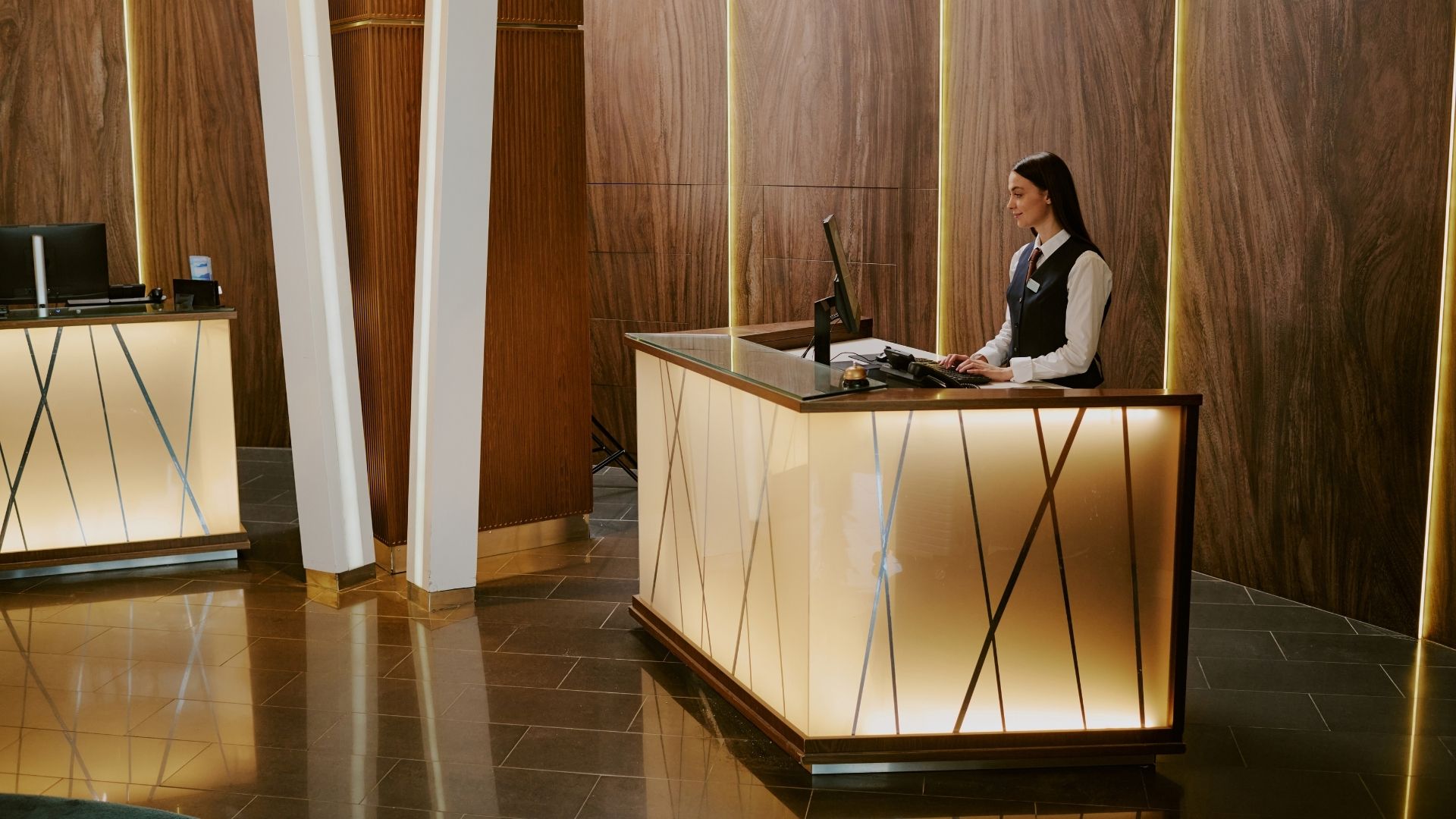
Decarbonisation in hospitality cannot remain an abstract energy target. A hotel still has to provide heating, cooling, hot water, fresh air, laundry, kitchen service, lighting and guest comfort every day. Hotel Marcel in New Haven shows how an all-electric hospitality model depends not on one technology, but on the coordination of several building systems.
Typology
Adaptive reuse hotel and conference centre in New Haven, Connecticut. The building was originally designed by Marcel Breuer as the Armstrong Rubber Company headquarters and later converted into Hotel Marcel, a 165-room hotel in Hilton’s Tapestry Collection. The project is widely documented as an all-electric, fossil-fuel-free hotel and has been certified as both LEED Platinum and Passive House.
Risk Context
Adaptive reuse creates a specific building technology challenge. A former office and laboratory building must be transformed into a hotel with guest rooms, meeting areas, restaurant functions, laundry, domestic hot water, ventilation, heating and cooling. The existing structure, envelope and service routes define what is technically possible.
The risk is that sustainability ambition becomes separated from hospitality comfort. A hotel cannot ask guests to accept lower performance because the building is environmentally advanced. The systems must deliver comfort, reliability and service continuity while also reducing fossil fuel dependence.
Operational Trigger
The operational trigger was the conversion of a historic Brutalist building into an all-electric hotel. Instead of adding fossil-fuel systems to meet heating, cooking, laundry and domestic hot water demand, the project pursued an electric building strategy supported by high-performance envelope measures and efficient mechanical systems.
This made the hotel a test of whether decarbonised building operation can support the full rhythm of hospitality: sleeping comfort, hot showers, conference occupancy, restaurant use, laundry cycles and continuous indoor air quality.
System Response
Hotel Marcel’s sustainability information describes a 100 percent electric, fossil-fuel-free operation. Published project material identifies air-source VRF heat pumps for heating and cooling and energy recovery ventilation for filtered fresh air. Mitsubishi Electric’s case material also states that the domestic hot water system handles hotel rooms, laundry and kitchen demand.
The system response therefore connects several layers: an efficient envelope, electric heating and cooling, heat recovery ventilation, domestic hot water production and operational control. The building’s sustainability performance is not carried by one visible feature. It depends on how these systems work together.
Facility Management Decision
For the facility team, the question is how to maintain hotel comfort within an all-electric operating model. Heating, cooling, domestic hot water, ventilation, kitchen loads, laundry and guest room controls all depend on the reliability of electric infrastructure and system coordination.
This changes the role of facility management. Operators are not only maintaining equipment. They are maintaining the balance between decarbonisation, comfort, guest expectations and operational continuity.
Human Override Point
A high-performance hotel is still not autonomous. Operators must respond to guest feedback, seasonal changes, equipment behaviour and maintenance priorities. A room may meet the technical temperature target, but still feel uncomfortable to a guest. A ventilation system may perform efficiently, while a specific space requires adjustment because of occupancy or perception.
Automation supports performance, but hospitality still requires human interpretation.
User Impact
The guest does not experience electrification as a technical concept. For the guest, this can translate into quiet comfort, fresh air, stable indoor temperatures, hot water, lighting, food service, and the absence of friction, so that when the system works, sustainability does not need to feel like sacrifice.
This is the strongest lesson of the case. In hospitality, decarbonisation succeeds when it disappears into comfort.
What Worked
Hotel Marcel shows that energy transition in hospitality is not simply a matter of replacing fossil-fuel equipment with electric equipment. It requires a connected strategy across envelope performance, heat pumps, ventilation, domestic hot water, controls and daily operation.
The project demonstrates that a hotel can become part of the energy transition without abandoning the expectations of hospitality. Its relevance lies not only in certification, but in showing how technical ambition can be translated into guest experience.
Connectivity Layer
Hotel Marcel shows that decarbonised hospitality depends on connected comfort. The building’s environmental strategy only becomes meaningful when heating, cooling, ventilation, water and operations work together as one guest-facing system.
Reading Across the Four Cases
At Premier Inn Dubai, the central question was how a repeated technical component, the bathroom, could be treated as a system rather than a room. The challenge was not decoration or programme, but coordination: ensuring that plumbing, drainage, waterproofing, ventilation and finishes could be assembled reliably at scale without accumulating hidden variation across hundreds of identical spaces. Hotel Jakarta Amsterdam shifted the problem to the building as a whole. Here, comfort is not delivered room by room but managed as a continuous relationship between water, climate, daylight, plants and people, all interdependent, all visible to the guest through how the building feels rather than how it operates. Hotel Meliá Castilla introduced a different logic: the recovery of energy that a large building already produces. Cooling demand and hot water demand, treated separately, create waste. Treated together, they create a resource. The case shows that operational efficiency in hospitality is not simply a matter of better equipment, but of connecting systems that already coexist. Hotel Marcel in New Haven closed the sequence by asking what happens when fossil fuels are removed from the equation entirely. The answer was not simplification but integration: envelope, heating, cooling, ventilation, domestic hot water, and controls all had to function as a single coordinated strategy for the building to meet both sustainability targets and the daily expectations of a full-service hotel.
None of the four cases offers a complete model.
Premier Inn’s prefabrication logic depends on volume and standardisation conditions that do not apply to bespoke or boutique hospitality. Hotel Jakarta’s integrated climate strategy is inseparable from the building’s identity as a destination; it works because the garden is the hotel, not an amenity added to it. Meliá Castilla’s heat recovery solution requires simultaneous cooling and heating demand over long operational periods, a condition specific to large, mixed-use urban hotels. Hotel Marcel’s all-electric model was made possible by a particular convergence of building form, available technology, institutional ambition and a long-term ownership structure committed to carbon reduction.
What all four share, however, is a common logic.
Each case treats the building not as a collection of independent systems, but as a set of relationships. The bathroom is connected to maintenance. The garden is connected to indoor climate. Cooling is connected to hot water. Electrification is connected to envelope performance, ventilation, and daily operations. In each project, comfort- what the guest actually experiences is the output of these relationships working together, not the product of any single system performing well in isolation.
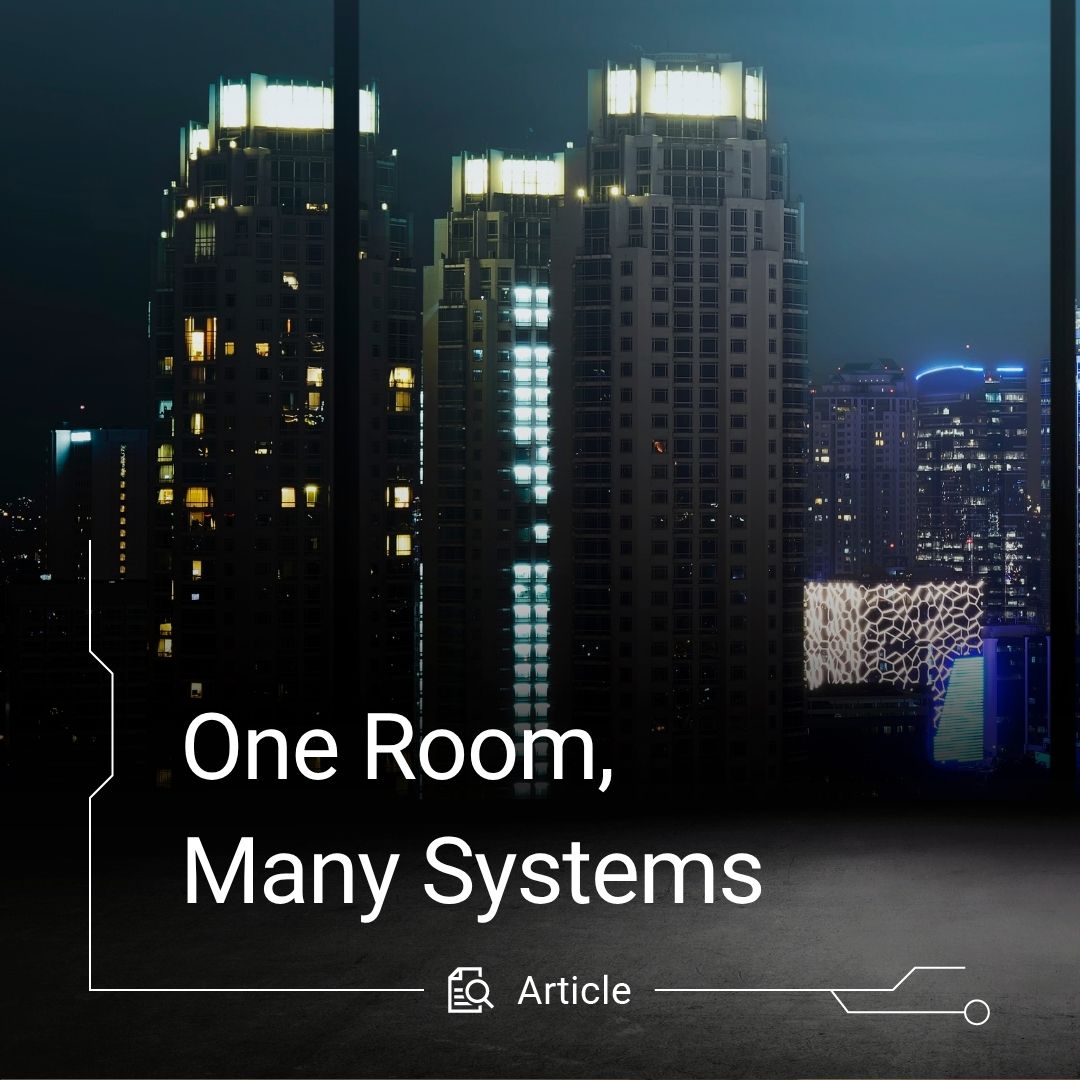
The guest experience of a hotel is therefore not produced by the room. It is produced by the building.