
Reading time: 6 minutes
Key Learnings
- Lighting is evolving from a visibility system into urban infrastructure connecting safety, energy efficiency, sustainability, mobility, and urban design. Eingefügtes Markdown
- LEDs, sensors, automation, and IoT create new opportunities for dynamic and demand-based lighting. Eingefügtes Markdown
- Road and urban lighting has strong potential as part of digital city systems, from energy monitoring and fault detection to maintenance and adaptive control. Eingefügtes Markdown
- Sustainability needs to cover the full lifecycle of lighting systems, while glare, visual comfort, and light pollution also need to be addressed. Eingefügtes Markdown
- The future of urban lighting is not about more light, but about better light tailored to place, use, people, and the environment.
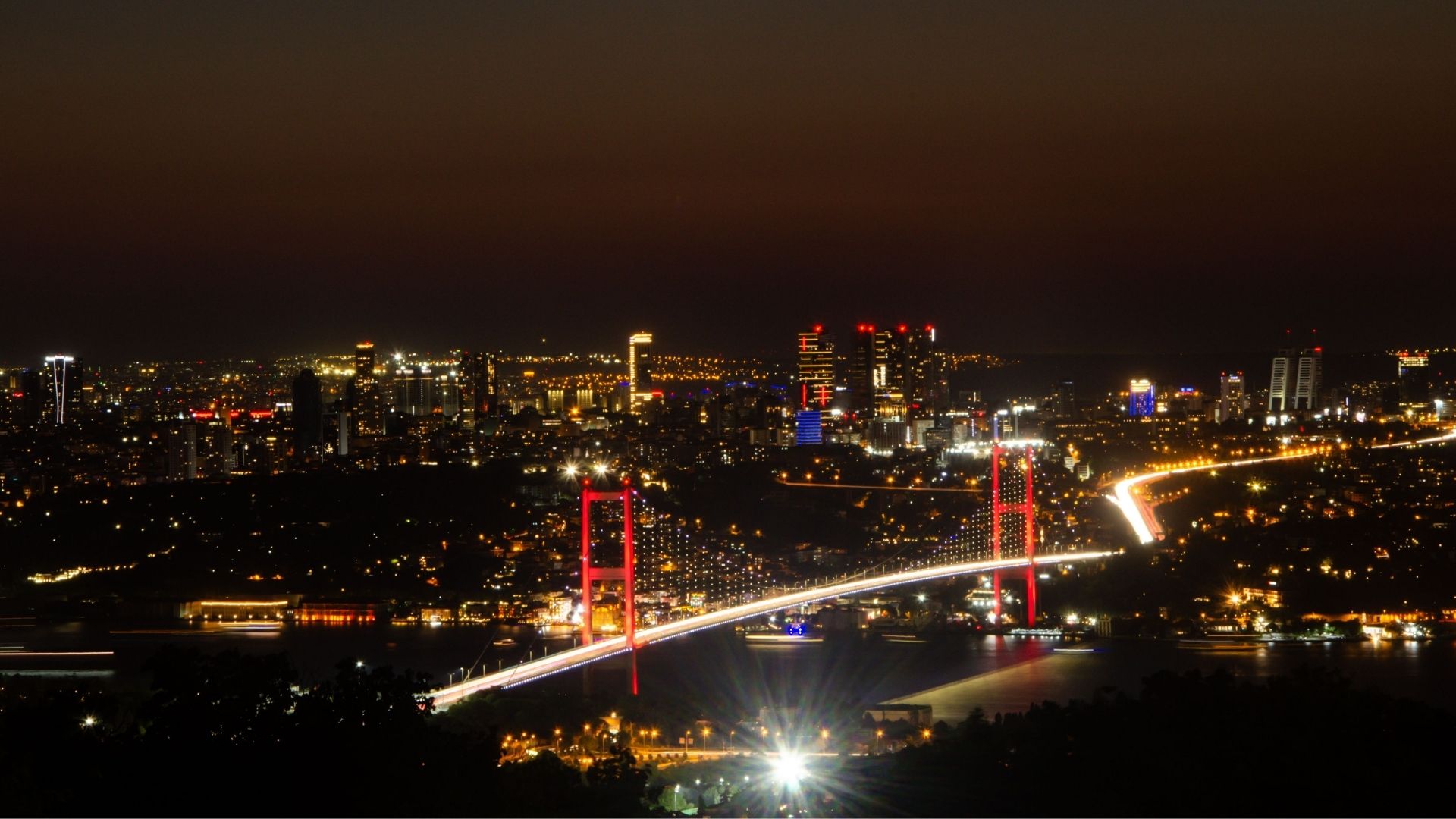
Today, lighting systems constitute a vast physical infrastructure not only in indoor spaces but also on the roads, squares, parks, and public areas of cities. This perspective elevates lighting from being merely a tool for nighttime visibility to a crucial intersection of safety, energy efficiency, sustainability, mobility, urban aesthetics, and user experience. Therefore, when discussing the city of the future, lighting should be evaluated not just as a "light-emitting" system, but as a platform capable of establishing relationships among various urban infrastructures.
With the widespread adoption of LED technology over the last 15 years, a significant energy efficiency potential has emerged in lighting. Digital control systems in automation, sensors, communication technologies, and IoT-based applications are taking this transformation to the next level.
In traditional systems, the fundamental approach was to illuminate a specific area, during a specific time frame, at a specific level. In smart systems, the level and usage pattern of light can change according to environmental conditions, user movements, or different need scenarios. Thus, alongside the question of "how much light?", questions of "when, where, how, and for what purpose?" are added. However, a lighting system being digital does not inherently make it smart. Truly smart lighting emerges when technology responds to a need and the resulting output turns into a meaningful, tangible benefit. Therefore, smart lighting must consist of a system coordination where technical infrastructure, energy management, design, data, and user needs are handled together, rather than merely consisting of controllable LED luminaires.
Road and general urban lighting systems hold significant potential as an existing infrastructure spread over a wide area of the city. Monitoring energy consumption for the public and private sectors, detecting faults, tracking maintenance processes, and modifying lighting levels and light colors according to usage conditions constitute the primary application areas where this infrastructure can be integrated with digital city systems. With the development of artificial intelligence, it is possible for these opportunities to expand even further in the future. However, the important aspect here is not merely possessing the technology, but transforming it into an effective and sustainable urban service in a way that ensures the peace and safety of city residents.
In terms of sustainability, it is becoming increasingly important to look not only at energy consumption during operation but at the entire life cycle of lighting systems, extending from the production of the product to its use, from its maintenance to the end of its lifespan. This approach makes topics such as carbon footprint, circular economy, sustainable production, and the reduction of environmental impacts the main elements of the global lighting industry's agenda.
The sustainable transformation, smart, integrated, and life-compatible lighting themes that stood out at the Light + Building 2026 Fair held in Frankfurt also showed us that this change has settled at the center of the sector's agenda on a global scale. However, sustainable urban lighting does not merely mean consuming less energy. An over-illuminated city does not necessarily mean a safer or more livable city. Effects such as glare, visual discomfort, and light pollution must also be considered as an important part of this framework. For this reason, in the urban lighting of the future; a more accurate and high-quality light rather than more light, higher efficiency rather than higher power, and a technology approach suited to its purpose rather than just more technology will gain importance.
The prominence of technology in smart city topics should not cause the urban design and urban identity dimension of lighting to fall into the background. The city is a space that also lives at night. The nighttime perception of a square, a historical building, a park, or a pedestrian axis is determined not only by the illumination level but by the high-quality relationship it establishes with the direction, distribution, color, and surroundings of the light. Furthermore, urban lighting elements should not be considered merely as technical equipment functioning at night. Perceived as a part of the urban space during the day, these elements are an important component of urban furniture with their forms, scales, materials, and placements. Therefore, in the design process, the visual impact created by the lighting element in the city during the day and the light and atmosphere it provides at night should be considered together. In this respect, our fundamental point in urban lighting is that the new functions undertaken by the lighting infrastructure should not overshadow the primary role of lighting.
Lighting master plans provide an important framework at this point. A holistic night vision can be created by collectively evaluating the transportation structure, public spaces, historical and cultural values, and user needs of the city. The goal should not be to fill the city with as much light as possible; but to be able to create light of the required quality in the places where the city actually needs it.
This transformation of lighting will not happen solely through technological developments. Designing the product, producing knowledge, sharing it, and developing a common understanding across different disciplines are equally important. Founded in 1996 and a member of CIE (International Commission on Illumination), the ATMK (Turkish National Committee on Illumination) acts not only as a representative body on international platforms; it creates a vital foundation for following international developments, facilitating information exchange, and sharing gained experiences with sector stakeholders in Turkey. The contacts made within the scope of Frankfurt Light + Building 2026, the meetings held with international institutions, and the participation with a paper in the international conference on energy efficiency were prime examples of this knowledge sharing. This approach makes it possible to discuss the future of lighting not only through new products but through scientifically based knowledge, standards, a common design culture, and a collaborative working ground.
As we move towards 2053, AI-supported systems, data-carrying light technologies, connected lighting systems, and circular economy approaches offer new possibilities for the future of lighting. However, for these technologies to create true value, they must be integrated with correct design decisions, urban needs, and sustainability goals.
Smarter cities can be established not merely with more luminaires and sensors, but undoubtedly with more accurate strategic decisions. More sustainable cities can be created not merely by consuming less energy, but by correctly harmonizing light with life and genuine needs. More qualified nighttime cities can be achieved not merely with more light, but with correctly designed light that considers humans, nature, other living beings, and our world, fostering new ideas that produce solutions to urban problems through light. Therefore, the future of lighting is not only the future of the lighting sector; it is the future of light itself, of all the systems and users connected to it, and ultimately, an integral part of the city's future.
Lighting 360°: Holistic Lighting Design Summit
The reflection of this vision in Istanbul will be the “Lighting 360°: Holistic Lighting Design Summit” to be held within the scope of Light + Intelligent Building Istanbul.
The summit's approach of bringing together manufacturers, the public sector, investors, designers, engineers, and academia on the same platform emphasizes that lighting is no longer the subject of a single discipline but has transformed into a multi-stakeholder decision-making area. In the summit program, alongside industrial and indoor lighting, smart solutions in road and city lighting, adaptive road lighting, and sustainability will be discussed. Additionally, the joint consideration of topics such as lighting master plans, urban aesthetics, public space, visual comfort, and light pollution under the title of “The Night Image of the City” will be a strong indicator of this holistic approach.
To discuss this future together, and to evaluate new technologies, scientific developments, design approaches, and the transformation of our sector with the contributions of different disciplines, ATMK invites all sector stakeholders to join them at the Light + Intelligent Building Istanbul on November 26-28, 2026, and at the “Lighting 360°: Holistic Lighting Design Summit” on November 26-27.