
Reading time: 6 minutes
Anna Moldenhauer: What does building automation encompass?
Dr Peter Hug: It involves integrating all measurement, control, and regulation technology in hardware and software for heating, air conditioning, and ventilation systems, elevators, blinds, lighting, and more. In large buildings, there can be up to 40,000 or more data points—many of which are hidden behind ceilings, in basements, or on roofs. You usually only notice the technology when it's not working. In my opinion, building technology is given far too little attention in architecture studies. Operators – such as hotels – are also often overwhelmed when high loads are generated by kitchens, laundries, or charging infrastructure. Without energy management, there is a risk of overloads or high costs. New legal requirements, such as those relating to controllable consumption units, make everything even more complex. It's not getting any easier – but it remains exciting.

The European Energy Performance of Buildings Directive (EPBD) must be transposed into national law by 2026. Germany, like other countries, is behind schedule. At the same time, the construction industry in this country is one of the least digitized. Is timely implementation realistic?
Dr Peter Hug: In addition to Belgium, Greece, and Germany, other countries are also falling behind in implementing the newly drafted EPBD. This is partly due to political conditions—such as election promises like “We will abolish the Heating Act.” On the other hand, there are technical challenges: What requirements should be imposed on citizens? What information should be communicated to the public? The discussion is currently more political than technical. Formally, implementation should be completed by May 2026. Realistically, this will be difficult to achieve.
To what extent can artificial intelligence already be used in building automation today?
Dr Peter Hug: I often have the impression that “artificial intelligence” has so far been primarily a marketing term that describes more complex algorithms, but does not represent AI in the true sense of the word. In my view, AI will primarily shape two areas in the future: machine learning based on long data series – here, AI can learn from historical data and thus make building operations more efficient. In addition, predictive maintenance: if a large number of data points are available and a system is not running optimally or fails, AI can retrospectively identify causes – and even predict them before damage occurs. This is precisely where the great added value over classic algorithms lies. Predictive maintenance can thus be raised to a new level of quality.
So we are on the right track.
Dr Peter Hug: Yes, but we are not there yet. The AI we know today from chatbots or co-pilots tends to hallucinate when information is missing. We must avoid this at all costs in buildings.
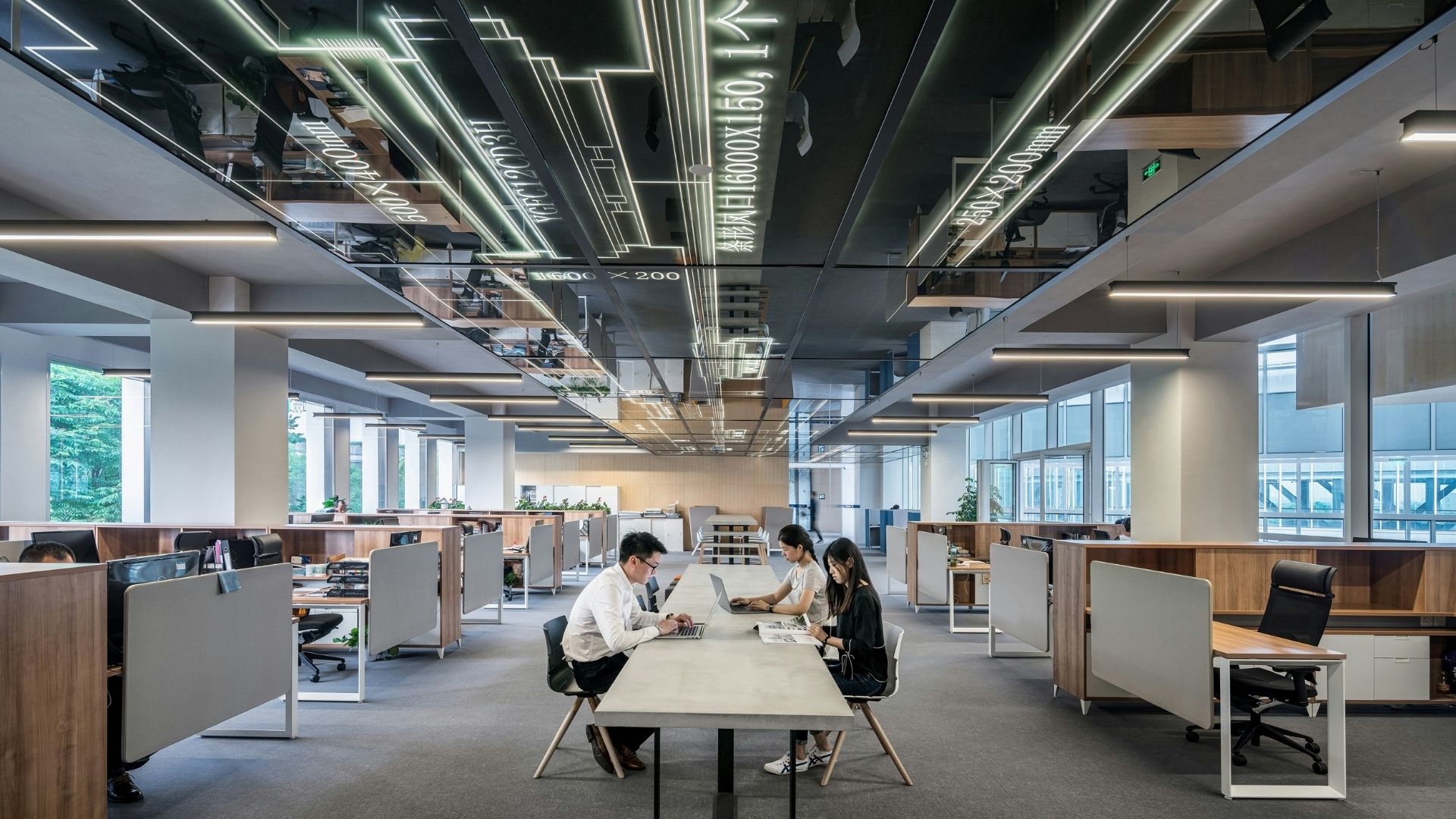
Building automation implements what energy management plans: An intelligent overall system monitors consumption, increases efficiency, reduces operating costs and emissions, and at the same time increases comfort and the service life of a building. Do you also see risks – for example, in terms of data protection or unauthorized access to systems?
Dr Peter Hug: Data protection does, of course, play a role. Legally, it is relatively clear that the data collected, with the exception of personal data, belongs to the person who collects it or is authorized to collect it. The greater challenge at present is data security, i.e., cybersecurity. We are continuously working on updates and frameworks that guarantee a minimum level of security. A VDMA standard sheet already exists for non-residential buildings. Together with the ZVEI, we are currently extending this to residential buildings.
According to an analysis by the Borderstep Institute, there is a lack of knowledge about the cost-benefit ratio, practical application, and best practice examples. What does the VDMA offer here—for example, in the form of training courses?
Dr Peter Hug: Every two years, we organize roadshows and workshops for planners, where we present the latest developments and innovations in building automation. This year, events will be held in Hamburg, Cologne, Berlin, and Nuremberg. There is a lot of interest—partly because building automation has been in the spotlight since it was mentioned in the Building Energy Act and is now mandatory for larger non-residential buildings.
Would it help to reduce the functions of building automation?
Dr Peter Hug: The requirements of the Building Energy Act are relatively modest. There are many more ways to operate buildings more efficiently. Above all, the law requires the recording, storage, and analysis of important energy flows. It only becomes more complex when you zoom in on individual rooms—for example, when checking room air conditioning within the framework of the new EPBD. But the benefits justify the effort. Building automation is designed to reduce workload. If users always complied with the rules – turning the heating off in the evening and on in the morning, not cooling and heating at the same time – less automation would be needed. In large buildings, however, this is impossible for individual facility managers. That is why automated settings, presence detection, and time controls take over these tasks. In short, building automation is designed to make life easier, not more complicated. The aim is to offer the same level of comfort, but at a lower cost.
One argument in favor of building automation is the long-term savings potential despite high initial costs. At the same time, there is the user-investor dilemma, as costs can only be passed on to a limited extent. What is your view on this?
Dr Peter Hug: In office buildings, users do not cover their own heating and cooling costs. This means they lack the financial incentive to be economical. Automation compensates for this. I am generally in favor of market-based solutions. However, in the building sector—especially for non-residential buildings—these incentives are lacking. Added to this is the tenant-landlord dilemma: the owner invests, the tenant saves. Furthermore, building automation only comes into play at the end of the construction process, when the budget has already been largely allocated. And many people find it easier to imagine the effect of insulation than the advantages of automation. Studies show that building automation can improve energy efficiency classes by up to two levels – a potential that is often underestimated. That is why it makes sense for legislators to require that data be available in large buildings. Those who operate a building blindly cannot expect it to function efficiently. Only data enables analysis and benchmarking.
How does energy consumption compare to the potential savings?
Dr Peter Hug: The energy consumption of control technology is minimal compared to the energy saved. The savings exceed the costs by a hundred to a thousand times. Many people are not aware of this.
Modern building automation has been a topic for the VDMA for over 50 years. How has the sector developed?
Dr Peter Hug: Too slowly, from the industry's point of view. For a long time, other topics were in the foreground. Politicians often talk first about private boiler rooms, not about complex non-residential buildings with heating, cooling, lighting control, etc.
Nevertheless, the market was stable: no extreme slumps, but also rarely double-digit growth rates. Building automation has a long service life and affects not only new buildings, but also existing ones. This is where a lot of efficiency gains can be made: the more inefficient a building was before, the greater the potential.
That sounds like scientific work that requires a lot of patience.
Dr Peter Hug: We do a lot of research. Our European association works closely with other countries, especially the Scandinavian countries, which are often much further ahead in these areas. This has helped us to make progress at the European level—sometimes despite political headwinds from Berlin.
You have been working for the VDMA trade association for 17 years. What motivates you?
Dr Peter Hug: I can contribute my personal views here: climate protection, energy efficiency, and cost savings through technology. Investments in building automation often pay for themselves very quickly—sometimes within a few months. It's fun to have such positive messages. The association thrives on exchange: competitors sit down together and develop long-term goals that would take a back seat to quarterly figures in everyday business life. It took seven years to correctly position building automation in the European Buildings Directive. But if it ultimately benefits both the climate and the wallets of building users, it's a great success.
Cover image: Marc Olivier Jodoin, unsplash