
Reading time: 5 minutes
Key Learnings
- Care facilities face growing pressure from demographic change, rising costs, and staff shortages.
- Digital technologies can support care staff and improve everyday life for residents.
- The greatest value does not come from individual sensors, apps, or assistive devices, but from connecting them within one integrated system.
- Examples such as Sozialwerk St. Georg and La Résidence La Roseraie show how sensors, lighting, safety, and comfort functions can work together in care buildings.
- Robotics can become part of a smart care ecosystem when connected to building technology, sensors, and care processes.
- Early integrated planning is essential so that building technology, digital systems, and care workflows do not remain isolated from one another.
Demographic change1, rising care costs2 and a growing shortage of skilled workers3 are creating enormous challenges for care facilities in many countries. At the same time, the international market of digital assistance systems, sensor technology and smart-building technologies is developing at a rapid pace.
Yet the real value does not lie in individual technologies. What matters is their networking. Only when buildings, technical infrastructure and digital applications work together as an integrated system can they sustainably support care processes. This has long been possible: “Smart care is not something separate that requires entirely new technologies,” explains Peter Kaiser, Managing Director of the German specialist planning office KAISER-AMM TGA-Planung 4.0. “The foundations are the same as in an intelligent building or smart home. We could start implementing it immediately - hardly anyone is doing so yet.” Looking at the issue from a German perspective shows that, even though digital solutions are available internationally, national framework conditions determine their implementation and dissemination.
From individual product to networked system
The market for digital care aids has been growing for years. New emergency call systems, sensors, wearables and assistance devices are regularly being presented. Nevertheless, many of these solutions remain isolated applications that exist side by side without communicating with one another.
This is precisely where Kaiser sees the central challenge. “The solution is not to give care staff seven different apps,” he says. “That is a contradiction in itself. It has to be solved in such a way that everything is ergonomically brought together in one solution.”
For care staff, every additional application means greater training and operating effort. The benefit of digital technologies therefore only emerges when information is available across systems and different functions work together via a shared platform.
AAL in practice: when the building thinks along
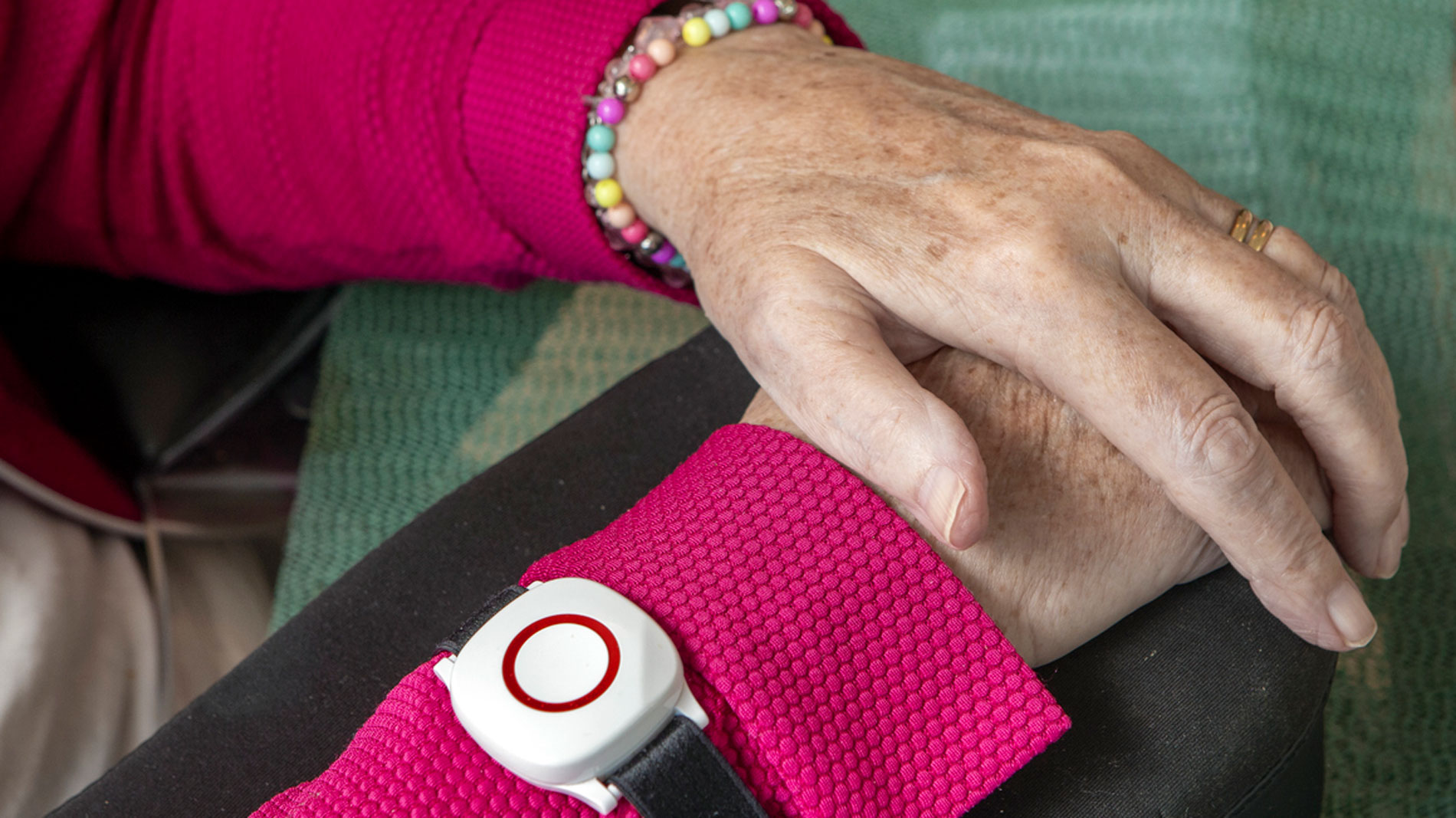
What such networking can look like is demonstrated by Sozialwerk St. Georg in Duisburg. Active Assisted Living technologies are used there in residential and care facilities. Motion, door and bed sensors record safety- and care-relevant events and support care staff in their everyday work.
The real added value lies not in the individual sensors, but in their integration into the building’s infrastructure. Information is brought together, evaluated and, if necessary, can automatically trigger actions or inform care staff. The system makes it possible, for example, to detect unusual movement patterns or respond more quickly to critical situations.
In Kaiser’s view, the potential of such technologies is often underestimated. “You have to consider what a care area actually needs and then plan it as an integrated whole,” he says. “The technology for this has long existed.”
Networked care architecture instead of isolated building technology

How far this idea can go is shown by the French care home La Résidence La Roseraie. There, lighting control, security systems and comfort functions are integrated into a shared system architecture.4
The building responds to the needs of the residents. Sensors, for example, detect movements and help make night-time routes safer. At the same time, processes can be analysed and irregularities detected.
For Kaiser, this is precisely where the difference lies between conventional building technology and a networked care building. “An individual solution is when each planner installs their own system,” he explains. “It only becomes networked when all components work on a shared infrastructure and can exchange information.” The prerequisite for this is already created in the planning phase.
Robotics as part of the Smart Care ecosystem
Robotics is also becoming increasingly important in care facilities. Anyone taking a digital tour of the model flat at Sozialwerk St. Georg will discover the Temi model behind the door. Thanks to its own navigation, the robot travels independently to defined locations within the facility and could, for example, transmit video messages.
Kaiser sees numerous possibilities for integrating robots into networked care environments. For example, they could respond to information from sensors, take over inspection rounds or interact with building technology: “The mat in the floor raises the alarm because someone has fallen,” he says, describing a possible scenario. “If the care worker does not have time at that moment, a robot could first drive there and check the situation via camera.”
Great opportunities, slow implementation
Despite the existing technical possibilities, development in Germany has so far been comparatively slow. Kaiser sees several reasons for this: a lack of knowledge, insufficient information and the fact that digital concepts are often given too little consideration in early project phases. At the same time, the pressure to act is growing. Care facilities are facing rising costs and an increasing shortage of staff. This is precisely where Kaiser sees the greatest opportunity for networked technologies.
“You have to look at what care staff do every day and consider which tasks technology could take over,” he says. The aim is not to replace people, but to relieve them of activities that do not create any direct care-related added value.
This could range from automated ordering processes to digital assistance systems. Every task that allows care staff to spend less time on organisation and more time with people can make an important contribution.
Conclusion: connectivity as the basis of modern care
Smart technologies have long since arrived in care. Which solutions become established also depends on the respective national framework conditions. Sensor technology, building automation, digital assistance systems and robotics already show concrete added value today. However, they only develop their full potential when they become part of a networked overall system. Connectivity is thus becoming the central design principle of modern care architecture — as a connection between building technology, digital systems and care processes.
Or, as Peter Kaiser puts it: “We need someone who recognises these opportunities, takes responsibility and thinks about the issue from the very beginning.” Only then can individual technologies become a networked care environment that is capable of meeting the challenges of the future.
Info box: interviewee/expert
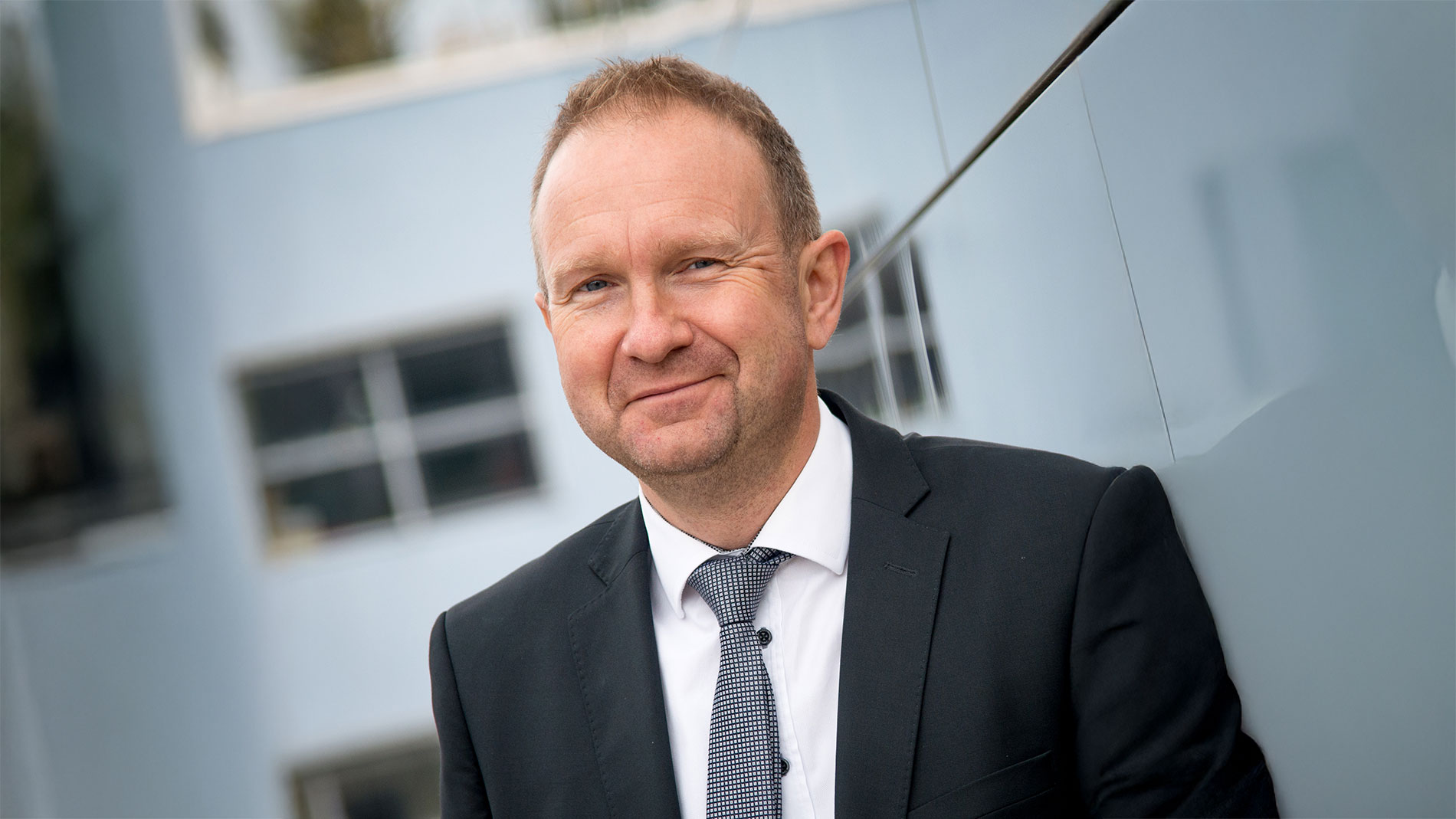
Peter Kaiser is Managing Director of KAISER-AMM TGA-Planung 4.0 and a publicly appointed and sworn HOAI expert. At the Central Association of the German Electrical and Information Technology Trades (ZVEH) in Frankfurt am Main, he is responsible for the areas of AAL and BIM. For BIM, he is a member of the corresponding DIN standards committees and Chair of the DKE/K945 “Electrotechnical Aspects in BIM” standardisation committee at VDE/DKE, the German lead committee for the introduction of BIM in electrical engineering in buildings and thus responsible nationwide for the introduction of this new revolutionary construction method.
For AAL, he was Chair of the DKE/K801 “AAL” standardisation committee at VDE/DKE for many years. He is regarded as one of the pioneers of the practical implementation of these technologies in Germany and is the author of the guidebook “Active Assisted Living” (Hüthig). AAL and the group of people affected are very close to his heart because he was Chair of a large social institution and Deputy Head of a rescue organisation for many years. He was also a member of supervisory boards of clinics and public procurement committees.