
Reading time: 5 minutes
Key Learnings
- Power generation is shifting from simple capacity expansion toward flexibility, resilience, and economically sustainable systems.
- Hybrid plants, solar PV, wind repowering, distributed assets, and flexible gas capacity are among the most important growth themes.
- For buildings and power-intensive sites, energy availability and grid connection are becoming strategic planning issues.
- Distributed and modular generation becomes more important when grid expansion is too slow or interconnection timelines are too long.
- Europe can benefit from these trends, but it also faces grid congestion, permitting delays, and the need for reliable, dispatchable energy.
A New Energy Investment Cycle Is Emerging
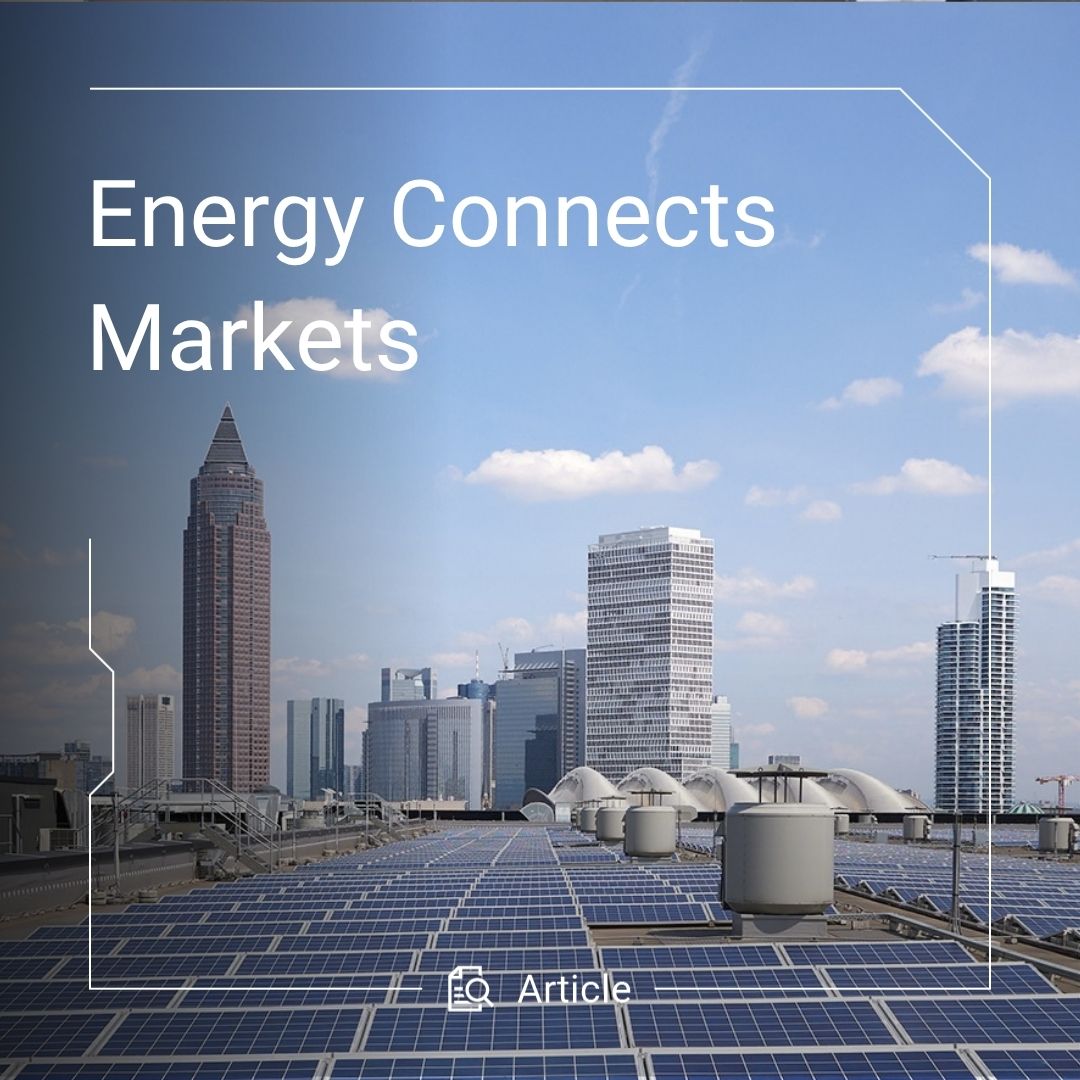
The transformation of the energy system is increasingly being felt at the building and facility level. Rising electricity demand, growing electrification, grid constraints, and the need for greater resilience are changing how energy is generated, distributed, and managed. For data centers, industrial facilities, and other power-intensive users, access to reliable and flexible power is becoming a strategic concern.
The power generation sector is entering a period where reliability and flexibility are becoming just as important as decarbonization. The top growth opportunities shaping the market include hybrid power plants, utility-scale solar PV, onshore wind repowering and life extension, flexible gas generation, geothermal energy, distributed modular power plants, offshore wind, bioenergy and biomass, plant modernization and life extension, and portfolio optimization platforms.
Together, these opportunities reflect a market that is evolving beyond simple capacity additions toward more resilient, flexible, and economically sustainable power systems.
The shift has direct implications for energy-intensive facilities, especially in regions where grid capacity, connection times, or supply reliability are becoming limiting factors.
While these opportunities span different technologies and business models, they can be grouped into four overarching themes. First, the rise of integrated and hybrid energy systems that combine multiple technologies to improve reliability. Second, the growing role of distributed generation to address grid constraints and emerging demand centers. Third, the increasing focus on maximizing value from existing assets through repowering and modernization. Fourth, the growing importance of firm and flexible generation resources that can support energy security and grid stability.
Power Generation Growth Opportunities: Four Themes Shaping the Market
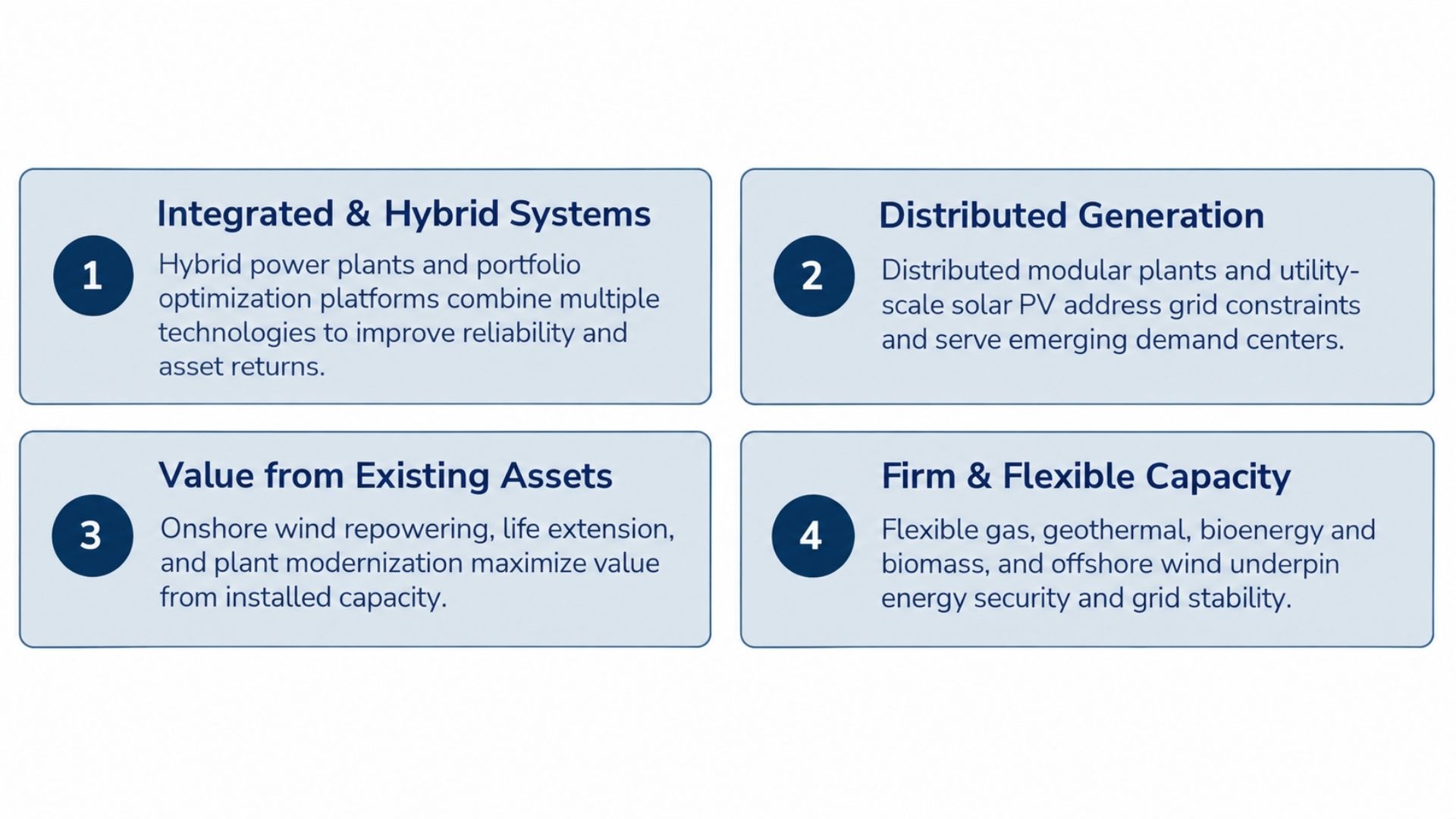
Rising electricity demand from data centers, industrial electrification, and economic reshoring is placing unprecedented pressure on power systems. At the same time, grid expansion is struggling to keep pace with demand growth, creating bottlenecks, interconnection delays, and permitting challenges.
Hybrid Power Plants Move into the Mainstream
One of the strongest growth areas is the development of hybrid power plants that combine renewable generation, energy storage, and dispatchable power sources. These projects address a critical challenge facing modern power systems, which is the need to balance sustainability with reliability. Utility-scale solar PV and selected offshore wind developments increasingly form part of these integrated energy ecosystems, allowing developers to deliver more predictable and valuable energy products.
Hybrid configurations allow developers to offer shaped energy products while reducing integration complexity for customers. As renewable penetration rises, these systems are becoming increasingly attractive to utilities, corporate buyers, and industrial customers seeking greater operational certainty.
This approach is also changing how energy supply is considered at facility level. Instead of relying on a single source, combinations of generation, storage, and flexible capacity can provide greater operational resilience for power-intensive applications.
Distributed Energy Gains Strategic Importance
The growth of distributed and modular power generation is another major trend. Facilities below 50 MW are increasingly being deployed to support industrial sites, mining operations, remote facilities, and data centers where immediate power requirements cannot wait for new transmission infrastructure.
In such cases, power infrastructure becomes part of the location and expansion strategy itself. Where grid capacity is limited or new transmission takes too long to build, distributed generation can offer a more immediate route to meeting additional electricity demand.
The value proposition extends beyond speed of deployment. Distributed assets can improve resilience, reduce dependence on congested networks, and provide localized energy security. As demand growth continues to outpace grid development in many regions, distributed generation is likely to become a core component of future power strategies.
The result is a closer link between energy generation, building operations, and site-level energy management.
Extending the Value of Existing Assets
Not all growth opportunities involve building new infrastructure. Asset owners are increasingly pursuing repowering, modernization, and life extension projects to improve performance while minimizing execution risk. This trend is particularly visible in onshore wind, bioenergy facilities, and aging conventional generation fleets.
Repowering existing sites can significantly increase output while avoiding many of the permitting and land acquisition challenges associated with new developments. Similar opportunities exist across multiple generation technologies where upgrades can deliver attractive returns with shorter payback periods.
For end users, the relevance is indirect but important: more efficient and resilient generation assets can strengthen the wider energy infrastructure on which commercial buildings, industrial facilities, and other electricity-intensive operations depend.
Firm and Flexible Capacity Remains Essential
Despite rapid renewable deployment, demand for firm and flexible power remains strong. Fast-start gas technologies continue to play a role in balancing grids with high renewable penetration, particularly where reserve capacity and rapid response are required. Geothermal energy and bioenergy are also attracting growing attention because they provide dispatchable, low-carbon generation that supports grid stability. Portfolio optimization platforms are emerging as investors seek diversified exposure across these technologies while improving capital efficiency and risk management.
The market is increasingly rewarding technologies that can provide flexibility, reliability, and operational resilience alongside sustainability objectives.
What This Means for Europe
Europe is well positioned to benefit from these trends, but it also faces unique challenges. Energy security remains a strategic priority, reinforcing interest in domestic sources of firm and dispatchable power such as geothermal energy, hybrid power plants, and flexible generation technologies.
Grid congestion and lengthy permitting processes continue to constrain project development across several European markets. This creates a significant opportunity for distributed modular generation that can support industrial expansion and data center growth without waiting for large-scale transmission upgrades.
Repowering aging wind assets is expected to become an increasingly important investment theme, particularly in mature markets where prime sites have already been developed. Meanwhile, offshore wind remains strategically important, although project economics, supply chain challenges, and permitting complexity will continue to influence deployment rates.
For operators of data centers, industrial facilities, and other high-demand assets, this makes energy strategy an increasingly important part of operational planning. Reliable, flexible, and scalable power supply is becoming closely linked to how facilities are designed, expanded, and operated.
As power systems become more complex, the boundary between energy infrastructure and building infrastructure is becoming less distinct. The buildings of the future will not simply consume electricity; they will increasingly need to interact with the systems that generate, store, and distribute it.