
Reading time: 6 minutes
Key Learnings
- Expo City Dubai is evolving from a temporary Expo site into a permanent district for residents, workers, and visitors.
- The master plan follows the 15-minute city concept, with strong emphasis on walkability and outdoor climate comfort.
- Around 80 percent of Expo 2020 infrastructure is being retained, reducing demolition, waste, and emissions.
- Digital twins and integrated monitoring platforms support energy, water, and operational optimization across the district.
- Social sustainability is central, supported by neighborhood amenities, public spaces, and a sense of belonging.
Through adaptive reuse, climate-responsive design, smart technologies, and ambitious sustainability targets, the project of Expo City Dubai is seeking to demonstrate how architecture and urban planning can translate the ambitions of the United Nations Sustainable Development Goals (SDGs) into a functioning city.
When Expo 2020 Dubai welcomed more than 24 million visitors from around the world, it showcased a vision of innovation, sustainability, and international collaboration. Yet from the outset, the ambition extended beyond a six-month global event. The challenge was how to transform one of the world's largest temporary gatherings into a thriving urban district capable of supporting residents, workers, and visitors—for decades to come.
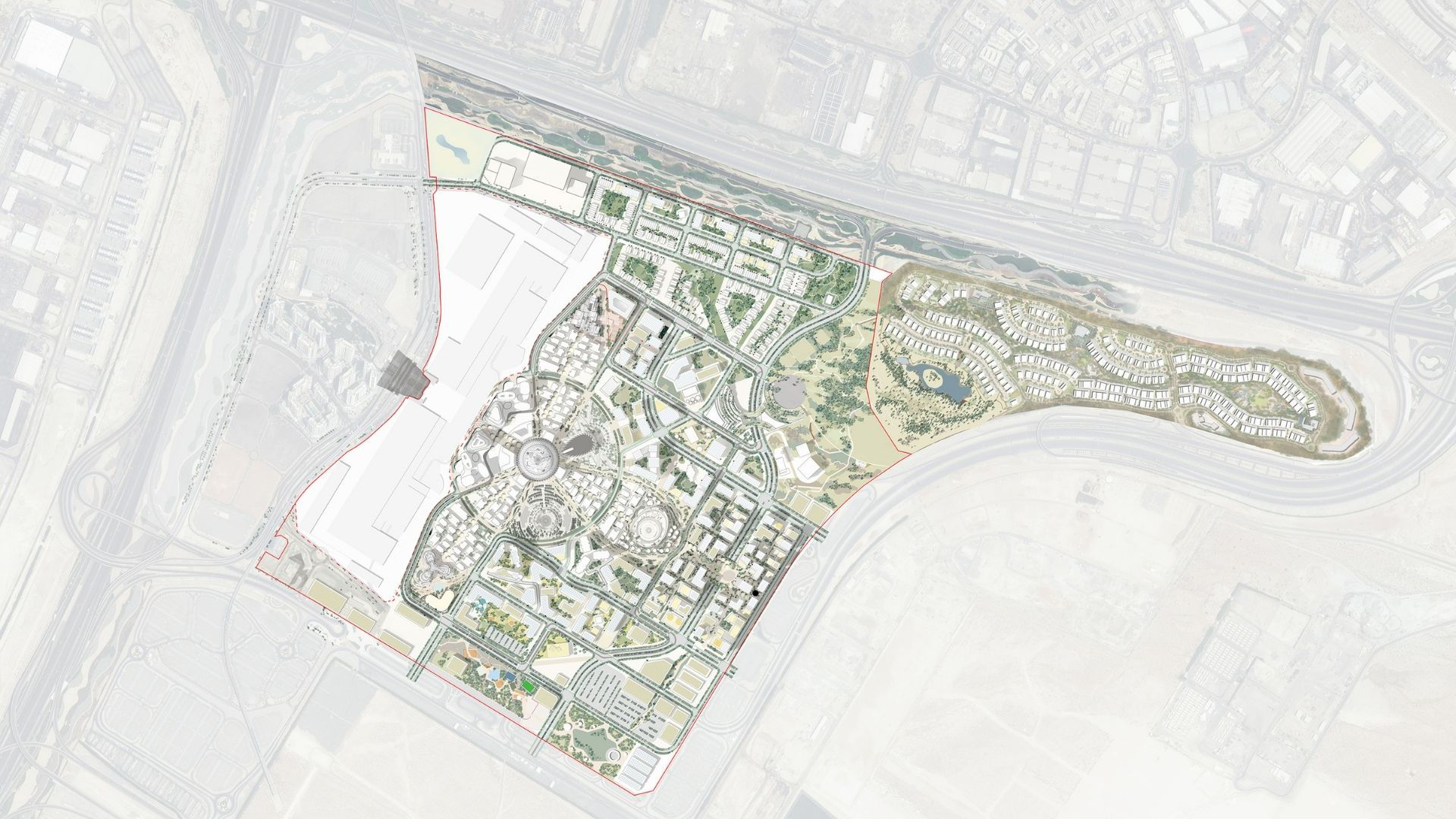
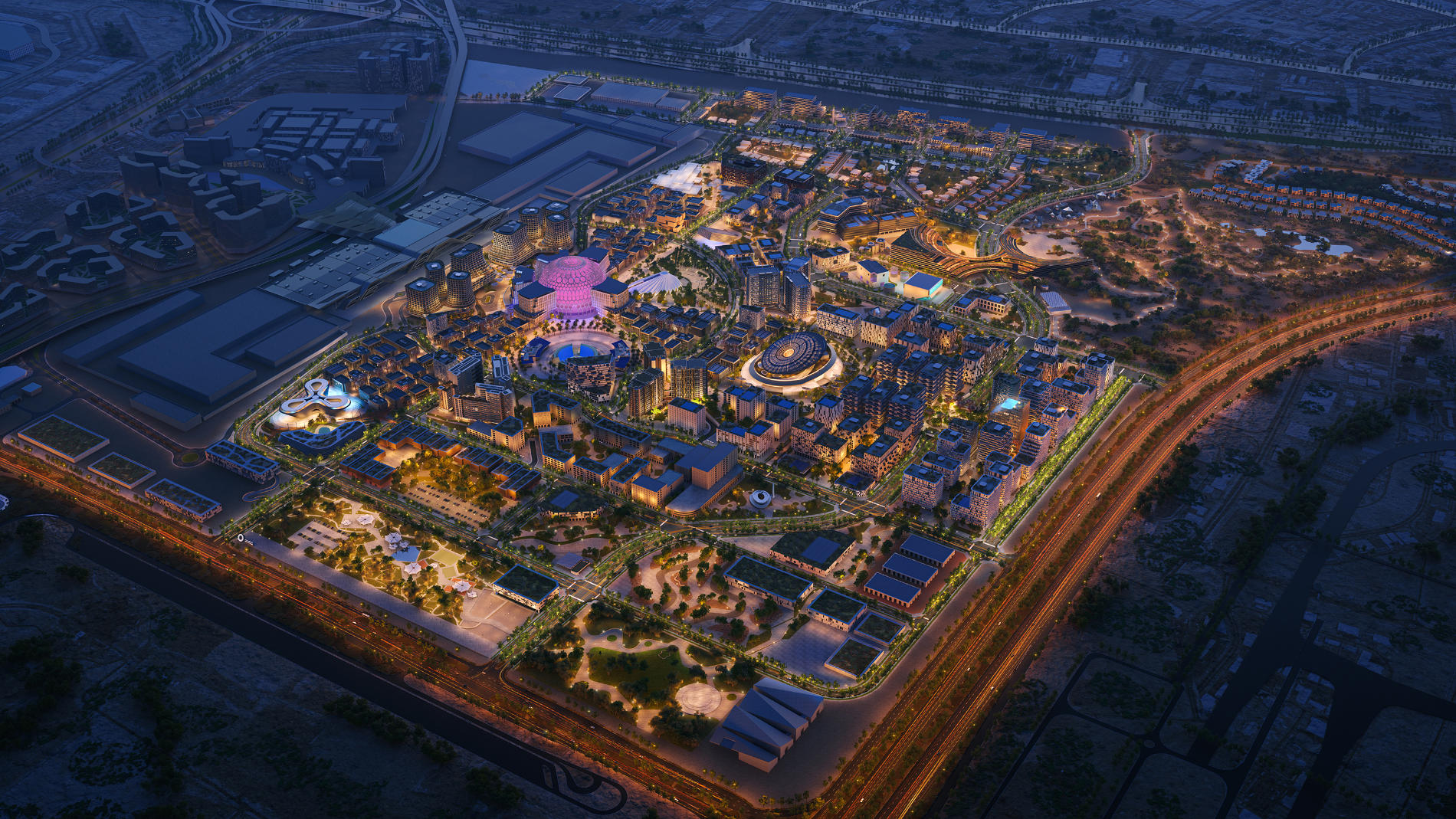
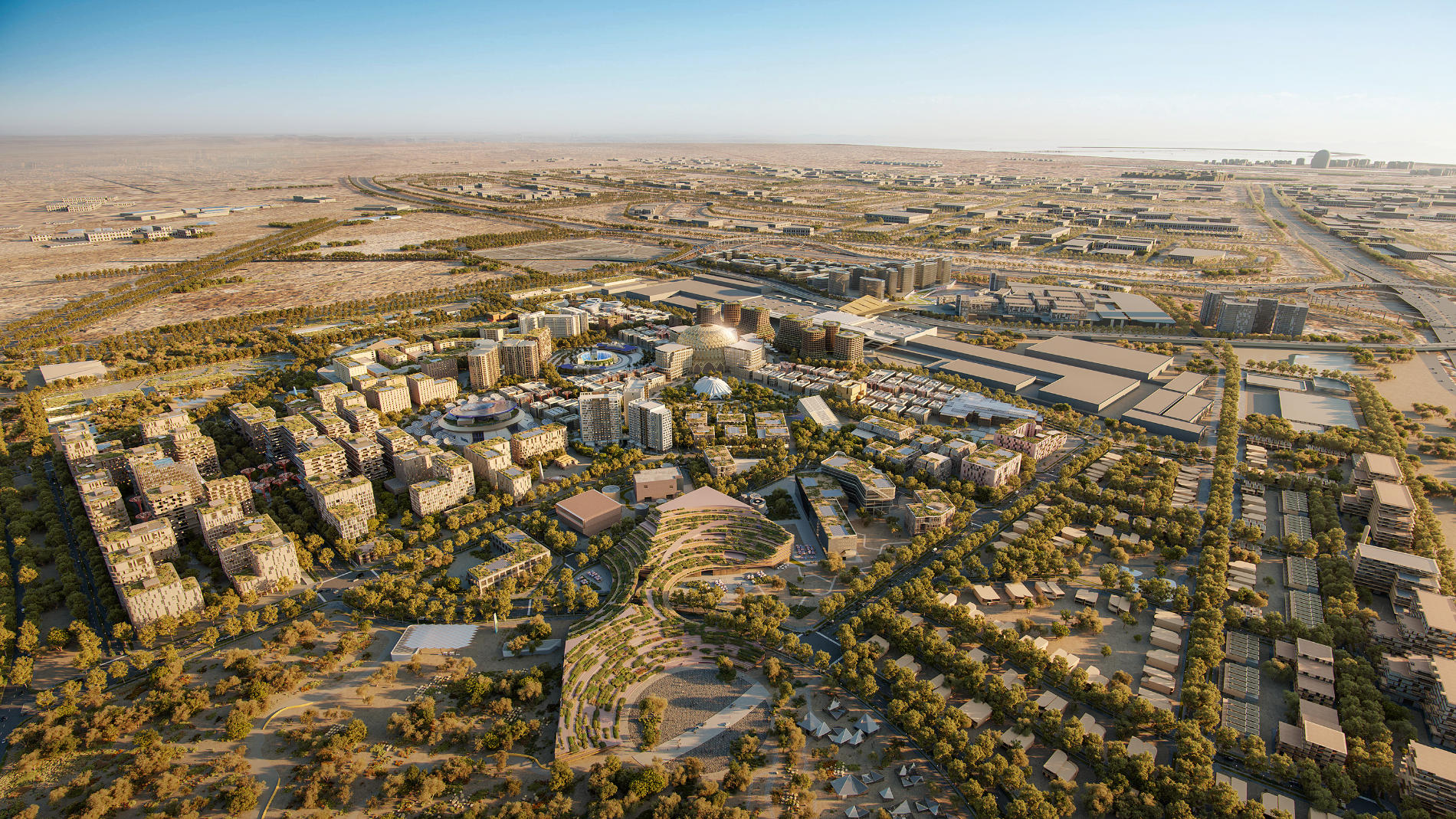
Today, that transformation is taking shape within Dubai South's emerging growth corridor. Positioned between Al Maktoum International Airport and Jebel Ali Port, and connected by the Dubai Logistics Corridor, Expo City occupies a strategic location at the heart of one of the region's most ambitious urban developments. For Ahmed Al Khatib, Chief Development and Delivery Officer at Expo City Dubai, the project represents a blueprint for a more sustainable model of city-making. "Expo City Dubai is an inclusive, innovation-driven, people-centric city of the future committed to maximizing its positive social, environmental, and economic impact," he says. "Designed according to 15-minute city planning principles, it is a blueprint for sustainable living and a hub on the Dubai 2040 Urban Master Plan."
Creating a city that works every day required a fundamental rethink of the original Expo site. For Dana Behrman, Director and Senior Urban Designer at the Amsterdam headquarters of UNS (previously UNStudio), the challenge was not simply one of urban design, but of changing the way the site functions. "The biggest challenge was shifting the logic of the site from a destination for major events into a district that works every day," she explains. "Visitor movement, infrastructure, public space, and program all had to evolve from supporting short-term intensity to enabling long-term comfort, usability, and economic viability."
This focus on livability sits at the heart of SDG 11, which promotes sustainable cities and communities. Climate comfort has therefore become a defining element of the Expo City Dubai master plan. In a region where summer temperatures can approach 50°C, creating walkable public spaces depends as much on environmental performance as it does on connectivity.
Arjan Pit, Managing Director of UNS Dubai, says the city has been planned around the needs of people rather than vehicles. "It was designed primarily for pedestrians and cyclists," he explains. "There will also be cars there, but the design is really thinking first about people and their comfort and the connectivity and walkability."
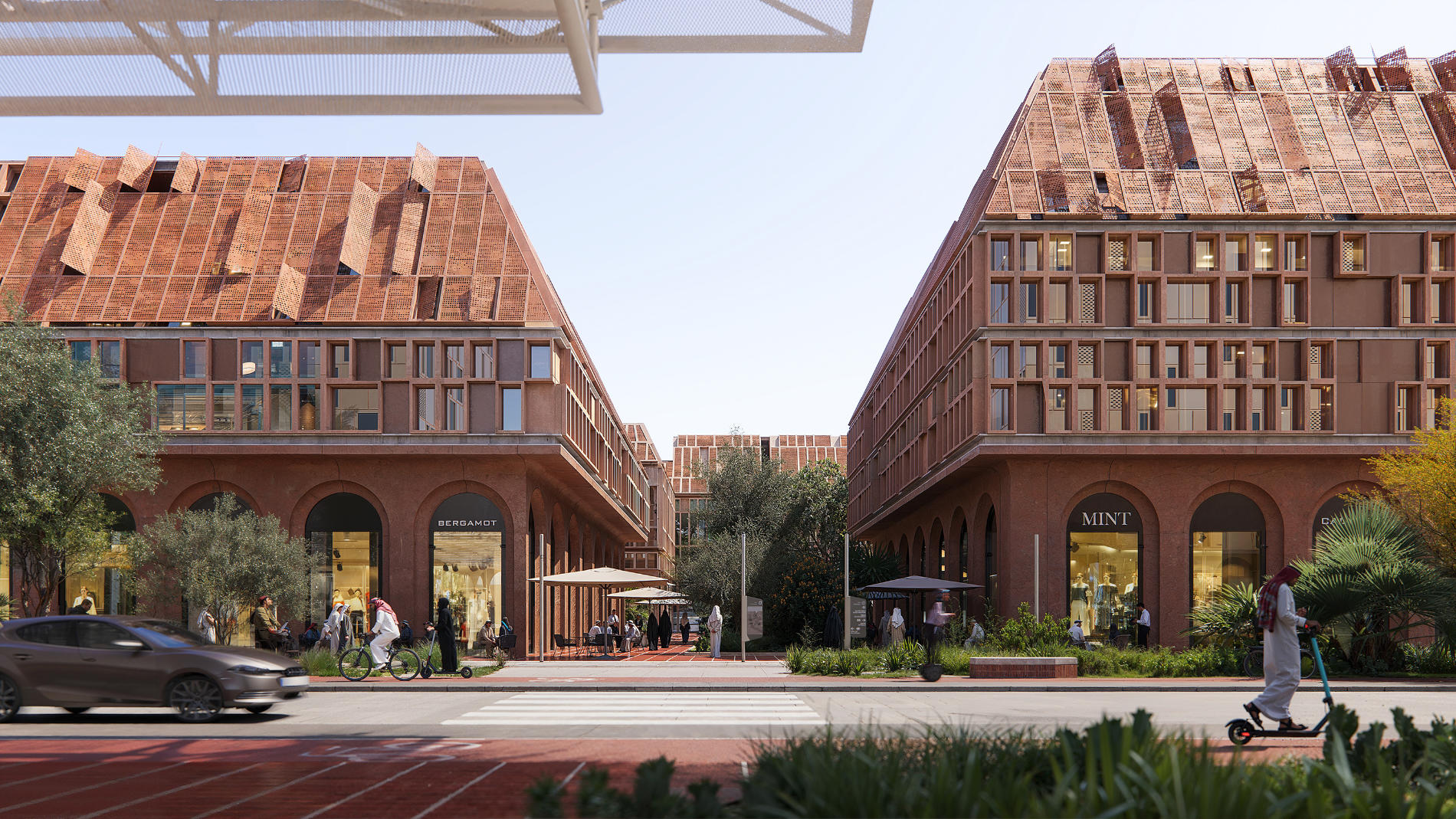
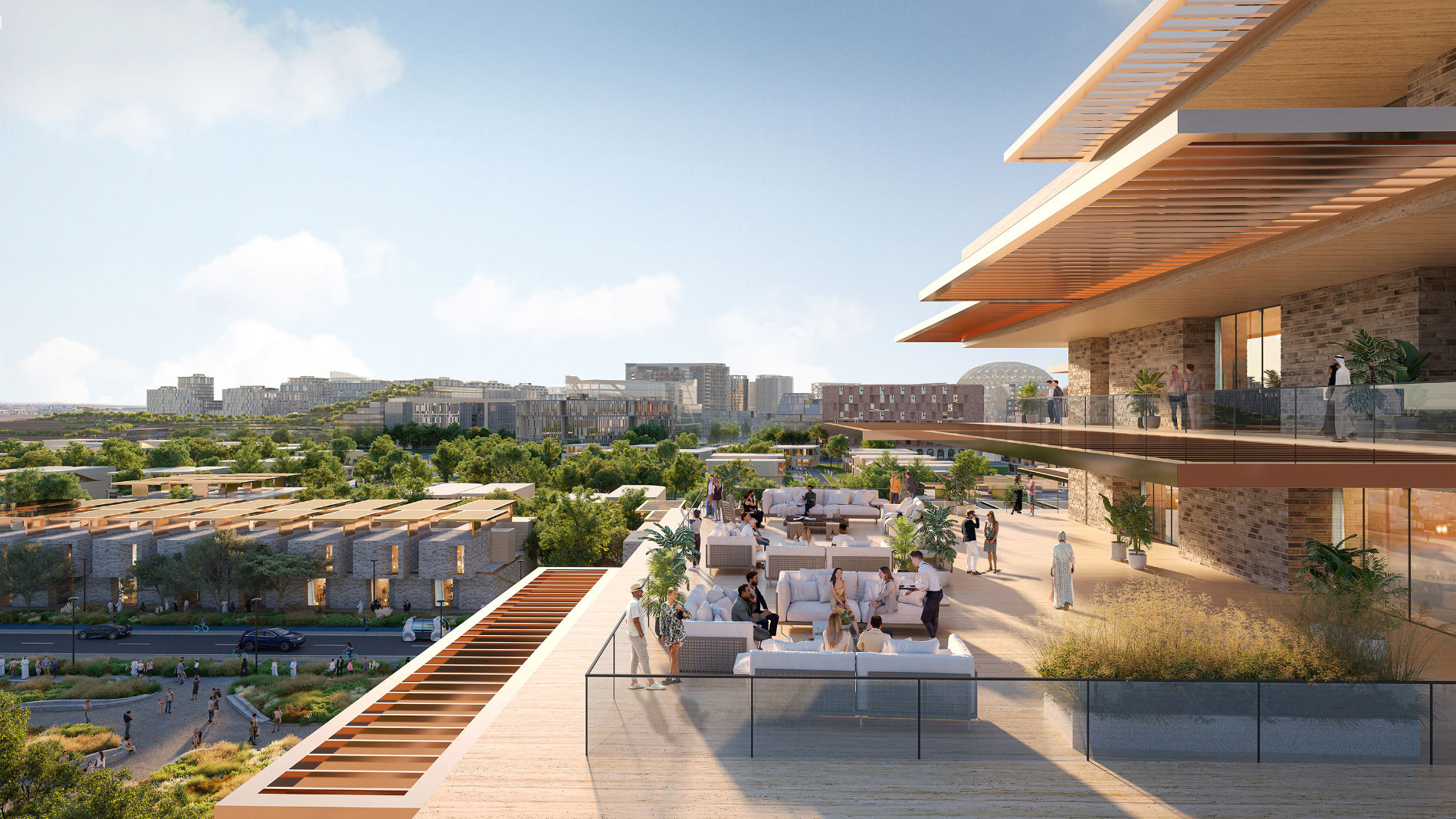
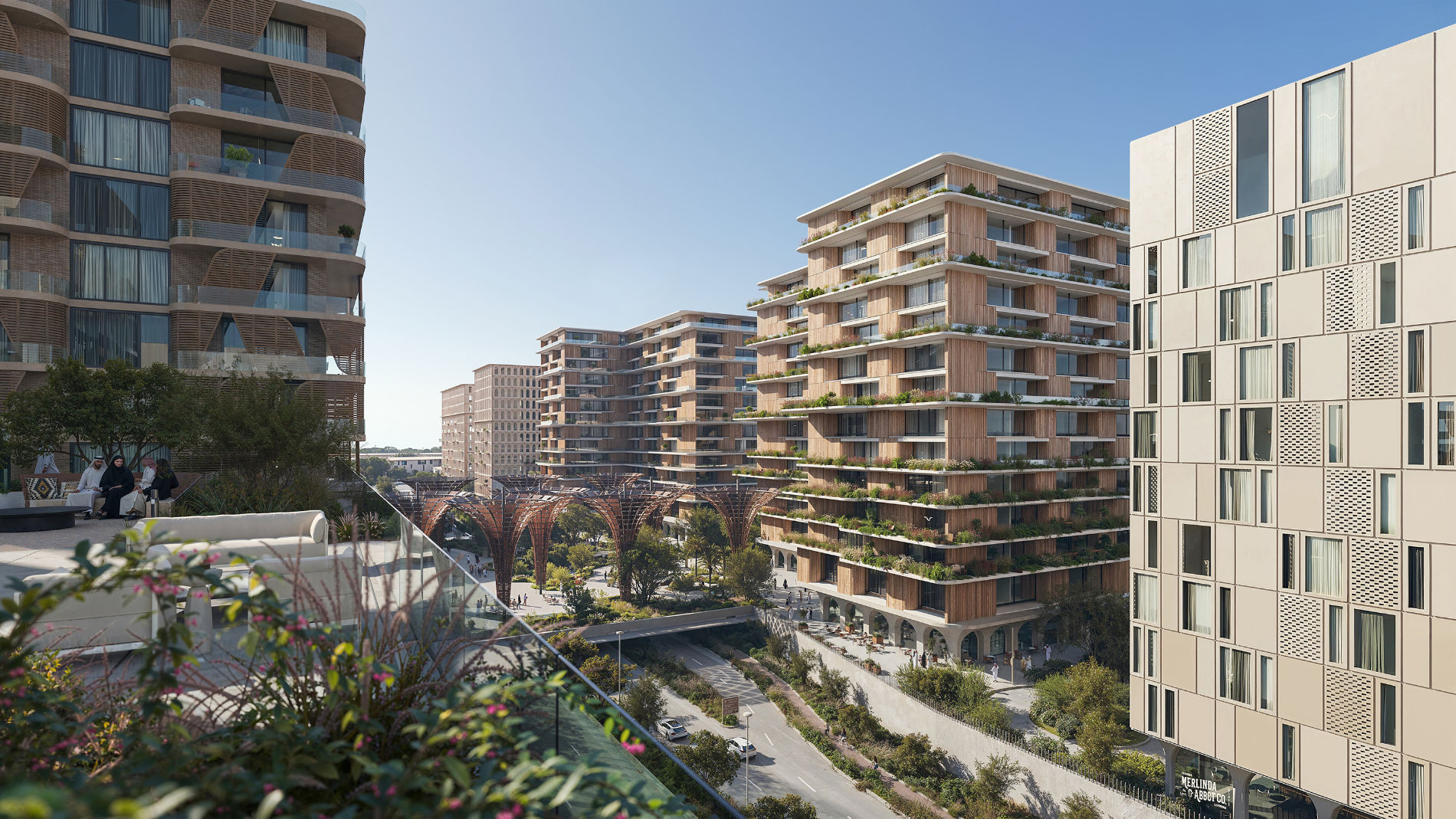
"Climate responsiveness is essential in this regional context, so the master plan places strong emphasis on outdoor comfort," adds Behrman. "This includes both passive and active design strategies through a dense urban form, shaded pedestrian routes, planting, material choices, and the careful positioning of public spaces."
One of the project's key ambitions is to ensure that at least 70% of walkways are shaded by structures and buildings, combined with ample trees and landscaping, supporting cooling by design. Building on this, the city is also introducing native planting, biodiversity initiatives, and recreational amenities designed to strengthen connections between people and nature. Elements of the wider landscape strategy have been developed with the involvement of Danish landscape architecture practice SLA, reinforcing the city's commitment to ecological resilience, wellbeing, and outdoor living.
Another defining feature of the project is its commitment to adaptive reuse. Rather than demolishing and rebuilding, Expo City has retained 80% of the infrastructure that was created for Expo 2020. The approach aligns closely with SDG 12, which promotes responsible consumption and production through the more efficient use of resources.
"It is a demanding process because infrastructure designed for a global event does not automatically suit permanent urban use," says Behrman. "The first challenge was to identify what could be retained, upgraded, or reprogrammed so that legacy assets would remain useful, efficient, and economically relevant over time."
The strategy builds upon the foundations established by the original Expo 2020 Dubai master plan while adapting the site for long-term urban life. The original Expo site was intended to serve as a sustainable benchmark for events in the Middle East, including utilizing the site and many of its structures as part of Dubai’s fabric after the event. According to Dr Ioannis Spanos, Vice President – Sustainability at Expo City Dubai, utilizing existing infrastructure delivers significant environmental benefits. "Retaining 80% of Expo 2020 built infrastructure avoids the emissions and waste associated with demolition and rebuild, and preserves the value of buildings that were already LEED-certified," he says.
Beyond adaptive reuse, Expo City has established a pathway towards net zero by 2050, with interim carbon-reduction targets of 45% by 2030 and 80% by 2040. These commitments directly support SDG 13, Climate Action, while contributing to the UAE's broader sustainability ambitions. "Demand reduction is a priority," says Spanos. "There is a citywide design intent to reduce building energy demand by approximately 30% and water demand by approximately 50% relative to international standards through monitoring and optimization."
Technology is also playing a central role. A digital twin and integrated monitoring platforms are helping optimize energy, water, and operational performance across the district, supporting SDG 9, which focuses on industry, innovation, and infrastructure. "A smart city is not simply a city with more technology," says Behrman. "It is a city in which digital systems help improve livability, efficiency, sustainability, and adaptability in ways that are meaningful for the people who use the place every day."
Pit believes the long-term success of Expo City will depend not only on environmental performance but also on its ability to foster meaningful social connections. "Social sustainability means that the cohesion of neighborhoods is maintained, that people do not feel lonely, and that connections between people are supported," he says. "Schools, neighborhood facilities, cafés, restaurants, and public spaces all play an important role in creating a sense of belonging."
The emphasis on social sustainability aligns closely with both the United Nations Sustainable Development Goals and Expo City's wider ambition to create a community where people choose not only to work, but also to live, connect, and build long-term roots.
As the first residents prepare to move in, Expo City is becoming more than the legacy of a World Expo. It is emerging as a real-world test case for how architecture, urban planning, and technology can work together to create measurable social, environmental, and economic outcomes.
"The true measure of success will be the deep sense of civic pride and connection felt by everyone who is part of Expo City," says Al Khatib. "When a neighborhood actively prioritizes the health and quality of life of its people, those individuals become deeply engaged in its future, becoming active champions for its preservation, community resilience, and sustainable ethos."
In that sense, Expo City is not simply adapting an event site for a new purpose. It is demonstrating how the ambitions of the Sustainable Development Goals can be translated into the everyday experience of a city.