
Reading time: 4 minutes
Key Learnings
- Data centres are not conventional real estate assets, but highly connected ecosystems of building technology, digital infrastructure, and operational processes.
- AI workloads, hyperscale demand, and resilient digital infrastructure are driving growth while increasing pressure on power, cooling, and cybersecurity.
- Operators prioritize uptime, reliability, and scalability, while suppliers are increasingly expected to deliver measurable outcomes rather than individual technologies.
- The industry is moving from efficiency optimization toward intelligent, predictive, and eventually autonomous operating models.
- Future-ready data centres need modular architectures, digital twins, real-time sustainability metrics, and cybersecurity embedded across all systems.
The global data centre industry is entering a new phase of accelerated expansion driven by AI workloads, hyperscale demand, and the need for resilient digital infrastructure. Yet, as investment surges, the complexity of building and operating these facilities is rising even faster. The challenge today is not just scaling capacity, but aligning operators and suppliers around uptime, efficiency, and long-term growth.
Data Centres Are Not “Just Buildings”
A persistent misconception is that data centres function like conventional real estate assets. In reality, they operate as tightly integrated ecosystems where building systems, digital infrastructure, and operational processes must function seamlessly.
At the core is a multi-layered ecosystem encompassing smart building management through BAS and BEMS, critical equipment such as HVAC and power systems, facility management, lighting, and construction technologies including BIM and digital twins. Each component is interdependent, and failure in one layer can cascade across the entire operation.
This interconnected nature creates new risks. Power availability constraints, assumptions around retrofitting legacy facilities for AI workloads, and the tendency to over prioritise white space over infrastructure all highlight how traditional thinking falls short in a mission critical environment.
Growth Is Strong but Complexity Is Stronger
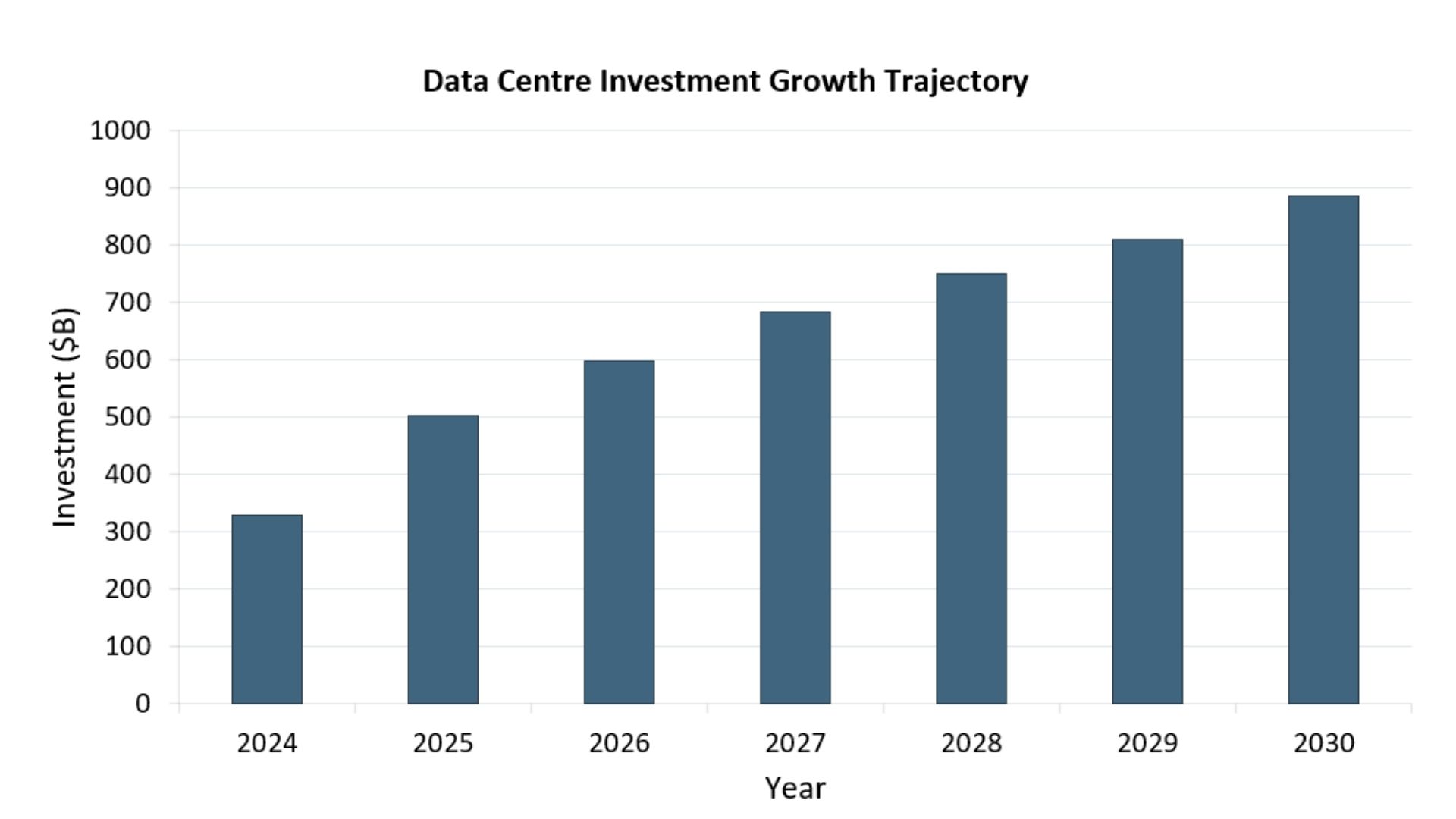
The sector is growing rapidly, with global data centre investment projected to reach approximately $885 billion by 2030, expanding at a 12% CAGR from 2025.
While this signals immense opportunity, operators and suppliers face mounting constraints:
- Workforce shortages and rapid technology obsolescence are straining operational capabilities
- Cooling efficiency and power constraints are intensifying as rack densities increase
- Cybersecurity and compliance requirements are adding layers of complexity
- Supply chain disruptions are delaying expansion timelines
In effect, expansion is no longer just a capital problem. It is a systems problem.
The Alignment Challenge: Operators vs. Suppliers
A key friction point in the market lies in the differing priorities of operators and suppliers.
Operators remain focused on maintaining uptime and reliability, often targeting five nines availability and zero downtime operations even during upgrades. At the same time, they must improve energy efficiency, integrate legacy systems, and ensure cybersecurity compliance while preparing for future scalability.
Suppliers face challenges in demonstrating ROI beyond energy savings, navigating complex high density retrofits, and managing extended procurement cycles. They are increasingly expected to deliver measurable outcomes such as improved uptime, predictive maintenance insights, and credible sustainability metrics rather than just technology solutions.
Bridging this gap requires a shift from a product centric mindset to an outcome driven approach.
Uptime Defines Everything
Across all building systems including BAS, HVAC, facility management, lighting, and construction technologies, one theme dominates. Uptime.
Data centres operate under stringent expectations, including N+1 or 2N redundancy, 99.999 percent uptime, and zero downtime maintenance. These requirements shape every design decision, from compact controllers for retrofits to advanced cybersecurity protocols and modular expansion strategies.
This is particularly evident in critical systems such as HVAC, where even minor fluctuations in temperature or airflow can trigger failures in high density environments. Facility management processes must minimise human error risks, while lighting systems must reduce thermal impact without compromising reliability.
Uptime is no longer just an operational metric. It is the defining principle of data centre design.
From Efficiency to Intelligence
Another major shift is underway. The transition from efficiency focused optimisation to intelligent, autonomous operations.
In the near term, adoption will continue to centre on advanced cooling systems, energy optimisation, and cybersecurity solutions. By 2030, AI driven analytics, automation, and edge integration will become more prevalent. Beyond that, the industry will move toward digital twins, self healing infrastructure, and quantum ready systems.
This evolution reflects a broader shift from reactive operations to predictive and eventually autonomous systems.
A New Growth Playbook
To succeed in this increasingly complex environment, both operators and suppliers must align around a new set of priorities:
- Demonstrate measurable ROI beyond energy savings, particularly in uptime and operational performance
- Embed cybersecurity into all systems rather than treating it as an add on
- Deliver granular sustainability metrics including real time carbon tracking
- Enable modular, scalable architectures that support rapid expansion
- Leverage digital twins and automation to address workforce constraints
Ultimately, the opportunity is significant, not just in data centre capacity, but in the broader ecosystem of building technologies and services supporting it.
The Road Ahead
The data centre industry is entering a defining decade. Investment is accelerating, technologies are evolving, and expectations around reliability and performance are reaching unprecedented levels.
Success will depend on how effectively operators and suppliers can bridge the divide between technical capability and operational outcomes. Those who align around uptime, intelligence, and measurable value will be best positioned to capture the next wave of growth.
Download
Download additional insights and market data on the development of the global data centre market. The information shows how AI workloads, hyperscale demand, uptime requirements, energy efficiency, and smart building technologies are shaping the industry’s next phase of growth.