
Reading time: 7 minutes
Key Takeaways
- The EPBD provides the European framework for improving building energy performance and aims for full decarbonization of the building sector by 2050.
- Romania implemented the EU requirements early, establishing energy certificates, auditors, assessment methods, and renovation processes.
- Much of Romania’s building stock is older and energy inefficient, making renovation, insulation, and modern heating systems central levers.
- Photovoltaics and prosumer models have grown rapidly; by 2026, Romania has almost 314,000 prosumers with around 3,400 MWp of installed capacity.
- Without storage and modernized low-voltage grids, solar energy cannot be fully utilized. Buildings are becoming part of an energy ecosystem made up of consumers, PV systems, batteries, inverters, and the grid.
European legislative framework
At EU level, buildings are responsible for 35% to 40% of total energy consumption. In order to reduce this consumption, the EU adopted, in 2002, the EPBD – Energy Performance of Buildings Directive 2002/91/EC, hereinafter referred to as the EPBD. The EPBD was subsequently revised and the revised version EU/2024/1275 is currently in force. The revised versions of the EPBD aimed at gradually increasing the energy performance of buildings.
The general framework of the EPBD refers to:
- Classification of buildings according to energy consumption
- Maximum permitted values for energy consumption of building categories at specified times in the following years
- The modalities and measures to be implemented at EU level to achieve the objectives of the EPBD
In the almost 25 years that have passed since the adoption of the first form of the EPBD, buildings in the EU have transformed substantially, with the reduction of energy consumption being the focus of attention of beneficiaries, architects and builders. The ultimate objective of the EPBD is the complete decarbonization of the buildings sector by 2050.
What was the situation in Romania?
Romania implemented the first version of the EPBD by Law no. 372 of 13 December 2005, even before its accession to the EU in 2006. Subsequent versions of the EPBD were also rapidly implemented in the country's legislation. The following stages were completed:
- The methodology for calculating the energy efficiency of buildings (MCE) was approved
- A new profession, that of energy auditor for buildings, was created
- Software applications for energy auditing were developed
- Energy auditing became mandatory for building transactions, which are possible after obtaining the Energy Performance Certificate (CPE)
- Professional associations dedicated to the energy auditing of buildings were created and they support training courses in the field
- The buildings’ energy performance was assessed and energy efficiency solutions were developed and proposed for various categories of buildings
- The process of increasing buildings’ energy performance was started
The residential sector in Romania
In 2023, Romania had a real estate park of approximately 9.7 million individual homes, located either in buildings with condominium status or in individual buildings. Most of these residential buildings were built before 2000 and had a low level of energy performance, generally over 200 kWh/year, which placed them in the lower energy performance classes (from C to G).
As a result of this situation and due to high energy prices, owners of old buildings began to invest in increasing energy performance.
New buildings were built in compliance with the new energy performance standards.
Public buildings in Romania
Public buildings in Romania that are privately owned and built in recent years (office buildings and commercial spaces) are energy efficient, being built according to EU standards to minimize operating costs due to energy consumption.
The vast majority of buildings owned by the Romanian state (schools, hospitals, public institution headquarters) were built before 1990 and require extensive energy rehabilitation. The process has started, but there are still many buildings that require renovation and energy rehabilitation.
Concrete measures to increase the energy efficiency of buildings
The measures to increase buildings’ energy performance that were imposed were: superior thermal insulation of the building envelope (walls, ceilings, floors, doors and windows), the massive transition to efficient heat production through high-efficiency thermal power plants, economical lighting based on LED sources, equipping rooms with presence/occupancy sensors, etc. Romania's temperate-continental climate, with cold winters and very hot summers, imposed primarily the reduction of energy losses through thermal insulation of the building envelope but also by modernizing heating systems that used outdated and inefficient solutions for heat production.
Centralized heating systems that recorded high losses on the transport and distribution networks were closed and replaced with local heating solutions based on more efficient gas plants.
All these passive energy efficiency solutions did not allow the buildings to be classified in the high energy performance classes A and A+, and it was necessary to adopt active solutions for local energy generation. The launch in 2010 of the NZEB (Near Zero Energy Building) concept has boosted the process of increasing buildings’ energy efficiency.
Prosumers appear
Without local energy production, buildings cannot be efficient according to the EPBD. The classification of buildings in higher energy performance classes and the achievement of the NZEB standard required buildings to be equipped with their own energy generation sources, usually using photovoltaic solar panels.
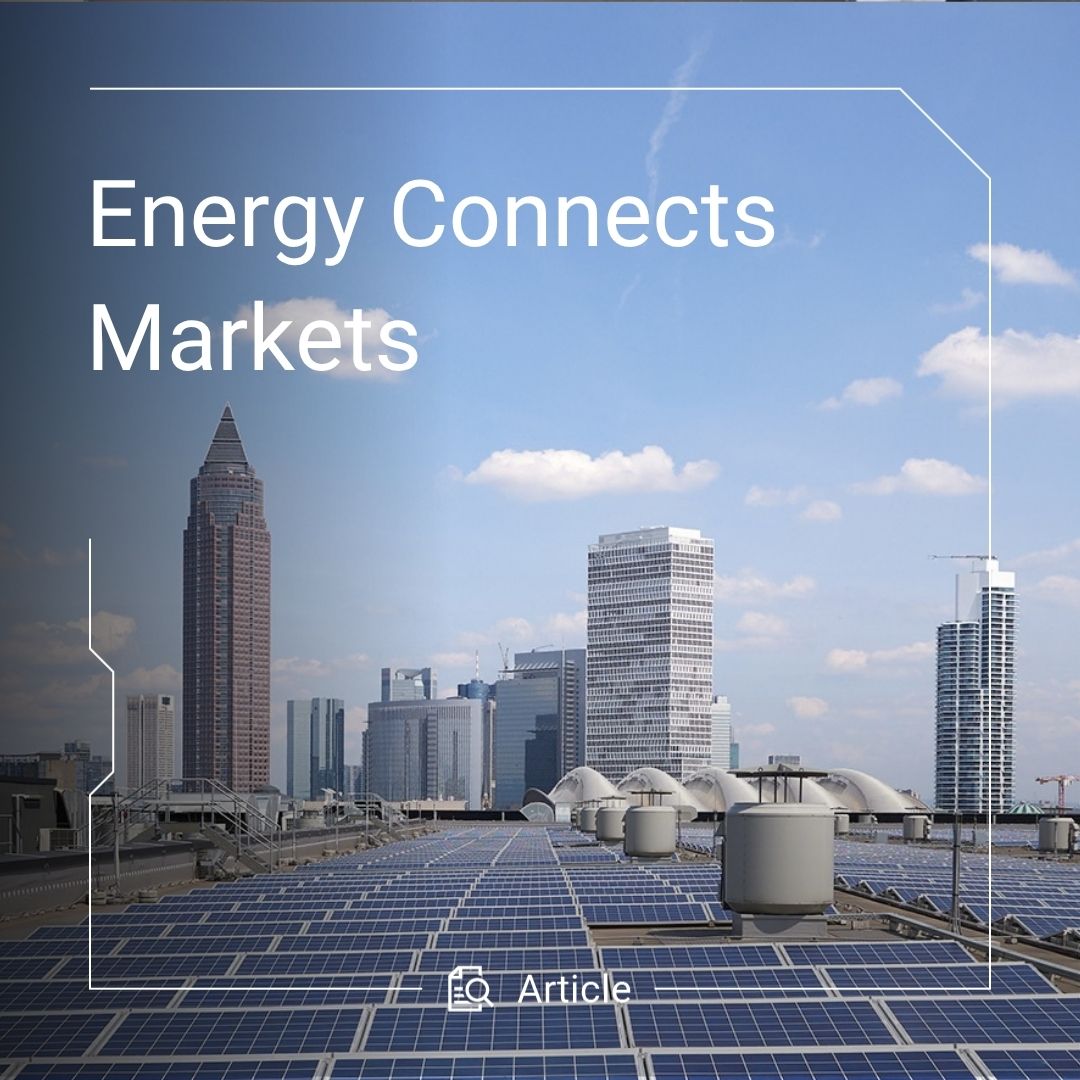
The photovoltaic solar panel market has developed rapidly in Romania in the last decade and photovoltaic panels have been installed on the roofs of tens of thousands of buildings. The energy produced by these panels improves the energy balance of these buildings. The energy produced is consumed locally or stored (if there are storage batteries) and the surplus is injected into the grid. The grid is used only when the panels and batteries do not produce enough to cover the building's energy needs. A new category of building owners - prosumers has been created.
The Romanian state intervened in the market for photovoltaic systems for buildings
The Romanian state intervened with subsidy programs for prosumers. The programs subsidized photovoltaic installations with a maximum power of 3 kWp (kW peak power). Prosumers who installed photovoltaic systems above 3 kWp received the subsidy for 3 kWp, the additional power being installed through their own investment. Excess energy production could be transmitted to the grid and paid for by the distribution operator or compensated with the energy consumed during the hours when the photovoltaic panels were not producing.
The number of prosumers grew rapidly. The maximum limit of power installed by a prosumer gradually increased to 400 kWp, which also included larger buildings or small industrial applications.
Photovoltaic systems were usually installed on the roofs of buildings but also on metal structures separate from buildings.
Battery storage was unfortunately not included from the beginning in the state financing programs, which created difficulties later.
The latest data from 2026 shows that there are almost 314,000 prosumers in Romania, with a maximum installed power of 3,400 MWp, which produced in 2025 over 5 TWh in total (including for own consumption).
The GREEN HOUSE PHOTOVOLTAIC program subsidized the installation of solar panels for prosumers with almost 3 billion lei from 2010 until 2026, when it was suspended.
The increase in solar energy production was also stimulated by the favorable climate and geographical data of the Romanian territory, located between approximately 44°N and 48°N northern latitude. In the south of the country, a photovoltaic system with a power of 1 kWp (peak power, at an optimal incidence angle) can produce the amount of energy of almost 1400 kWh annually. The availability coefficient of photovoltaic panels is on average over 10% for the territory of Romania, a representative of APCE (Association of Prosumers and Energy Communities in Romania) recently told us.
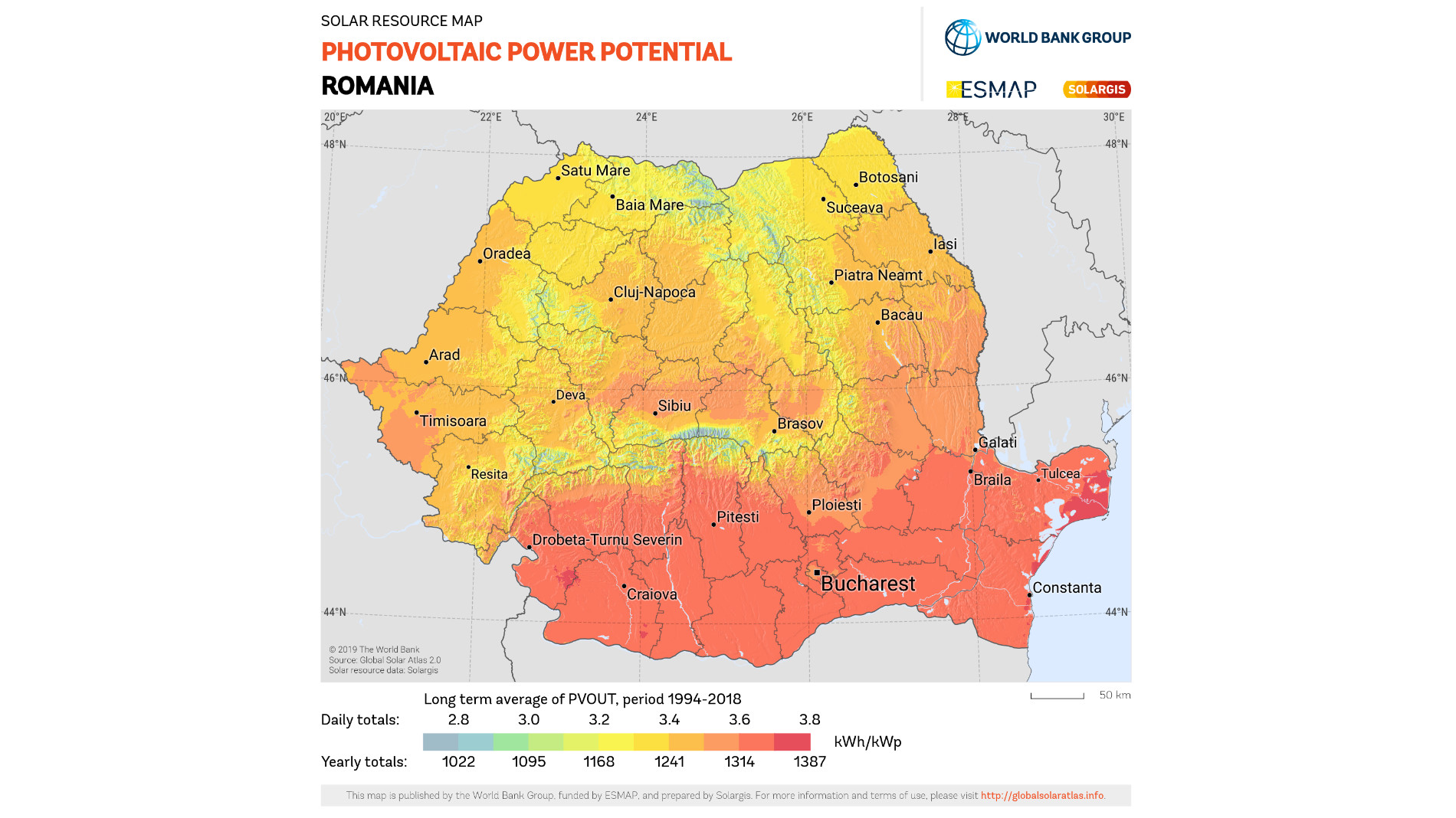
[Data/information/map] obtained from “Global Solar Atlas 2.0”, a free, web-based application developed and operated by the company Solargis s.r.o. on behalf of the World Bank Group, utilizing Solargis data, with funding provided by the Energy Sector Management Assistance Program (ESMAP). For additional information: https://globalsolaratlas.info
Note: It should be noted that the Romanian state had already applied the EU ETS support scheme using green certificates to photovoltaic parks with capacities over 10 MWp. These large production capacities, dispatchable according to the definition of the national grid operator, have a special situation and are integrated into the grid, with a significant daily production.
Photovoltaic panels + heat pumps + electric vehicle chargers
Photovoltaic panels produce electricity, and heat pumps and electric vehicle chargers consume it. The big problem, however, is synchronizing the moment of production with the moment of consumption of this energy. If it is not consumed during production, the electricity must be stored; otherwise, it is lost. So the enthusiasm was tempered by reality: we produce electricity from solar in large quantities in the middle of the day, we partially consume this energy even when it is produced, but if we do not store it, at load peaks, the solar energy of the prosumers does not count and they consume from the grid.
Sometimes the low-voltage electrical networks into which the prosumers inject energy can no longer take over this energy. In this case, prosumers are disconnected from the grid and their production is lost.
The optimal situation is for the energy produced by prosumers to be consumed by them or by their neighbors from the same local low-voltage grid or possibly stored locally.
The unmodernized low-voltage electricity grids in Romania can only take over a limited amount of energy from prosumers.
Without storage, solar energy cannot be fully utilized
Storage at the prosumer is the solution to the problem of surplus energy produced, but unfortunately many prosumers who want to install storage batteries must also invest in changing some equipment already installed (installing hybrid inverters). The Romanian government intervened late to subsidize energy storage batteries.
Fortunately, the prices of energy storage batteries have decreased considerably, as have the prices of photovoltaic panels.
The prosumer's building has thus become part of an ecosystem that includes:
- the building with its consumers: heat pump, electric vehicle charger, etc.
- photovoltaic panels
- storage battery(ies)
- the national energy grid
- the inverter that controls the entire system
The elements of this prosumer ecosystem work together according to complex rules that take into account the energy production of the photovoltaic panels, the consumption needs, the charging of the storage batteries, the capacity of the local electrical grid to take over the energy from the prosumer.
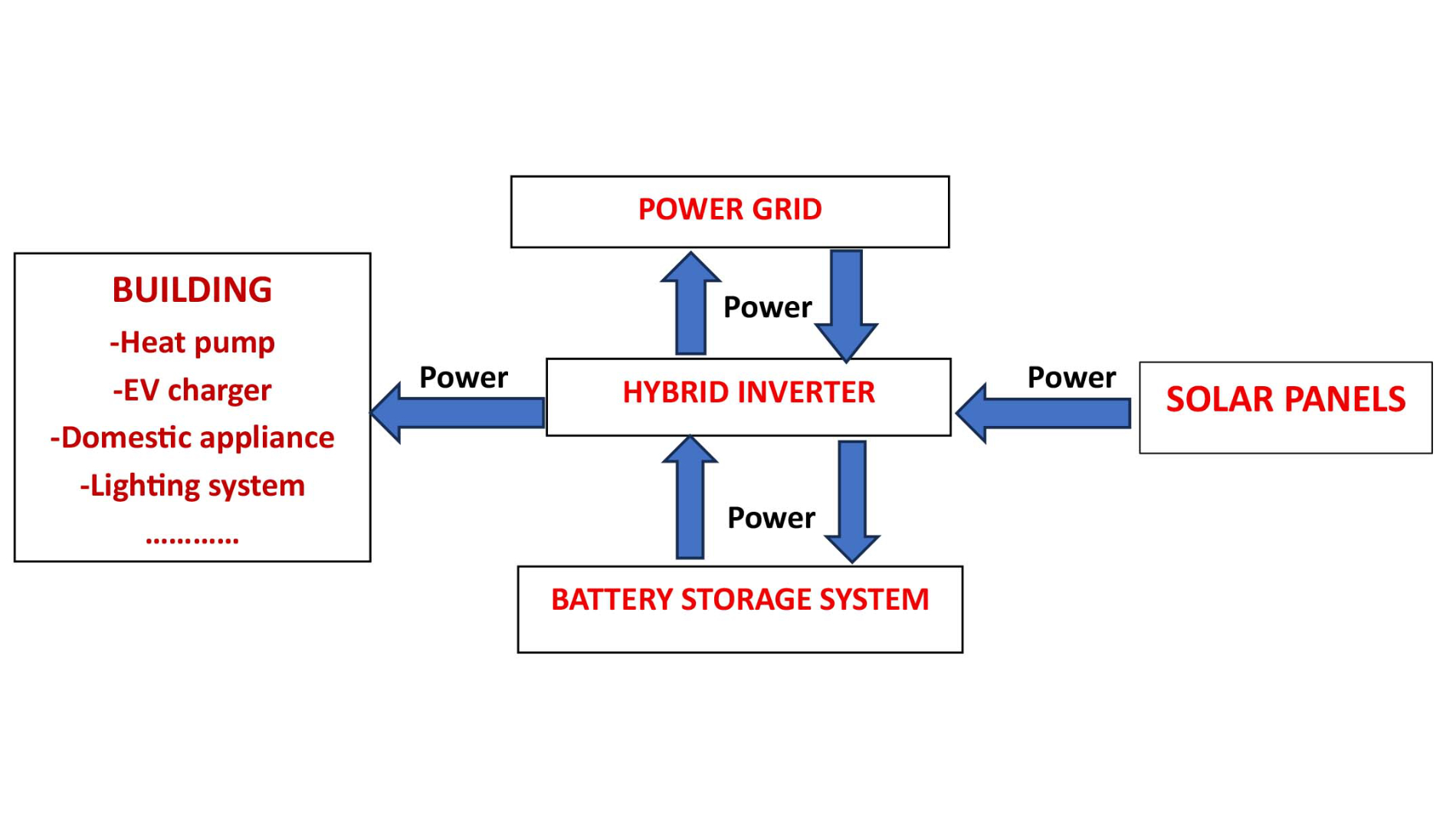
Building-energy ecosystem
Situations encountered by a prosumer:
- Produces energy that it consumes entirely
- Produces energy above consumption requirements, and the surplus is stored in batteries
- Produces above consumption requirements, and the battery is charged to the maximum and the excess is injected into the grid, if it is not overloaded
- Consumes stored energy when it needs energy and production does not cover the requirements
- Also consumes from the grid when local production and the battery do not provide the requirements
The essential problem: the cost of investing in energy efficiency of buildings
The problem of the costs necessary to have an energy-efficient building equipped with photovoltaic panels and storage batteries remains the most important. Building owners make decisions based on analyses that target the recovery period of the investment in energy efficiency, ROI (Return on Investment) and the TCO (Total Cost of Ownership) of the building’s energy efficiency. Building owners take these costs into account:
- Energy cost upon purchase and sale
- Cost of installing a photovoltaic system with or without storage batteries
- Cost of energy rehabilitation of the building
- State subsidy
The evolution of these costs will influence the building sector in Romania in the coming years, as much as the legislation in the field. The building is now part of an ecosystem and all its elements must be taken into account now.