Get a quick and up-to-date overview of the developments in the field of intelligent building technology. The content is customizable to your interests, presented in a neutral manner, and created by experts for experts.
Intelligent building technology is moving from a background function to a strategic competitive factor in hospitality.
Rising energy costs, ESG requirements, labor shortages, and digital guest expectations are increasing pressure on operators, investors, and planners.
Multifunctional spaces such as lobbies, co-working zones, and event areas require adaptive ventilation, climate, acoustics, and energy systems.
Project management becomes a central interface because building systems, IT, PMS, access systems, sensors, and building management need early coordination.
Smart hotel assets only succeed when design, building technology, and operational processes are integrated from the start.
In view of exploding energy costs, strict ESG requirements from investors and the acute shortage of skilled labour, intelligent building services engineering is moving from a purely background trade to a decisive competitive factor. A modern hotel today is a highly complex, data-driven smart building.
“Expectations of hotels are far more professional today than they were ten years ago.”
This is the standard against which the hotel global industry must measure itself. The sector is facing enormous economic and technical challenges. “Expectations of hotels are far more professional today than they were ten years ago,” confirms Gesa Rohwedder, Head of Hospitality at the consultancy Drees & Sommer. The company operates at 80 locations worldwide and employs more than 6,500 people. “The increased demands are coming not only from guests, but also from the professional institutional investors who form the foundation of the industry.” Future-proof building automation and digitalisation play a key role in this. Rohwedder, who managed luxury hotels herself for many years, strongly recommends: “Today, these technical components need to be coordinated with one another at a much earlier stage.” In order for networked complexity to become economic success, strategic project management is needed as the link between the smart-building vision and real-life structural implementation.
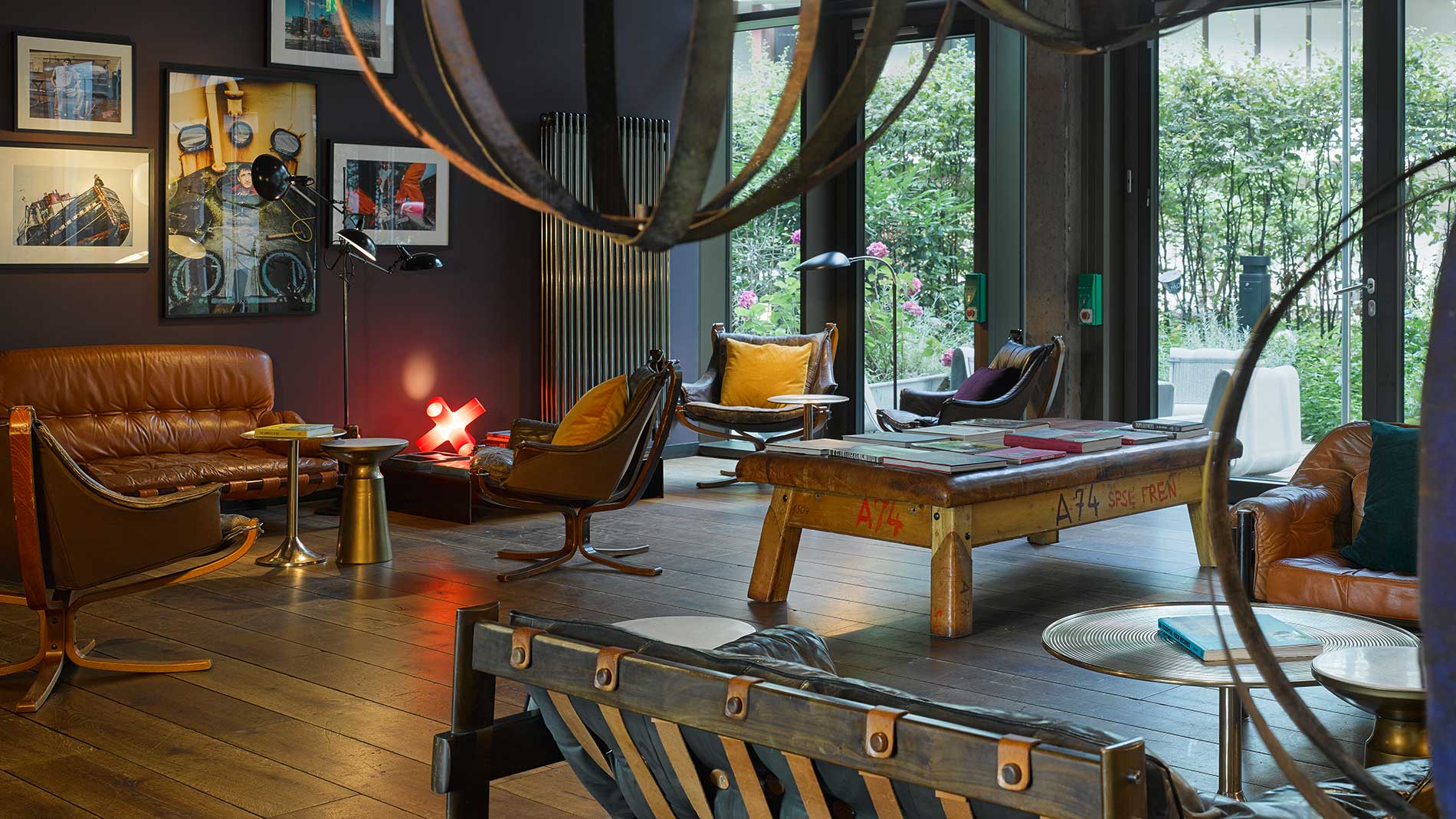
Hotel construction: when ventilation and acoustics become dynamic
Photo: 25hours
In the past, hotel fit-out was a classic project business. Building services ran rigidly in the background. Today, the hotel is a dynamic ecosystem connected via the Internet of Things (IoT).
This technological shift is shaping architecture, especially as conventional new-build projects are becoming less common. The refurbishment of existing buildings dominates the market. “There are more and more conversions,” says Rohwedder. Trends such as co-working and co-living are merging with traditional hotel operations - and this poses a massive challenge for building services. “The lobby is now a mixture of check-in and co-working zone; in the evening, a DJ plays there. The best example of this is the 25hours Hotels brand,” the expert explains. This multifunctional use of spaces means that technical building equipment must be adaptive. Heating, air conditioning, ventilation and acoustic systems must use smart sensors to respond in real time to different occupancy levels and types of use, so that energy is not wasted unnecessarily.
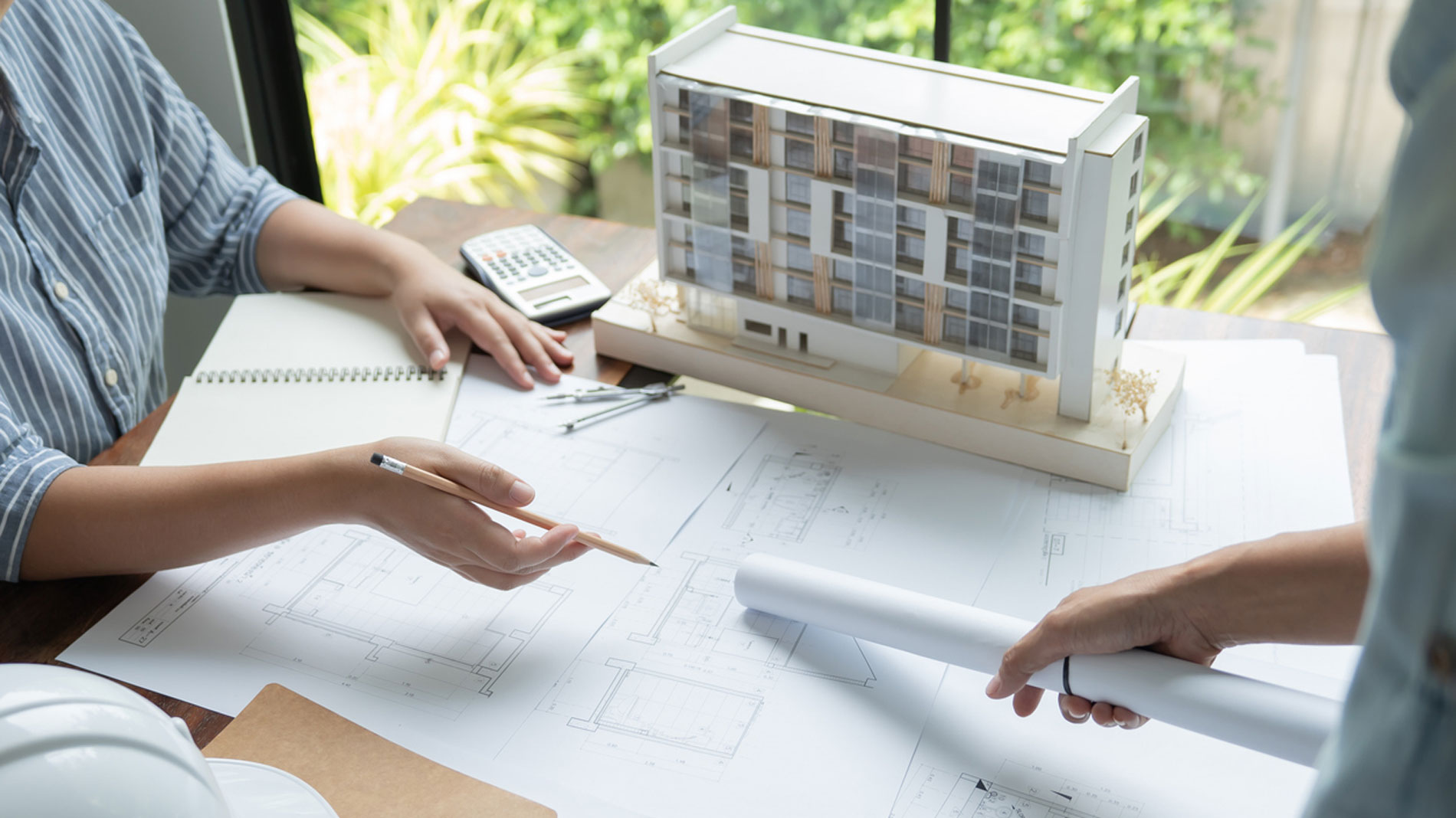
The project manager as the conductor of smart building services
Photo: Dacharlie
With this upgrade to a smart building, the boundaries between classical building physics, electrical engineering and IT become blurred. Who ensures that the property management system (PMS) communicates flawlessly with room thermostats, IoT presence detectors, digital locking systems and the overarching building management system? Traditional planning structures often fail when faced with these highly complex interfaces.
This is where the project manager takes the lead. They must understand how hardware and software interact within the building. Gesa Rohwedder emphasises this proactive role: “A project manager has to sit at the table with all stakeholders, including the investor, right from the start and ask many questions: What about sound insulation? What about the air conditioning or the sprinkler system? These matters must be defined early on and orchestrated effectively.” The key is to consistently ensure the right balance between quality, cost and time. “You also have to be unpopular at times,” says Rohwedder. If, for example, the system integrator for building automation is brought into the construction process too late, there is a risk of considerable delays during commissioning, communication errors between the systems and expensive additional claims.
Lighting and climate control: the invisible integration of technology
A decisive success factor in modern hospitality design is the visual invisibility of technology. Guests expect maximum digital convenience and a perfect indoor climate, but do not want to be overwhelmed by technical controls.
A suitable example of this is modern lighting and room management. Human Centric Lighting (HCL), which adapts to the natural human biorhythm, noticeably enhances the quality of stay in a hotel room. When the physical light switch on the wall becomes an intuitive smart-home interface that also controls motorised curtains, lowers the temperature and transmits the “Do not disturb” mode directly to the housekeeping software, building services and guest comfort merge seamlessly. Project management ensures that such integrated bus systems are already taken into account during shell construction through appropriate cable routes, server capacities and space allocations.
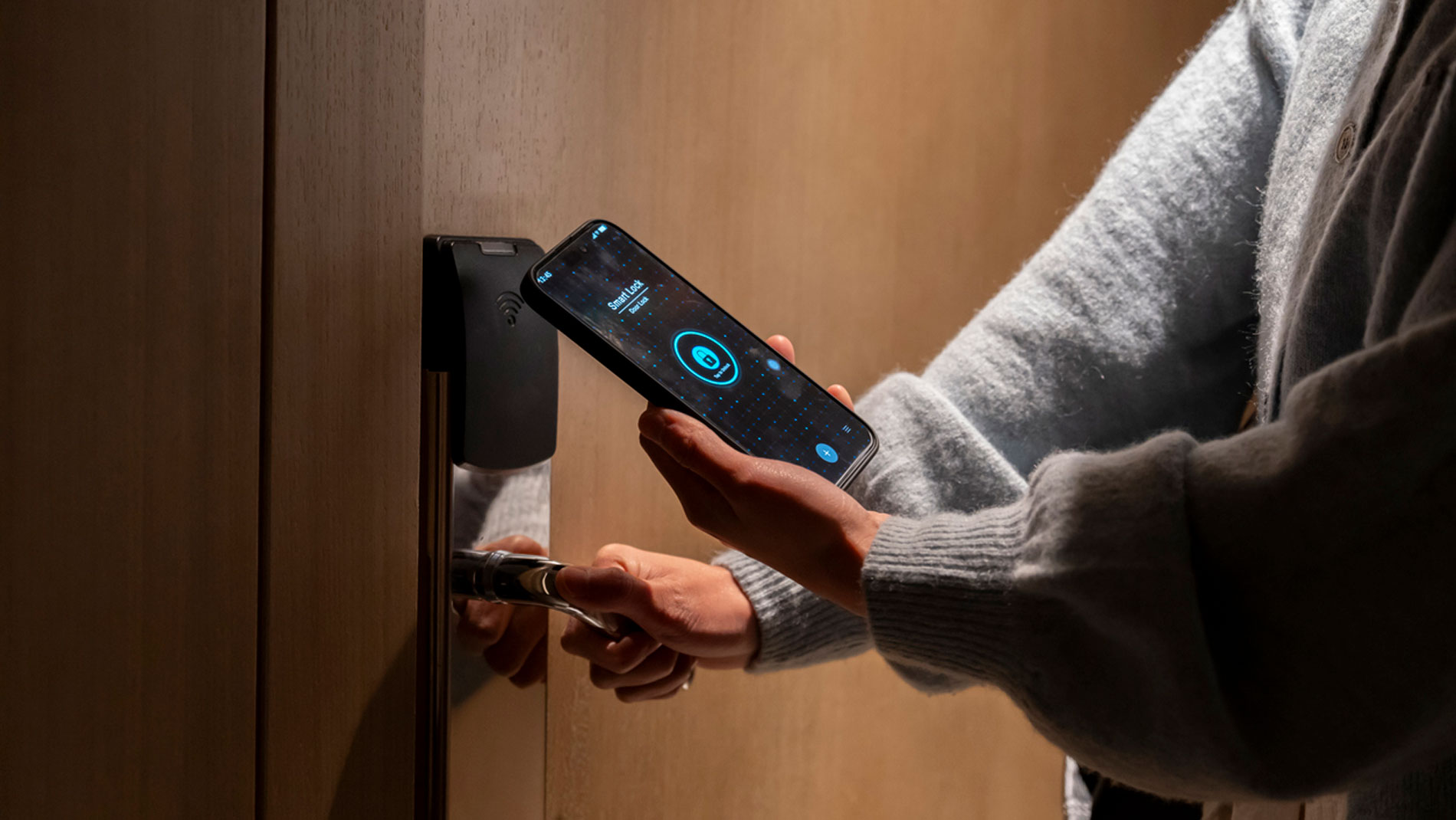
Digital guest journey meets existing walls
Photo: MengWen Guo
The heart of digitalisation is the “seamless experience” for the guests. Online check-in and the “mobile key” on the smartphone are becoming the new industry standard. When this IT is cleanly linked with the building services, the room “wakes up” in the background: the heating starts up and the light goes on as soon as the guest checks in via the app. This is also an economically necessary step: “The principle of the classic reception with several receptionists is simply outdated. Today there are excellent solutions for digital reception and digital keys. Around 30 per cent of personnel costs can be saved in this way,” Rohwedder calculates.
However, implementing this smart infrastructure involves hurdles, as the market is dominated by existing properties. “Building permits take a long time anyway, but heritage protection in particular can sometimes appear unexpectedly even during an ongoing conversion,” Rohwedder says, describing practical experience. Thick historic walls, which block Wi-Fi and radio signals from IoT sensors, or structural constraints make it difficult to retrofit cabling and require highly flexible engineering solutions.
Conclusion: holistic connectivity secures the future
Future-proof, ESG-compliant and profitable hotel properties are not created by simply working through individual craft services in isolation. Economic success fundamentally depends on how early smart building technology, design and operational processes are interlinked. Modern project management has long since ceased to be merely a control body for schedules. It is the strategic catalyst that translates intelligent building services into profitable, functioning realities focused on the guest.
Anja Steinbuch
Freelance Author for Building. Technology. Solutions.
Anja Steinbuch explores how buildings can become more than just structures of stone and steel. Her goal is to make technological developments in the built environment accessible and easy to understand by presenting them from the perspective of the people who use and experience them.