Reading time: 3 minutes
A delicate cup of coffee in the soft light of early morning, the vibrancy of a city bathed in golden evening light, or the flicker of a candle—light addresses our senses subtly yet profoundly. It shapes perception, evokes emotion, and influences the atmosphere of spaces. As a design instrument, light zones, structures, and enables functional building use. However, it only unfolds its full, holistic impact on occupants when contextual parameters are considered.
This is where intelligent lighting technologies come into play. They enable a seamless integration of lighting and building services. The fundamental shift lies in moving away from isolated product thinking: luminaires, sensors, and control units no longer operate independently but as components of a higher-level system architecture.
In networked buildings, lighting communicates with HVAC, shading systems, energy management, and IT infrastructure. Presence detection and daylight data can influence thermal control loops; illuminance levels respond dynamically to solar gains or internal loads; IP-based infrastructures transform lighting into a data carrier, enabling sophisticated smart building strategies.
This connectivity redefines the role of lighting within building technology—from a passive energy consumer to an active element in control logic and data analytics. Consequently, not only operational processes but also planning and execution paradigms are evolving. Networked lighting systems introduce significant technical complexity and greater responsibility, while simultaneously creating new opportunities for electrical planners, system integrators, and engineering consultancies. Interdisciplinary collaboration becomes indispensable.
Manufacturers like the Finnish company Casambi Technologies Oy collaborate closely with partners to create flexible lighting solutions tailored to different environments, where software and service are just as essential as sensitivity to materials and light quality.

Casambi technology serves, for example, as the invisible guardian of one of the last remaining Gutenberg Bibles. Printed in the 15th century, this incunabulum is extremely sensitive to light exposure; excessive temperatures or incorrect humidity levels can also cause irreversible damage. Nevertheless, the artifact is publicly accessible at the Cultural Center of the Polish Kociewie region.
This is made possible by a control system based on a wireless Bluetooth Low Energy mesh network. The invisible protection layer replaces conventional control cabling, which would have been nearly impossible to integrate into the listed interiors of the historic Cistercian abbey.
Illuminance levels within the display case are calibrated with an accuracy of just a few percentage points, ensuring that not even a fraction more light than permitted reaches the Bible’s pages. This precision protects the historic pigments from degradation. The system is further supported by dynamic, sensor-driven lighting scenes that automatically reduce intensity to a minimum when no visitor is present near the exhibit.
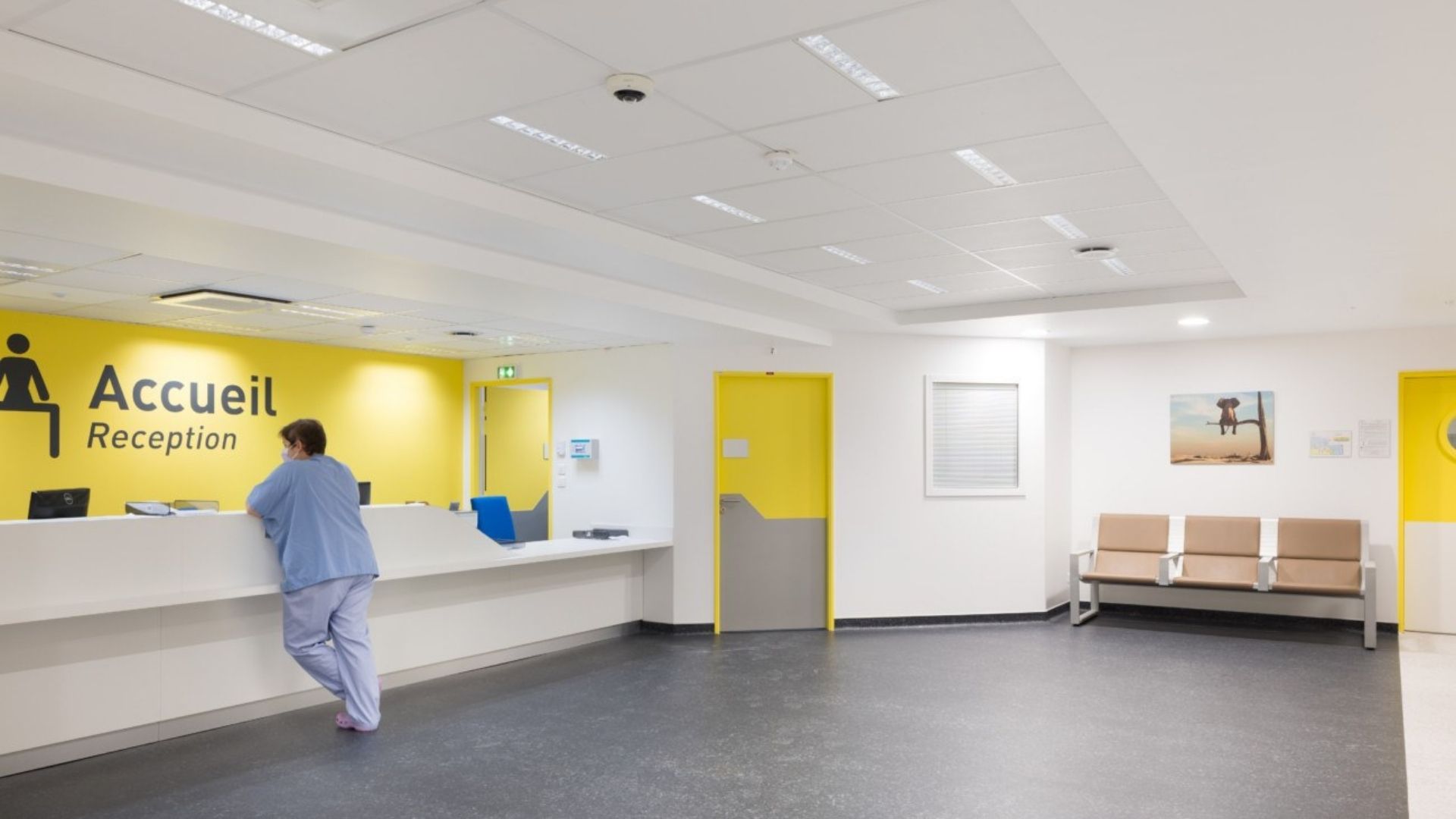
Casambi’s control systems are flexible and scalable—from small installations to industrial or complex large-scale projects such as the Gustave Roussy Hospital in Villejuif near Paris.
This oncology center is largely located underground. As a result, it implements a Human Centric Lighting (HCL) concept that aligns light intensity and correlated color temperature with the natural progression of daylight, while also accounting for spatial and movement-related variables.
In subterranean healthcare facilities in particular, lighting exerts a significant influence on patient and staff well-being. Prior to the installation of the new lighting system, users reported fatigue and even concerns about their mental health. By recreating the dynamics of natural daylight, the HCL concept has mitigated the negative effects associated with underground environments and measurably improved quality of life for both patients and medical personnel.
These exemplary projects clearly illustrate the added value that networked lighting systems can deliver in addressing the complex requirements of contemporary building design. Beyond energy efficiency and operational optimization, intelligent lighting contributes directly to cultural preservation, occupant well-being, and the strategic evolution of integrated building technology.