
Reading time: 4 minutes
The New Frankfurt is celebrating its 100th anniversary this year. To mark the occasion, Frankfurt’s Museum Angewandte Kunst (Museum of Applied Arts) has organized several exhibitions and a variety of events, some of which will run through January 2026. In addition to the history of reform ideas in urban planning, architecture, and lifestyle that developed in just a few years under the leadership of architect Ernst May (1886–1970), what is particularly interesting from today's perspective is whether and what can be learned from the housing program. After all, history only remains relevant if it allows for new lines of continuity when examined from the present.

What Defined the New Frankfurt?
After the First World War and the violent end of the monarchy, planners and architects in the young Weimar Republic pursued a public welfare-oriented approach to urban planning and housing construction. Burdened by the economic consequences of the war and the hyperinflation of 1923, society seemed open to new ideas. The programmatic title for Das Neue Frankfurt (The New Frankfurt) was coined by Ludwig Landmann (1868–1945), who was elected mayor in 1924. At that time, everything was given the "New" prefix; people spoke of New Building, New Objectivity, and New Vision, which also played an important role in photographic documentation in Frankfurt.
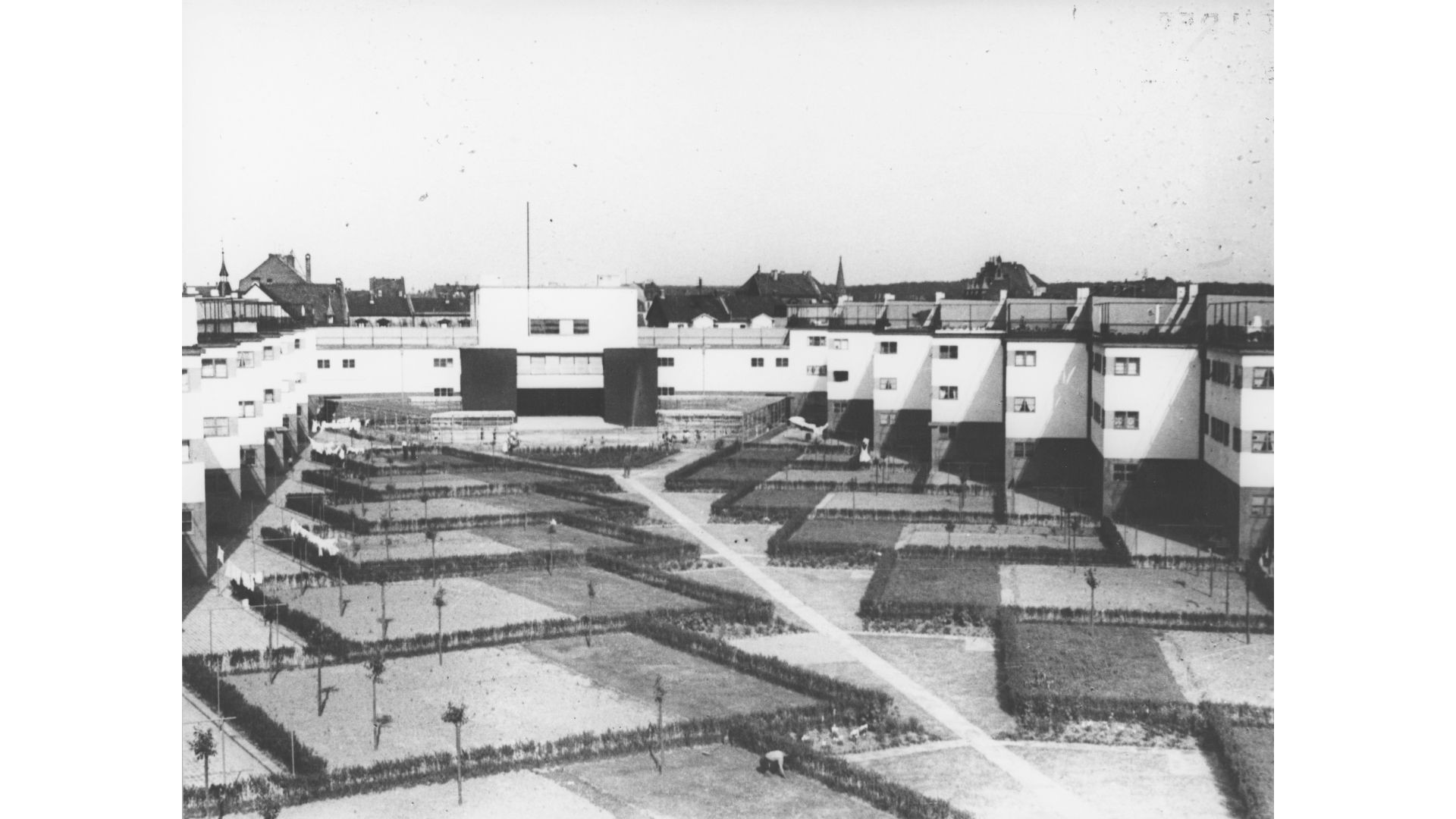
The ambitions behind these terms were great: In addition to comprehensive urban planning with an enormous housing program, life itself was to be given a new framework. The protagonists set their sights on the “New Man,” whom the philosopher Friedrich Nietzsche had dreamed of even before the turn of the century. Light, air, and sun were popular aspects that were now intended to allow even simple workers and their families to live in a new environment of green satellite towns—a way of life that integrated the social with the aesthetic and culturally defined the inhabitants as “New Men.”

Politics and Housing
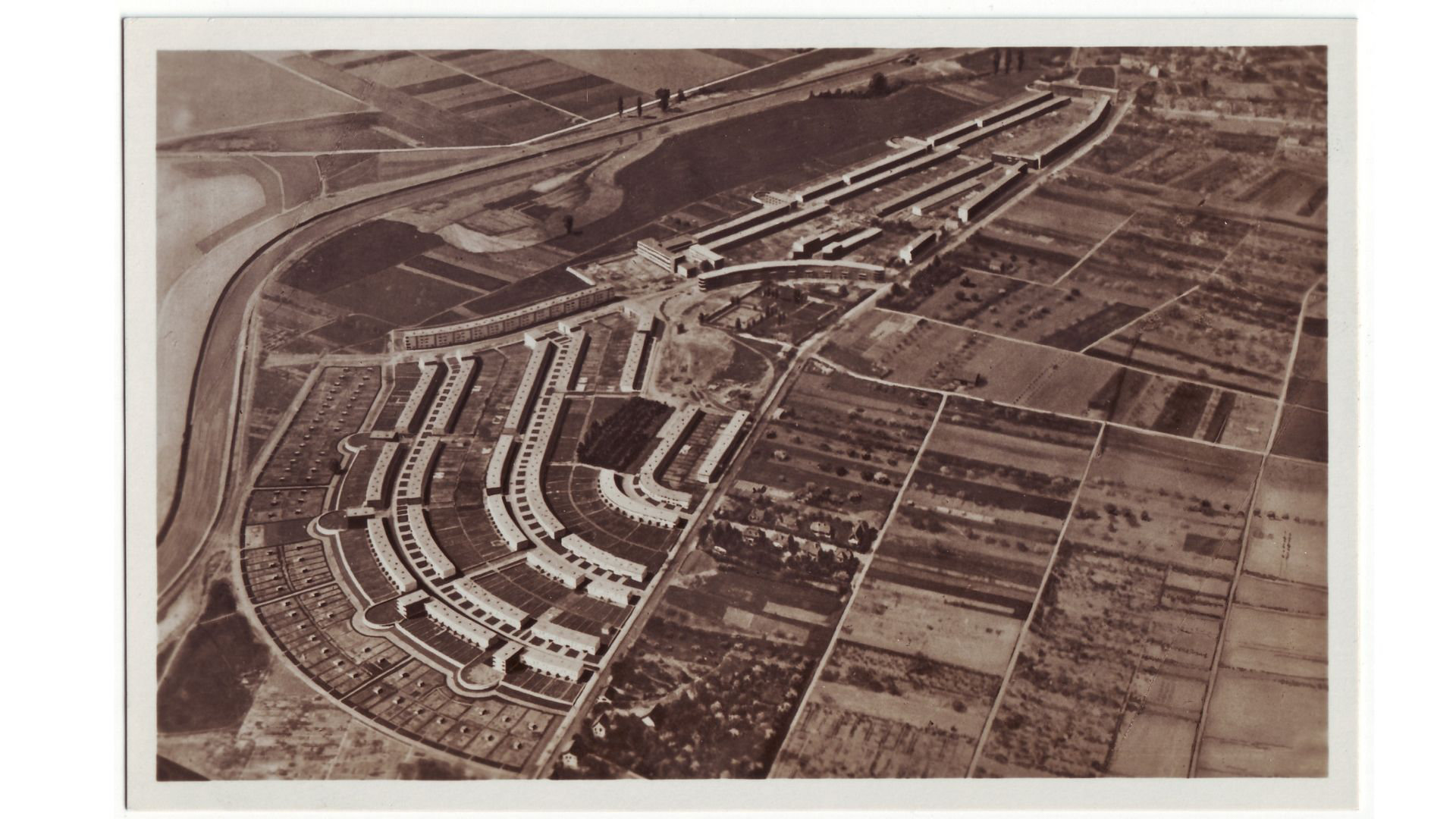
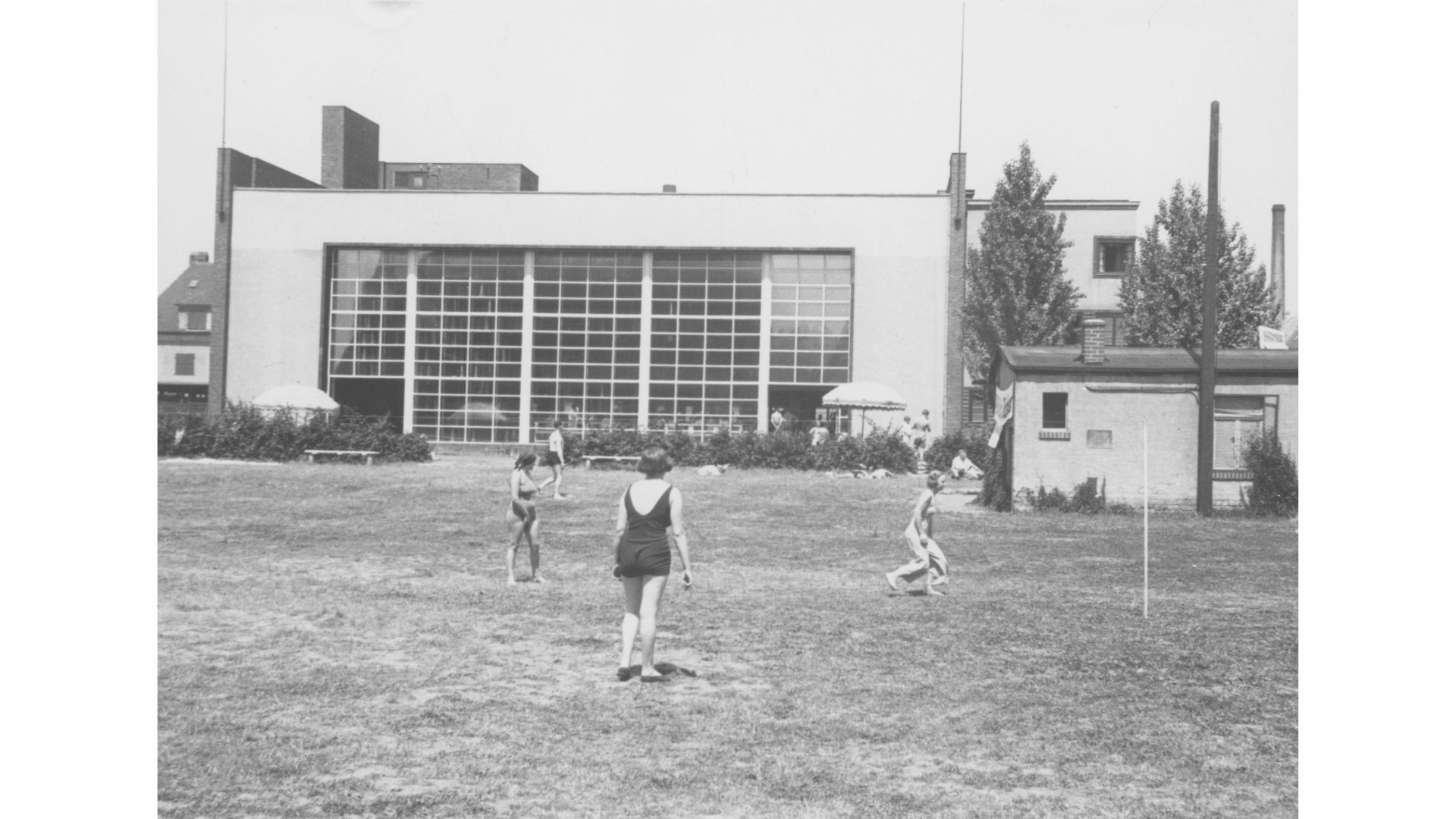
Without Ludwig Landmann, who served as mayor from 1924 to 1933, the New Frankfurt project would not have been possible. Among other things, his investment program aimed at ending the housing shortage in the city and, with a far-sighted vision, initiating a cultural transformation. Ernst May, head of the planning department, assembled a team of young architects and developed a satellite city concept, while Martin Elsaesser (1884–1957), as city planning director, worked with his staff on new schools, the Großmarkthalle (Wholesale Market Hall), and other special buildings.
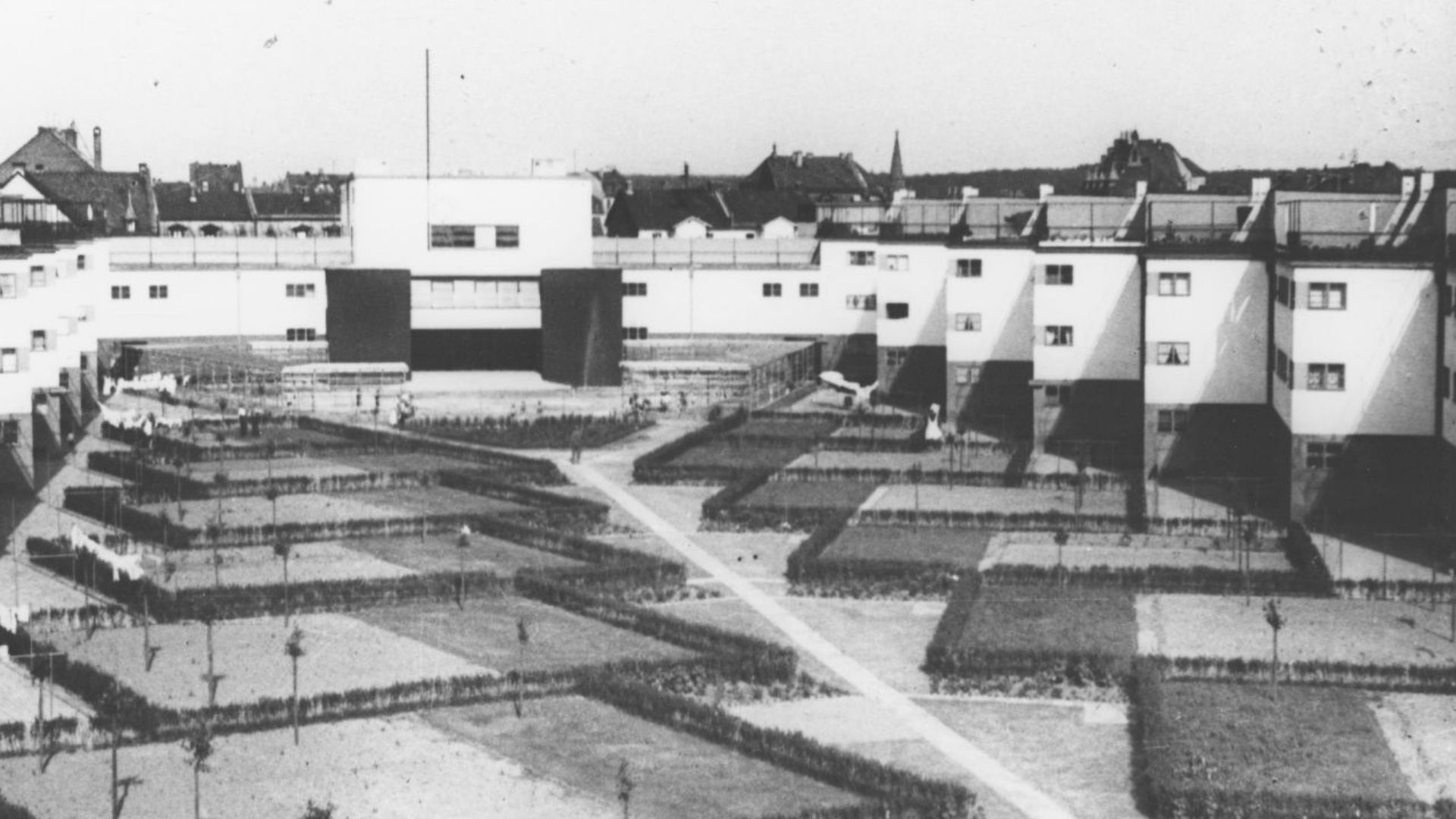
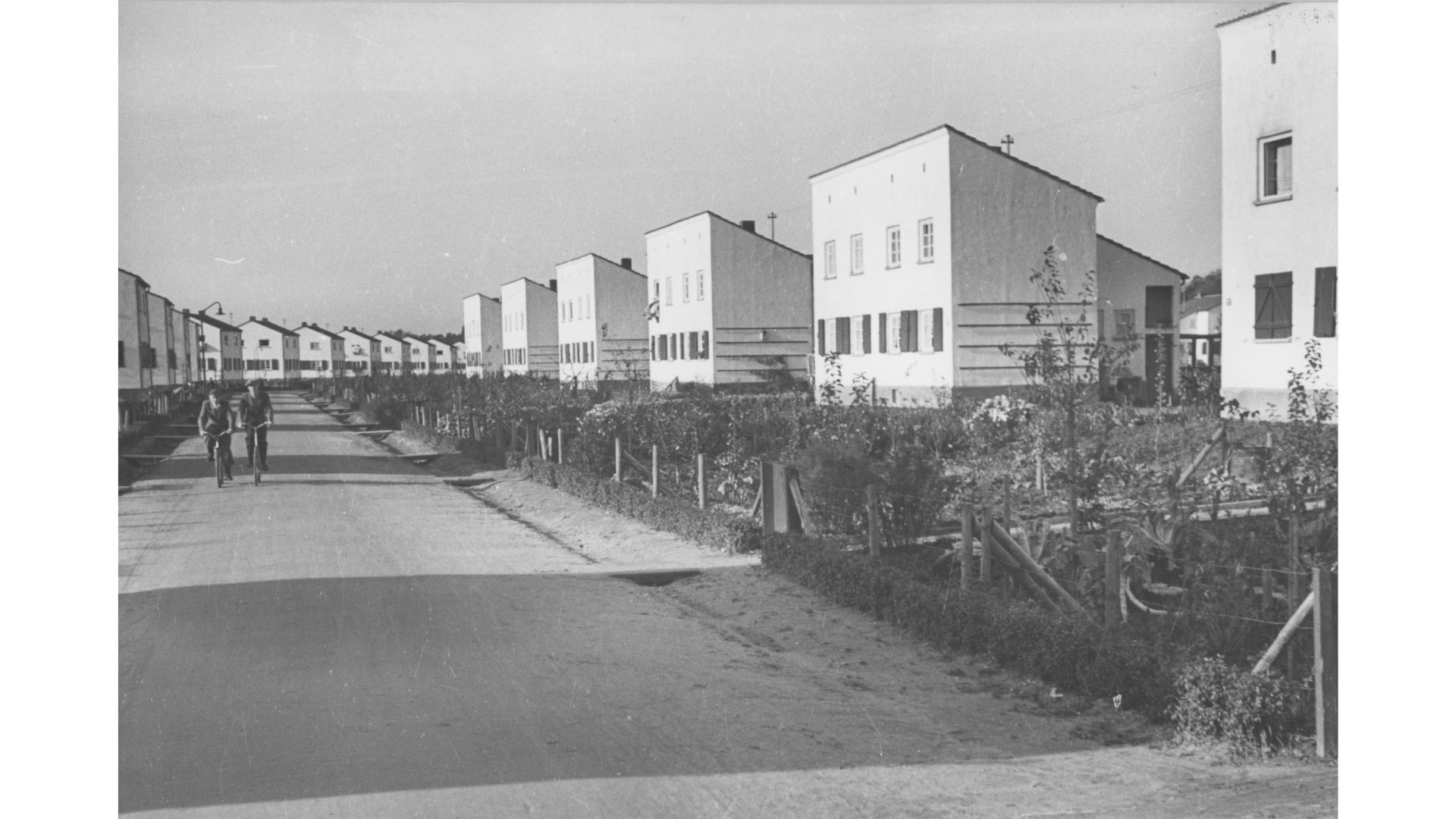
The centerpiece of New Frankfurt was a housing construction program on what was then the outskirts of the city, which resulted in the creation of approximately 12,000 residential units in a public-private partnership, most of which were located in newly built settlements. Most of the projects in Frankfurt that can be classified aesthetically within the New Objectivism movement were handled by the staff of the planning office. To save costs, the architects experimented with prefabrication and assembly methods. However, the economic development of the late 1920s led to prefabrication becoming more expensive, costing ten percent more than conventional construction.
Educating the Users
One of the goals of New Frankfurt was to create a new residential culture, for which Margarete Schütte-Lihotzky (1897–2000) developed the now famous, ergonomically designed Frankfurt Kitchen. To spread the reform ideas, Ernst May published the journal das neue frankfurt (The New Frankfurt) between 1926 and 1930, which was continued in 1932/33 under the title die neue stadt (The New City). It promoted the goals and successes in Frankfurt and was not only nationally significant but also received attention abroad, as evidenced by 135 subscribers from Japan. The journal’s design by siblings Grete and Hans Leistikow, and later Willi Baumeister, as well as the documentation in the spirit of New Vision by an entire team of photographers, contributed significantly to its success.
The last major sensation was the CIAM congress "The Minimum Living Space," which took place in Frankfurt in 1929, against the backdrop of the global economic crisis, and dealt with small living units. In Frankfurt, the economic development of the late 1920s led to budget cuts and difficulties in obtaining credit. As early as 1930, Ernst May left Frankfurt together with a group of architects and planners in the hope of finding better working conditions in Moscow. This experiment failed after only a few years. With the National Socialists' seizure of power, New Frankfurt came to a definitive end in 1933.
Do We Need a New Building Movement Today?
Germany is once again facing a housing shortage today, especially for lower income groups. Forecasts indicate that at least two million units will need to be built by 2030. Simplified permitting procedures and modular construction are intended to pave the way for this. But more is needed: Affordable land prices and experimental building designs are certainly necessary, but so are courageous local administrations and politicians who are willing to take risks. In view of the dramatic shortage of land, new construction is not the only option. Rather, entirely new qualities of life can emerge through conversions, expansions, densification, or shared functions, provided they are removed from the cycle of purely commercial logic.
In contrast to the rather anti-urban, one-dimensional settlement solution in New Frankfurt, today's focus must be on diversity so a wide variety of needs and lifestyles can be taken into account. Since small-scale and diverse solutions often appear patchwork to people, it is all the more important today to communicate successes in the media, as was done in New Frankfurt. A strong narrative is needed to show how diverse projects fit into a larger context. After all, individual solutions are defined not only by their form, but also by whether they create added value for the neighborhood. These can be, for example, public spaces that allow social interaction or shared functional spaces that are managed jointly.
As in New Frankfurt, bold local politics and interdisciplinary cooperation are needed today to tap into spatial reserves, for example on the periphery, and to allow unconventional strategies that develop added social value from existing buildings with minimal intervention. Against the backdrop of climate change, resource scarcity, and a weakening economy, the future of construction lies in the permanent adaptation of existing structures that remain open to transformation and new ways of living.