Reading time: 8 minutes
Human and Operational Insights from AI-Connected Buildings
Across documented projects and operational case studies, evidence shows that AI-connected building systems deliver meaningful operational value when technical intelligence is aligned with human decision-making. In realised projects, the decisive factor is not the sophistication of algorithms, but how systems interact with users, operators, and social expectations.
Taken together, these use cases confirm a shared operational lesson observed in practice: AI in the built environment functions most effectively as a decision-support layer embedded within human, social, and operational systems, rather than as an autonomous authority.
Amsterdam Airport Schiphol
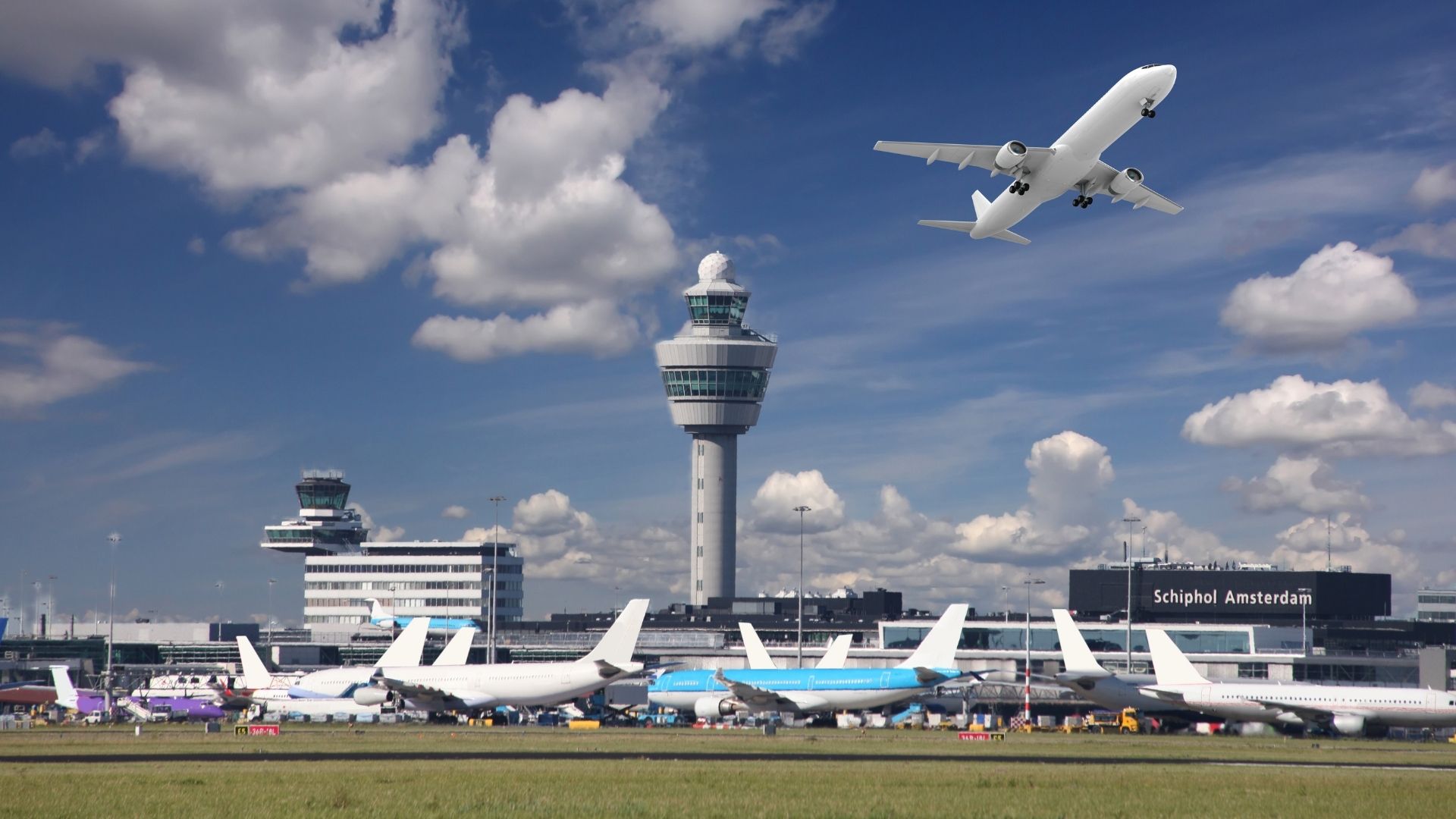
Amsterdam Airport Schiphol is a major international hub airport operating a large-scale terminal and infrastructure portfolio under continuous operational pressure. Passenger volumes vary significantly due to delays, security procedures, weather conditions, and global disruptions, creating a highly dynamic operational environment.
Typology
Safety-critical public transport infrastructure with high passenger density, strict regulatory oversight, and non-negotiable security and safety requirements. Operational continuity is prioritised over efficiency.
Operational Trigger
Irregular operations such as cascading flight delays, security escalations, infrastructure works, and external system disruptions frequently alter passenger distribution and space usage inside terminal areas.
AI Recommendation
Digitally supported monitoring and information systems provide situational awareness to support planning and coordination across airport operations. Public documentation does not indicate autonomous decision-making or automated control of building systems.
Facility Management Decision
Facility Management teams remain responsible for adapting terminal environments during irregular operations. Decisions prioritize safety, accessibility, and passenger flow continuity, particularly when predefined operational plans no longer reflect real-time conditions.
Human Override Point
Human override occurs when disruptions or safety risks require deviation from predefined operational procedures. These moments include overcrowding, construction-related hazards, or external system failures where manual coordination across stakeholders becomes necessary.
User Impact
For passengers, this results in maintained safety and acceptable service continuity, even if efficiency or comfort is temporarily reduced. Schiphol explicitly links infrastructure investments and operational decisions to passenger experience and safety outcomes.
What Failed
Predictive or predefined operational models alone proved insufficient to manage high uncertainty scenarios. Schiphol’s experience demonstrates that resilience depends on human accountability, cross-stakeholder coordination, and the ability to intervene beyond digitally supported systems when conditions change rapidly.
Connectivity: System ↔ Human
Digital monitoring platforms aggregate operational data across security, flight information, and facility systems, but authority remains with human operators. The value of connectivity lies not in automation, but in enhancing situational awareness and enabling accountable decision-making under uncertainty.
Punggol Digital District, Singapore
Typology
The asset typology is a district-scale innovation precinct combining education, workplaces, public spaces, and shared infrastructure. Unlike a single building, Punggol Digital District operates through distributed ownership and management across multiple stakeholders under a coordinated development framework.
Operational Trigger
Daily operations are shaped by highly variable usage patterns driven by academic schedules, office activity, public access, and large-scale events. This variability creates coordination challenges across buildings, infrastructure systems, and shared public spaces rather than within individual assets.
AI Recommendation
Public documentation describes Punggol Digital District as digitally enabled, with data and digital infrastructure supporting monitoring, planning, and long-term optimisation at the district level. These systems are presented as enablers for informed decision making rather than autonomous control mechanisms.
Facility Management Decision
Facility management responsibilities remain distributed among individual building operators and district level managers. Operational decisions must balance district wide objectives such as energy efficiency and connectivity with building specific requirements and user needs.
Human Override Point
Human intervention becomes necessary when local conditions require deviation from district level coordination, such as events, safety considerations, or conflicting operational priorities between tenants and shared infrastructure.
User Impact
For users, the district offers a connected and integrated environment that brings education, work, and public life into proximity. At the same time, operational decisions may be less visible to users due to the scale and centralisation of infrastructure systems.
What Failed
Fully centralised coordination alone proved insufficient to address diverse and localised operational needs. The Punggol Digital District case demonstrates that district scale digital systems require clear human governance and accountability structures to remain responsive in daily operation.
Connectivity: System ↔ System
Transport infrastructure, utilities, building systems, and shared digital platforms are interconnected to enable district-level coordination. The challenge is not automation, but ensuring that integrated systems remain responsive to diverse and evolving operational demands across assets.
Marina Bay Sands Singapore
Marina Bay Sands is a large scale integrated resort in Singapore comprising hotels, convention and exhibition facilities, retail, entertainment venues, and public attractions. The asset operates continuously with high visitor volumes and complex operational requirements across hospitality, tourism, and public access functions.

Typology
The asset typology is a mixed-use mega structure where hospitality, tourism, retail, and public space overlap. Each function follows different service logics, comfort expectations, and regulatory requirements, yet must be coordinated within one operational framework. This creates inherent tension between standardisation and situational adaptation.
Operational Trigger
Operational pressure is driven by fluctuating hotel occupancy, large-scale exhibitions, global events, and tourism cycles. Peak demand periods can change rapidly, placing strain on shared infrastructure, back of house operations, and facility services. These triggers rarely affect one function in isolation, requiring coordinated responses across the entire complex.
AI Recommendation
The annual report describes the use of digital systems and data analytics to support operational efficiency, sustainability initiatives, and performance monitoring across the integrated resort. These tools are positioned as management support systems rather than autonomous decision makers.
Facility Management Decision
Facility Management teams play a central coordinating role, translating operational signals into concrete actions across hospitality, events, and public areas. Decisions prioritise guest safety, service quality, and regulatory compliance, particularly when competing demands arise between different functions of the resort.
Human Override Point
Human intervention becomes critical during major events, unexpected surges in visitor numbers, or maintenance related disruptions. In such moments, predefined operational routines are adjusted manually to prevent cascading failures across interconnected functions.
User Impact
For guests and visitors, this approach ensures continuity of service and safety across the resort, even when operational adjustments are required behind the scenes. The report links operational decisions directly to guest experience and brand reputation.
What Failed
The complexity of a multi-functional integrated resort limits the effectiveness of standardised or centralised operational models alone. Marina Bay Sands’ experience highlights that human coordination across functions remains essential to manage variability and maintain service quality at scale.
Connectivity: Building ↔ System
Hotels, convention halls, retail areas, and public attractions are physically distinct yet technically interdependent through shared environmental, circulation, and facility systems. The strength of this model lies in integration, but that same integration increases systemic sensitivity when demand shifts rapidly.
EDGE Südkreuz Berlin
EDGE Südkreuz is a modern office building developed by EDGE Technologies, located in Berlin and designed with a strong focus on sustainability, digital infrastructure, and user wellbeing. The building is positioned as a future-oriented workplace asset rather than a conventional office development.
Typology
The typology is a predominantly office-based, single-use asset with relatively predictable daily occupancy patterns. Unlike public infrastructure or mixed-use developments, user behaviour follows regular rhythms linked to working hours, enabling a higher degree of operational foresight and stability. This makes the building an ideal test case for digitally supported building operations under controlled conditions.
Operational Trigger
Operational requirements are driven primarily by daily office use, indoor environmental quality expectations, and long-term sustainability performance targets. The building is designed to support consistent working conditions rather than rapid fluctuations in use.
AI Recommendation
Public project documentation describes the use of smart building technologies and digital systems to support energy efficiency, indoor comfort, and building performance monitoring. These systems are presented as part of an integrated smart building concept, without public disclosure of autonomous decision-making logic.
Facility Management Decision
Facility Management operates primarily in a supervisory mode. Decisions focus on maintaining alignment between actual performance and intended design outcomes, particularly around comfort, sustainability, and system efficiency. Intervention is deliberate and measured, reflecting the building’s stable operating context.
Human Override Point
Human intervention occurs primarily in maintenance, system calibration, and exception handling scenarios. Rather than continuous override, Facility Management provides oversight and adjustment when performance deviates from expected parameters.
User Impact
For users, the building offers a high-quality working environment with a strong emphasis on comfort, sustainability, and material responsibility. The use of certified timber contributes to environmental performance and occupant perception of the building.
What Failed
The EDGE Südkreuz case reveals the limits of transferability. Its success depends on predictable occupancy and controlled conditions. The model does not easily extend to environments characterised by volatility, public access, or safety-critical demands, where human intervention must play a far more active role.
Connectivity: Building ↔ System
Environmental conditions, energy use, and performance indicators are tightly linked to digital monitoring platforms. The building is designed to respond to structured data flows rather than unpredictable external shocks. Connectivity here enhances transparency and long-term optimisation, but its resilience is tied to stability rather than complexity.
Cleveland Clinic Abu Dhabi
Cleveland Clinic Abu Dhabi is a large-scale, tertiary care hospital operating as part of the Mubadala Health network. Designed to deliver highly specialised medical services, the facility functions as critical national healthcare infrastructure. Unlike commercial assets, its primary performance metric is not efficiency or utilisation, but patient safety, clinical outcomes, and continuity of care under all conditions.
Typology
The typology is a safety-critical healthcare facility with 24-hour operation, strict regulatory oversight, and direct impact on human life. Unlike commercial or office assets, operational continuity and reliability take precedence over efficiency optimisation.
Operational Trigger
Operational pressure is driven by fluctuating patient volumes, emergency admissions, complex procedures, and unpredictable clinical demand. Unlike planned events or office schedules, healthcare operations must absorb sudden surges without warning. The report highlights capacity management, system reliability, and coordination across clinical and technical teams as persistent challenges.
AI Recommendation
Digital systems and data-driven tools are used to support information availability, coordination, and planning across clinical and operational functions. These systems enhance visibility into resources, workflows, and performance indicators. However, public documentation makes clear that they serve as decision support tools.
Facility Management Decision
Facility Management plays a critical enabling role, ensuring the continuous availability of building services, medical gases, power supply, and environmental control. Decisions prioritise patient safety, infection control, and regulatory compliance, particularly during peak demand or emergencies where tolerance for failure is effectively zero.
Human Override Point
Human override occurs whenever clinical judgement, safety considerations, or system limitations require deviation from digitally supported workflows. In critical care environments, final decisions remain with medical and operational staff rather than automated systems.
User Impact
For patients, this operational model underpins trust and continuity of care, even under high-pressure conditions. For clinical staff, it provides a stable and reliable environment in which complex decisions can be made without being constrained by automated systems.
What Failed
The Cleveland Clinic Abu Dhabi case demonstrates that digitally supported systems alone cannot manage the full complexity of healthcare environments. In safety-critical contexts, resilience depends on human governance, accountability, and the ability to override systems decisively when patient outcomes are at stake.
Connectivity: Human ↔ System
Digital systems enhance situational awareness and coordination, but authority remains explicitly with clinical and operational professionals. Connectivity strengthens performance only when human governance remains central and decisive.