
Reading time: 3 minutes
The global focus on ESG, sustainability, and climate technologies is no longer a trend. It is a transformation that will redefine the buildings industry. By 2026, sustainability will influence every stage of the building lifecycle, from design and construction to operations and financing. This shift is driven by regulatory pressure, investor expectations, and growing climate risks. For building industry players, the question is no longer “if” but “how fast” they can adapt.
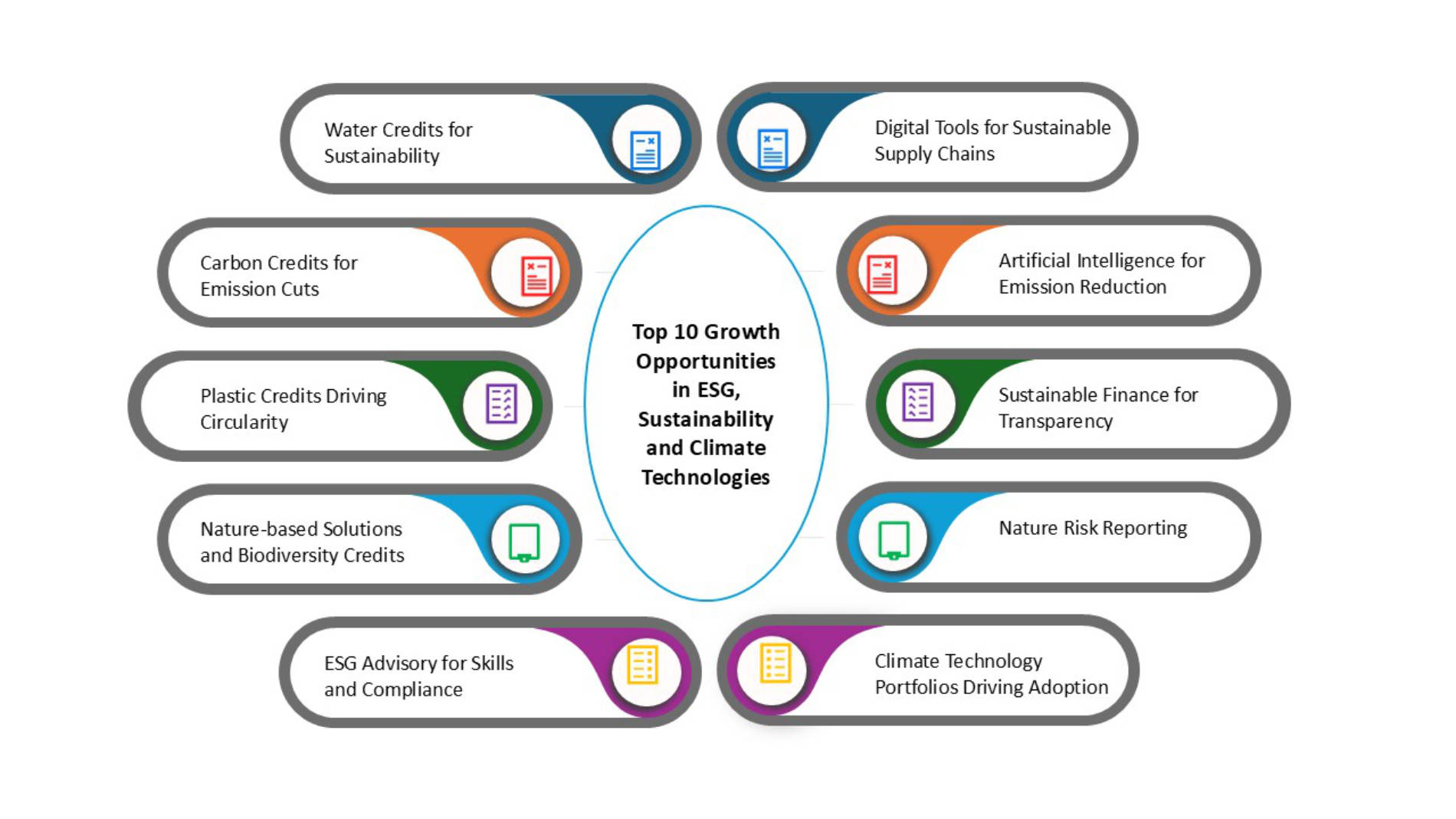
So, what is driving this change? Here are the top 10 growth opportunities in ESG, sustainability, and climate technologies that will reshape the sector:
- Water Credits for Sustainability
- Carbon Credits for Emission Cuts
- Plastic Credits Driving Circularity
- Nature-based Solutions and Biodiversity Credits
- ESG Advisory for Skills and Compliance
- Digital Tools for Sustainable Supply Chains
- Artificial Intelligence for Emission Reduction
- Sustainable Finance for Transparency
- Nature Risk Reporting
- Climate Technology Portfolios Driving Adoption
- Water Credits: Making Every Drop Count
Water scarcity is becoming a critical issue, and buildings will need smarter water management systems to qualify for water credits. Expect widespread adoption of rainwater harvesting, greywater reuse, and advanced metering. Developers who integrate these solutions early will not only meet compliance but also reduce operating costs and appeal to sustainability-conscious tenants.
- Carbon Credits: Monetizing Emission Cuts
Carbon credits are turning emission reduction into a revenue stream. Developers will invest in low-carbon materials such as green concrete and recycled steel, while retrofitting older buildings with energy-efficient systems. This approach creates financial incentives for sustainability and positions companies as leaders in climate responsibility.
- Plastic Circularity: Closing the Loop
Plastic waste in construction is under scrutiny. Circular supply chains will become standard, with recycled plastics used in pipes, insulation, and other components. Manufacturers will innovate to ensure recyclability, and contractors will need to demonstrate compliance to win bids.
- Nature-Based Solutions and Biodiversity Credits
Urban developments will integrate green roofs, vertical gardens, and biodiversity corridors to meet environmental targets. These features improve resilience, reduce heat islands, and enhance community well-being. Planning approvals will increasingly depend on biodiversity impact assessments, making nature-based design a strategic priority.
- ESG Advisory: Navigating Complexity
Regulations and investor demands are evolving rapidly. Developers and facility managers will rely on ESG consultants to craft compliance strategies, implement reporting frameworks and train teams. Advisory services will become essential for avoiding penalties and attracting sustainable finance.
- Digital Supply Chains: Transparency is King
Blockchain and IoT will enable traceable, ethical sourcing of building materials. Transparent supply chains will reduce risks and strengthen brand reputation. Contractors who embrace these tools will gain a competitive edge in an increasingly regulated market.
- Artificial Intelligence for Sustainability
AI will transform building operations through predictive maintenance, energy optimization and real-time carbon tracking. Smart platforms will integrate AI to deliver actionable insights, helping owners cut costs while meeting sustainability goals.
- Sustainable Finance: Green Money Talks
Access to capital will depend on ESG performance. Green bonds and sustainability-linked loans will dominate financing, rewarding projects that demonstrate measurable environmental impact. Developers who fail to meet these criteria risk losing funding opportunities.
- Nature Risk Reporting
Climate risks such as flooding and heat stress will influence property valuations and insurance premiums. Resilience measures will directly impact asset value, making nature risk reporting a critical component of portfolio management.
- Climate Technology Portfolios
Expect rapid adoption of technologies such as solar façades, heat pumps, and carbon capture systems. Buildings will evolve into hubs for renewable energy generation, supporting distributed energy networks, and reducing reliance on fossil fuels.
What Should Industry Players Do?
The time to act is now. Developers should start by embedding ESG principles into every stage of the building lifecycle, from early design to ongoing operations. Focus on earning water, carbon, and biodiversity credits by integrating smart water systems, low-carbon materials, and green spaces.
Contractors can differentiate themselves by adopting circular materials and building transparent supply chains that meet compliance and customer expectations. For developers, investing in AI-driven energy management and digital tools will improve efficiency and reporting accuracy.
Investors should prioritize projects with strong ESG reporting and resilience measures, as these will hold long-term value in a climate-conscious market. Collaboration across the value chain is essential. When developers, contractors, and financiers align on sustainability goals, projects become more attractive to regulators, tenants, and capital providers. Acting early means staying ahead of regulations, reducing costs and future-proofing assets.
The Bottom Line
By 2026, sustainability is not optional. It is a strategic imperative that will determine competitiveness, investor confidence, and long-term value. Those who act now will lead the market. Those who delay risk falling behind in an increasingly green economy.