
Reading time: 2 minutes
A Workforce Transformed
Many of today’s job roles did not exist a decade ago. Artificial intelligence and robotics are reshaping both the physical and cognitive dimensions of work across construction, engineering, and building operations. At the same time, demographic change, ageing workforces, and rising urban complexity are placing new demands on labour markets already struggling to fill critical roles.
These shifts raise a central question for the industry: How can we build and operate the cities of tomorrow when traditional workforce models are no longer sufficient?
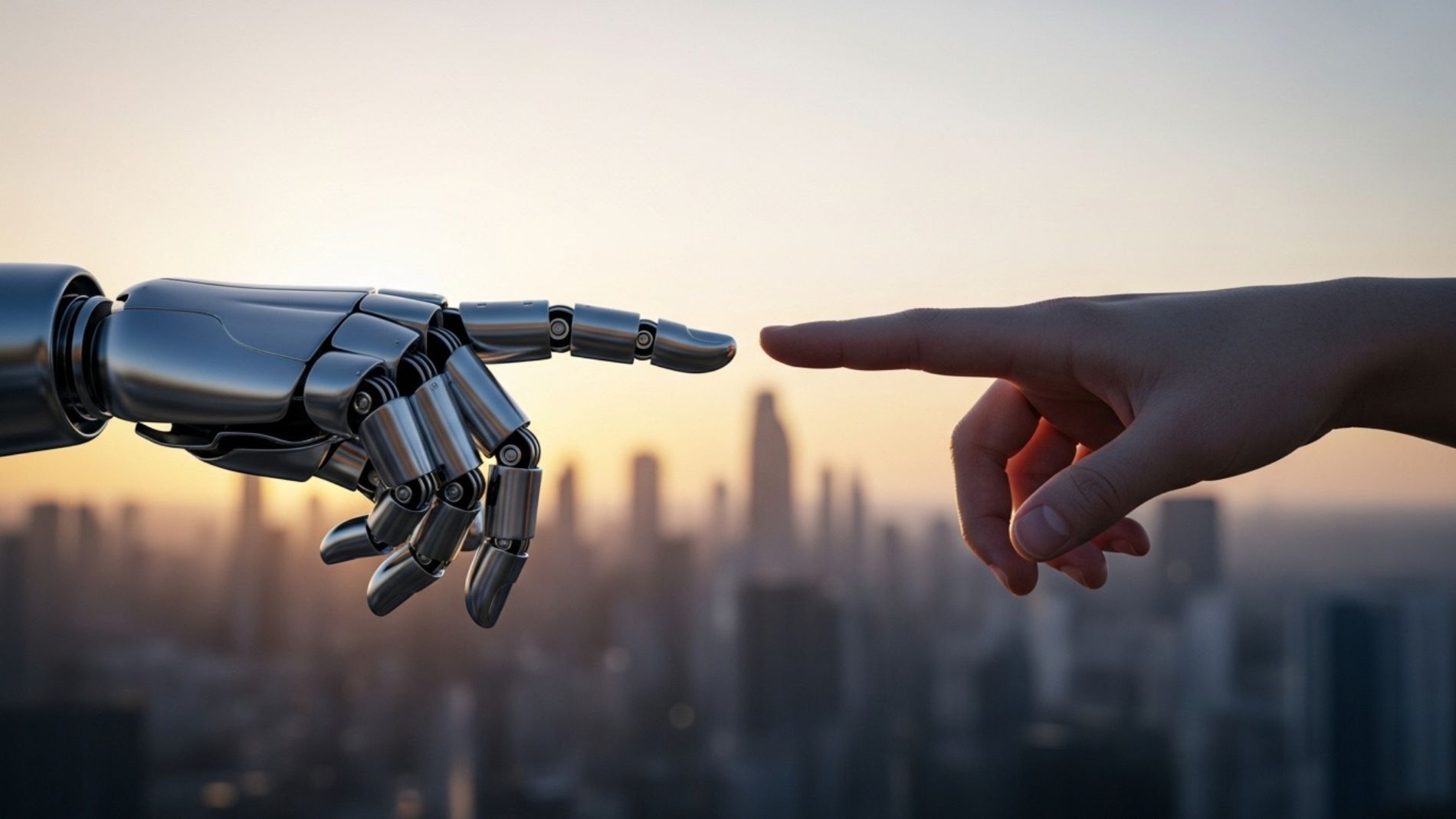
Emerging research points toward a hybrid approach—Joint Workforces that combine human expertise with intelligent machines to achieve higher productivity, safety, and adaptability.
Diversity 2.0: Beyond Representation
Diversity is increasingly recognised not as a social obligation but as a strategic driver of innovation. Studies show that diverse teams outperform homogeneous ones in creativity, resilience, and decision-making. In the built environment, this includes women, older professionals, migrant workers, and career-changers—groups that bring unique cognitive styles and lived experiences into project environments.
As automation reduces the reliance on physical strength, new pathways are emerging for underrepresented groups to participate across technical and construction-related fields. The whitepaper asks: How can organisations design structures that not only attract diverse talent but also actively leverage their strengths?
AI & Human–Machine Interaction
AI-enabled planning tools, digital twins, and collaborative robots are already influencing every phase of construction. These technologies can improve accuracy, reduce errors, and remove workers from hazardous or repetitive tasks. Rather than replacing people, they expand human capability by allowing workers to focus on judgment, coordination, and creative problem-solving.
Successful Human–Machine Interaction, however, depends on trust, psychological safety, and intuitive interfaces—factors essential for workforce acceptance and seamless collaboration.
Collaboration & Lifelong Learning
With the half-life of skills shrinking, organisations need dynamic learning ecosystems that support reskilling, cross-generational knowledge transfer, and digital literacy. VR-based simulations and adaptive robotic systems offer new training possibilities, preparing workers for more complex hybrid environments.
The whitepaper explores: How can the built environment cultivate a culture of continuous learning that enables sustainable workforce transformation?
Why It Matters
Joint Workforces strengthen talent pools, enhance safety, improve quality outcomes, and help cities respond to accelerating social, climatic, and technological pressures. They offer a path toward work ecosystems that are both human-centred and technologically adaptive.
If you're ready to explore the full analysis, download the whitepaper Joint Workforces: Driving Innovation with Diversity 2.0.
Download Whitepaper
- Joint Workforces: Driving Innovation with Diversity 2.0 (pdf, 825 KB)