
Reading time: 4 minutes
Across global commercial real estate, the role of heating, ventilation, air conditioning (HVAC) systems is undergoing a profound transformation. Long viewed as necessary but often overlooked infrastructure, HVAC is rapidly becoming a strategic lever for sustainability, operational efficiency, and occupant well‑being. The convergence of Internet of Things (IoT) connectivity, artificial intelligence (AI), and data‑driven services is redefining how buildings are maintained, optimised, and managed, marking a shift from cost‑center operations to performance‑driven, intelligent ecosystems.
From Breakdown Response to Intelligent Maintenance
HVAC maintenance has historically relied on two traditional models: reactive response, fixing equipment only after failure, and preventive maintenance based on fixed schedules. Both approaches are increasingly inadequate for modern buildings, where uptime, energy performance, and indoor air quality (IAQ) expectations have risen sharply.
IoT‑based HVAC services introduce two more advanced models: predictive maintenance and outcome‑based maintenance. In predictive environments, sensors continuously monitor equipment health, enabling analytics platforms to forecast faults before they occur. In outcome‑based frameworks, the focus shifts from tasks performed to performance delivered, including energy efficiency, IAQ stability, thermal comfort, and system reliability.
Several macro imperatives accelerate this transition. Post‑pandemic expectations around ventilation and IAQ have surged, with greater emphasis on infection control and occupant safety. Ageing populations have heightened the need for healthier indoor environments. Simultaneously, environmental, social, and governance (ESG) mandates and carbon‑reduction pressures demand more efficient, resilient building systems. These forces collectively position HVAC maintenance as a critical enabler of both operational continuity and sustainability outcomes.
The Compelling Case for Predictive Maintenance
Predictive maintenance is not merely a technological upgrade but carries tangible business and human‑centric value. Unplanned HVAC downtime can significantly disrupt commercial operations, with costs accumulating from lost productivity, tenant dissatisfaction, and emergency repairs. Reactive approaches are consistently more expensive than predictive or scheduled methods, largely due to overtime labour, rush‑order parts, and prolonged equipment inactivity.
Beyond financial savings, predictive strategies directly impact human well‑being. Poorly maintained HVAC systems correlate with higher rates of IAQ‑related complaints, while effective IAQ management is strongly linked to productivity improvements and reduced absenteeism. In this sense, predictive HVAC maintenance strengthens not only operational resilience but also employee experience, tenant comfort, and overall building health.
The Architecture of an Intelligent HVAC Ecosystem
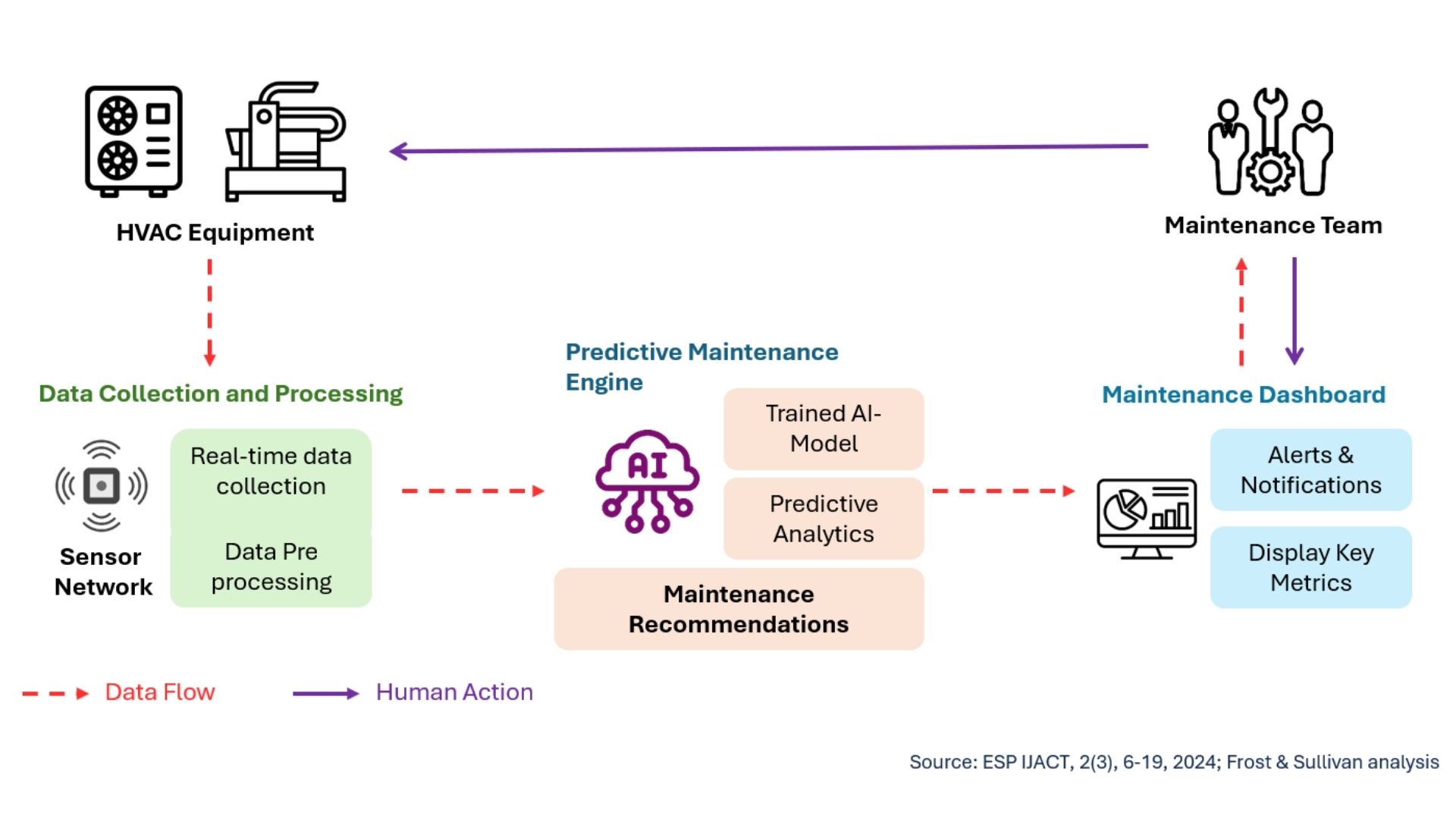
At the heart of IoT‑enabled HVAC services lies a multi‑layered technology architecture designed to capture, process, and act on data in real time.
HVAC equipment and sensor networks constitute the foundational layer, tracking variables such as temperature, humidity, airflow, vibration, IAQ metrics, occupancy, and energy consumption. These sensors form a continuous data stream feeding into data collection and processing platforms, where signals are cleaned, structured, and prepared for analysis.
The next core component is the predictive maintenance engine, typically powered by trained AI models that learn equipment behaviour over time. These engines conduct anomaly detection, performance forecasting, and optimisation analysis.
Insights generated are then presented through maintenance dashboards, supporting technicians with alerts, fault predictions, and recommended interventions. The final stage involves human verification and action, creating a hybrid workflow that pairs automated intelligence with expert judgement.
Successful predictive systems depend on data richness. External factors like outdoor air quality, weather variations, and seasonal conditions shape HVAC performance. Internally, IAQ, CO₂ concentration, humidity levels, and real‑time occupancy patterns provide essential context for accurate predictions.
A Rapidly Expanding IoT HVAC Market
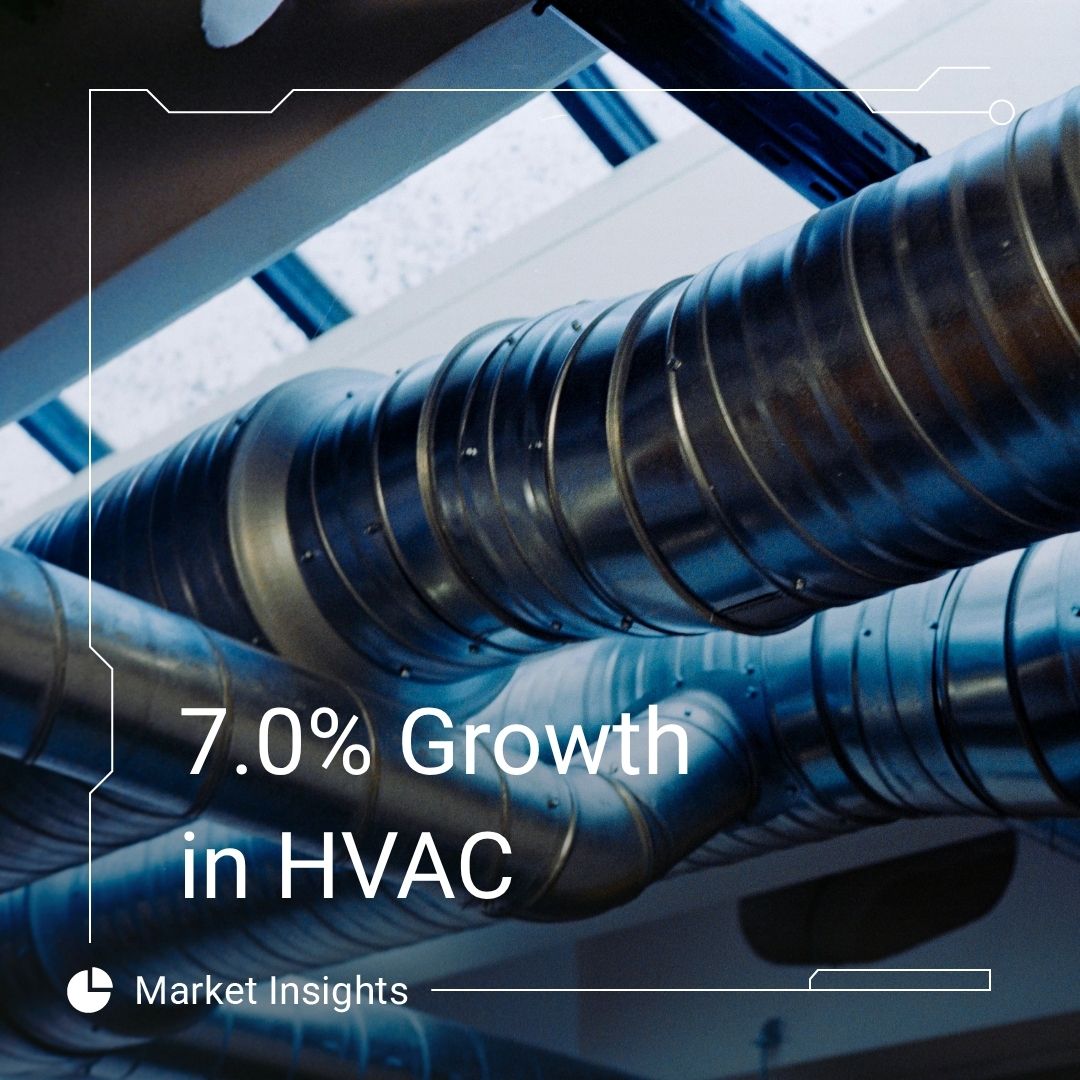
The installed base of connected HVAC devices is expanding rapidly, rising from 150.8 million units in 2025 to 190.3 million in 2026, with projections reaching 430.7 million by 2030. This growth reflects increasing demand for smarter operations, multi‑system connectivity, and deeper visibility into energy and equipment performance. As HVAC systems integrate with lighting, security, and other smart building technologies, coordinated automation and whole‑building optimisation are becoming more achievable.
Revenue from IoT‑enabled HVAC services is growing in parallel, increasing from $10.7 billion in 2025 to $12.8 billion in 2026 and expected to hit $25.2 billion by 2030, supported by remote diagnostics, predictive maintenance, and subscription‑based service models.
Sustainability Through Intelligent HVAC Services
IoT‑based HVAC solutions are becoming central to sustainable building strategies. Five pillars define this transformation:
- Energy‑efficient retrofits including VRF upgrades, heat pumps, and efficient lighting systems.
- IoT‑based energy management systems (EMS) that monitor and optimise HVAC, lighting, and plug loads.
- IAQ monitoring and smart ventilation, balancing fresh air intake, comfort, and energy use.
- On‑site renewable energy integration enabling dynamic load shifting with solar and storage.
- AI‑powered autonomous operations, where systems learn patterns and self‑optimise for comfort and efficiency.
Together, these pillars reduce emissions, improve resilience, and support the transition toward low‑carbon, high‑performance buildings.
Unlocking Growth Opportunities in the Built Environment
Opportunities in the built environment are expanding as owners seek solutions that close performance gaps and support long‑term sustainability goals. Many commercial buildings are decades old, and as a result face high energy use, ageing HVAC systems, and inconsistent indoor air quality. This creates strong demand for retrofit programs with connected, efficient technologies. Furthermore, momentum around net‑zero commitments is accelerating, with organisations combining equipment upgrades, renewable integration, advanced IAQ management, and data‑driven optimisation. In addition, financing trends such as ESG‑linked loans and health‑focused certifications are shaping investment priorities and pushing owners toward measurable sustainability improvements. Next, connected HVAC solutions and digital maintenance models are becoming essential. Finally, service‑based offerings like IAQ‑as‑a‑Service and HVAC‑as‑a‑Service support predictable costs, recurring value, and deeper long‑term partnerships.
Download
The full report with detailed forecasts, innovation insights, and strategic recommendations is available for download.
Management Summary
Listen now: your management summary in audio format.